Low Snowpack and High Gas Prices Drive Record Memorial Day Traffic on I-70
Record-breaking Memorial Day travel is predicted for Colorado as historically low snowpack opens trails early and $5 gas prices keep drivers on the road, leading to severe I-70 congestion.
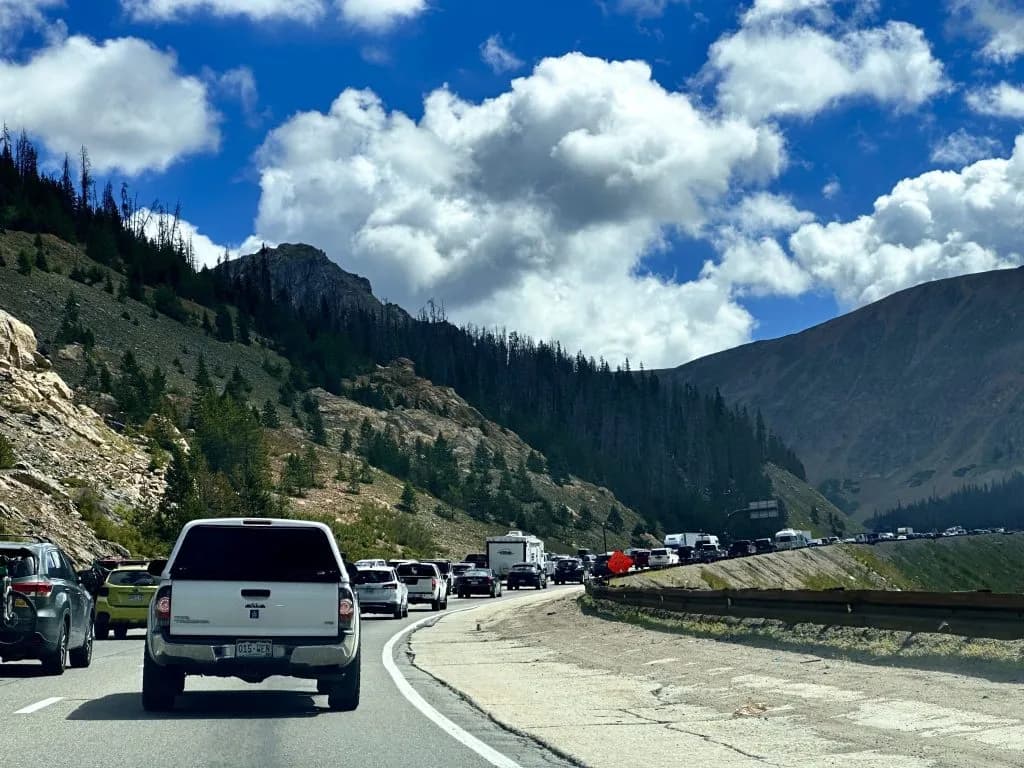
Aspen —The heat radiates off the asphalt on I-70 near Edwards. It’s a dry, dusty heat. The kind that makes the air shimmer above the hood of your truck. Drivers sit in gridlock, AC blasting, watching the odometer tick up while their wallets tick down.
This weekend, that scene gets worse.
Colorado’s mountain roads — I-70 included — are bracing for a traffic surge that defies the usual seasonal logic. The official line from the Colorado Department of Transportation (CDOT) is clear: traffic will easily exceed historical averages. The reason isn’t just the holiday. It’s the snow. Or rather, the lack of it.
Historically low snowpack has opened up mountain trails and recreation areas months earlier than usual. That access is pulling drivers out of their driveways. And they’re driving.
AAA reports a record 45 million people will travel this Memorial Day weekend. Thirty-nine million of them will be behind the wheel. That number was compiled before gas prices hit the $5-a-gallon mark. Many Americans say those prices will kill their travel plans. AAA doesn’t expect the numbers to drop significantly.
Skyler McKinley, AAA’s director of public affairs, sees a silver lining for local economies. High gas prices might mean fewer people fly out of Denver. Instead, they’re driving. They’re staying closer to home. They’re spending money in the mountains.
“Look, we’re all paying a lot for gas right now, that’s no secret,” McKinley said. “But I think that favors many Colorado residents who are looking to stay closer to home and make their money go further.”
It’s a strange economic pivot. Inflation bites, so locals drive instead of fly. The money stays in the state. It hits the gas stations in Glenwood Springs and Vail. It fills the hotels in Basalt.
But the roads will clog. CDOT is suspending all construction and maintenance projects from noon Friday morning through Tuesday morning to keep lanes clear. Shawn Smith, CDOT’s director of maintenance and operations, noted that Memorial Day is usually a quiet bridge between ski season and summer. Not this year. The dry winter means earlier access. That access means more cars.
Expect the heaviest traffic on Friday. Expect it on Memorial Day itself. And expect the return rush on Tuesday.
Last year, about 41,000 vehicles passed through the Eisenhower-Johnson Memorial Tunnels on the Friday before Memorial Day. Twenty-four thousand eight hundred headed west. Sixteen thousand headed east. Saturday was even busier, with 36,500 drivers. Those were just the tunnel counts. They don’t include the backroads. They don’t include the US-6 crowd.
McKinley suggests leaving early. That’s standard advice. But with record-breaking travel volumes and earlier-than-usual access to high-country trails, “early” might not be early enough.
The short version: Gas is expensive. The snow is gone. The roads are open. And neighbors are driving.
Watch the tunnels. Watch the exits. The commute will cost you time. And money.
Keep up with Aspen
The day's Western Slope news, one email each morning. Free.