Michael Salomone Explains Why Irregular Cadence Catches More Fish
Fly fishing expert Michael Salomone reveals that irregular cadence and commotion, not speed, are key to triggering predatory strikes and catching more fish on the Western Slope.
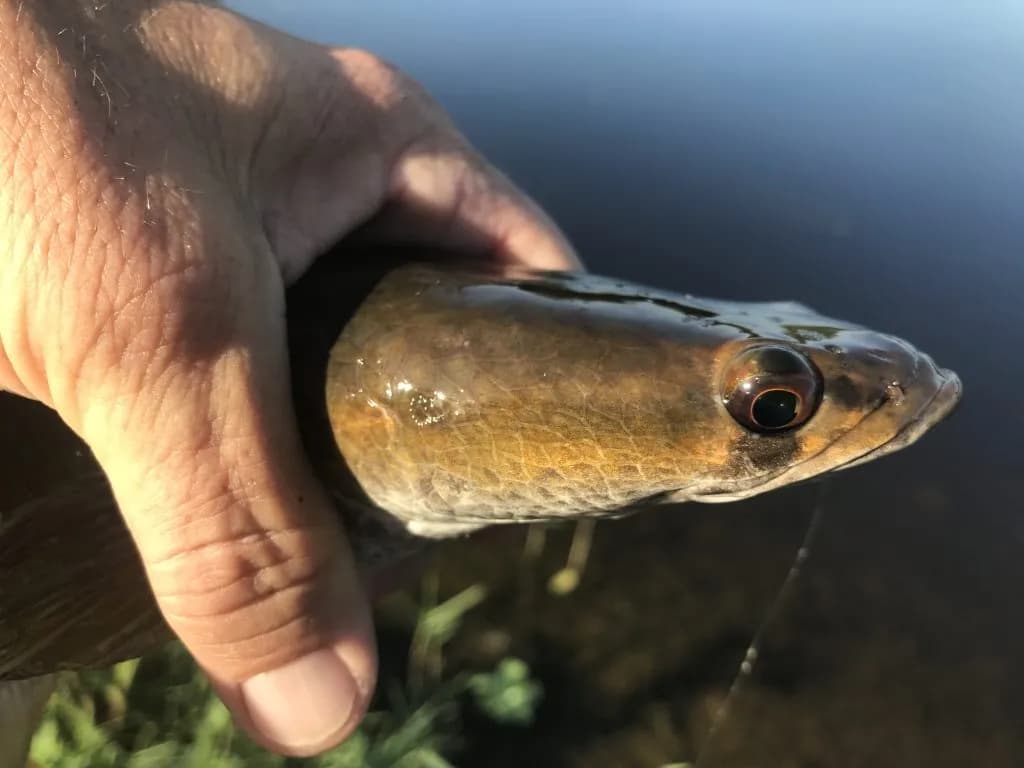
Aspen —The question is simple: why do you keep losing fish?
It’s the same frustration that drives thousands of anglers up and down the Western Slope every spring. You cast. You wait. You strip. Nothing. Or worse, you get a tentative nibble that dies before you can set the hook. You’re not doing anything wrong. You’re just fishing too smoothly.
Michael Salomone knows this. He’s spent years watching predators — fish that hunt by feeling the water’s turbulence rather than just seeing it — react to different presentations. His conclusion, detailed in his recent work on fly fishing mechanics, is that to catch the big ones, you need to create two specific things: cadence and commotion.
"Cadence deals with the pace in which a fly is retrieved," Salomone writes. "An irregular cadence imparts a less-than-ideal scenario wherein a smaller baitfish appears weak, injured or disoriented."
Think about that the next time you’re standing in the Roaring Fork or casting into Stagecoach Reservoir. A steady, smooth retrieve looks like a healthy fish. It’s predictable. It’s boring. Predators don’t want a healthy fish; they want an easy meal. They want the weak link in the herd.
"A streamer fly retrieved with a steady, smooth sequence does not gather the attention of a predator with the same enthusiasm as a jerky, irregular rhythm," Salomone says.
That’s the human angle right there. We’re wired to seek efficiency. We want to cast once and catch everything. But fishing isn’t about efficiency; it’s about deception. Long pauses. Short jerks. Letting the fly fall with weight in its eyes. That drop is often the moment the fish commits.
"Long and short pauses often trigger a fish to eat," Salomone notes.
It’s not just about how fast you pull the line. It’s about how you pull it. "Sloppy stripping command gives the predator an unconvincing look at your fly," he warns. If your hands are clumsy, the fish knows. You lose control. You lose fish.
Then there’s commotion. This is the noise, the splash, the disturbance. Fish feel turbulence through their lateral lines. They sense agitation. If your fly makes a sound, audible from a distance; you’re already winning half the battle.
"Top water poppers have a way of instigating a predatory reaction," Salomone says. "The splashy disturbance created on the surface attracts predators into investigating."
Whether it’s a popper on the surface or a Dahlberg diver weaving and bubbling below, the goal is the same: make the fish feel annoyed. Make it feel like something is struggling. "Wounded baitfish, frogs and even mice present struggling, frothy, moving targets to predators."
The beauty of this approach is that it works everywhere. From the sandy beaches where sea trout lurk to the deep pools of the Gunnison, the rules don’t change. You just change the fly.
"Both freshwater and saltwater predators eat top water poppers," Salomone points out. "A variety of materials cause different sounds when [they move through the water]."
For locals who spend their weekends fighting the current, the lesson isn’t to buy a new rod or a new reel. It’s to change how you move the line. Stop fishing smooth. Start fishing messy. Create the commotion. Break the cadence.
"Follows turned into commitments are the result of speed, pace and broken cadence," Salomone says. "When combined enticingly, predators are easy to predict."
It’s a shift in mindset that separates the casual angler from the one who fills the cooler. You don’t need to out-cast the fish. You just need to out-think them. And that starts with making a little noise.
Keep up with Aspen
The day's Western Slope news, one email each morning. Free.



Roaring Fork Transportation Coalition Proposes HOT Lane to Ease Aspen Congestion

Eagle County Judge Receives Legacy Award for Mental Health Court Reforms