Nepal-China Border Flood Kills 390 After Glacier Collapse
A glacier collapse triggered a catastrophic flood on the Nepal-China border, killing over 390 people and leaving more than 1,400 missing. Rescue teams face severe infrastructure damage.
Aspen —More than 390 people are dead and over 1,400 remain missing following a catastrophic flood that swept through the mountainous Nepal-China border on Wednesday, according to authorities in both countries.
The disaster was triggered by a glacier collapse that sent a torrent of water and mud, several stories high, crashing through communities in the steep slopes below the Himalayan range. Rescue teams and military helicopters are currently searching for survivors along the border, a task complicated by the fact that dozens of bridges have been destroyed and nearly 40 kilometers of roads are damaged.
In Nepal, police reported at least 389 deaths and more than 460 injuries. Another 910 people are missing in the country, a figure that includes hundreds of foreigners and pilgrims. In Tibet’s Shigatse prefecture, Chinese authorities reported at least three dead and 558 missing.
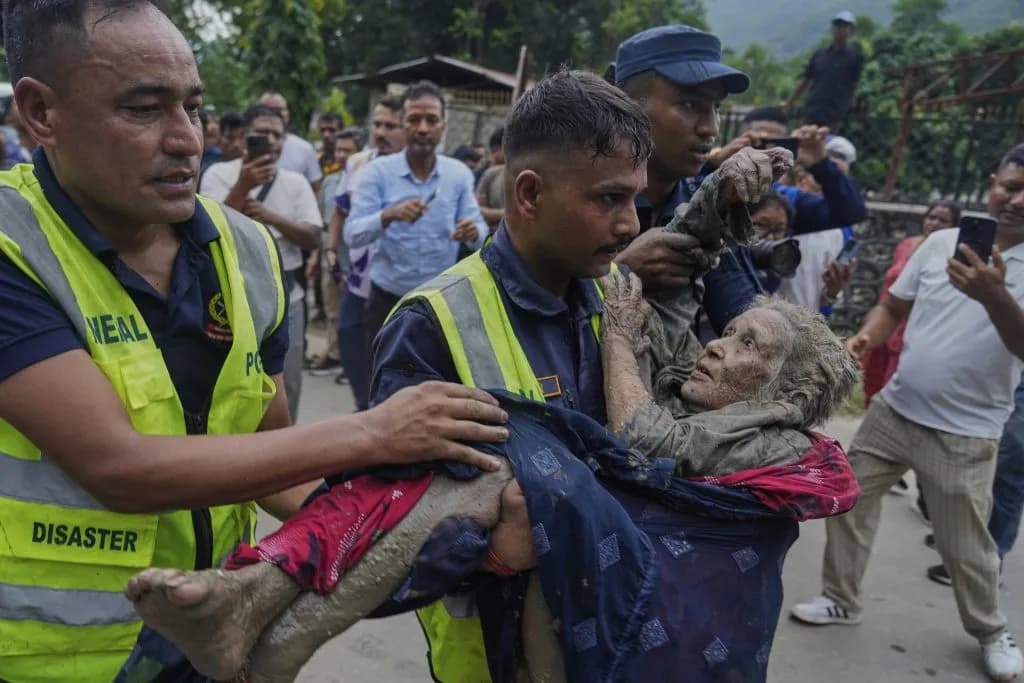
The physical destruction is total in the hardest-hit areas. In Nepal’s Nuwakot district, images show what appeared to be the second floors of buildings slathered in mud after the torrent rushed through. Riverbanks and village streets are buried, with debris hanging from tree branches and wires. Vehicles sit caked in mud, while stunned survivors are covered head to toe in the silt left behind by the water.
Aerial footage from China Central Television shows a two-lane road running along a river in Tibet’s Shigatse prefecture completely buried under the debris. A multistory building and more than a dozen vehicles are also covered in mud. Perhaps most ominously, aerial views show that a lake has formed and expanded on the China-Nepal border. Authorities are warning of a possible dam break, which could send another wave of water downstream.
Nirajan Paudyal, a journalist based in Kathmandu, is waiting for news of his parents and other relatives in the district’s village of Soley. “I fear there won’t be any update,” Paudyal said, a sentiment that likely echoes across the valley for thousands of families who have lost contact with loved ones.
The Nepalese army has deployed helicopters for rescue operations because of the damaged road infrastructure. Brig. Gen. Raja Ram Basnet, an army spokesperson, said the air units have rescued more than 100 people so far. Army teams also evacuated people trapped inside facilities linked to the Trishuli hydropower project. Dozens of injured individuals have been transported to Kathmandu for medical care, and rescuers have already found bodies in Chitwan district, hundreds of kilometers downstream from the initial impact zone.
U.S. President Donald Trump addressed the disaster from the Oval Office, describing how “strong, well-built buildings were wiped out like they were toothpicks.” He stated that the U.S. has spoken with Nepalese leaders and offered to provide “anything they want” in the wake of the tragedy.
The vulnerability of these regions is not new, but it is intensifying. The steep slopes and lush valleys below the Himalayan mountain range are home to many of the world’s highest peaks and remaining glaciers. Melting glaciers have become more common due to human-caused climate change, a factor that experts say makes these communities especially susceptible to sudden flooding and landslides.
For now, the focus is on the immediate aftermath: the mud, the missing, and the fragile hope that a helicopter will spot movement in the debris. The water has receded from many streets, but it left behind a thick, gray layer of sediment that coats every surface, a silent witness to the speed at which the landscape was erased.
Keep up with Aspen
The day's Western Slope news, one email each morning. Free.