North Fork Valley Orchards Face Zero Harvest After April Freeze
A severe April freeze obliterated North Fork Valley fruit crops, leaving orchards like First Fruits with healthy trees but zero revenue while ongoing costs persist.
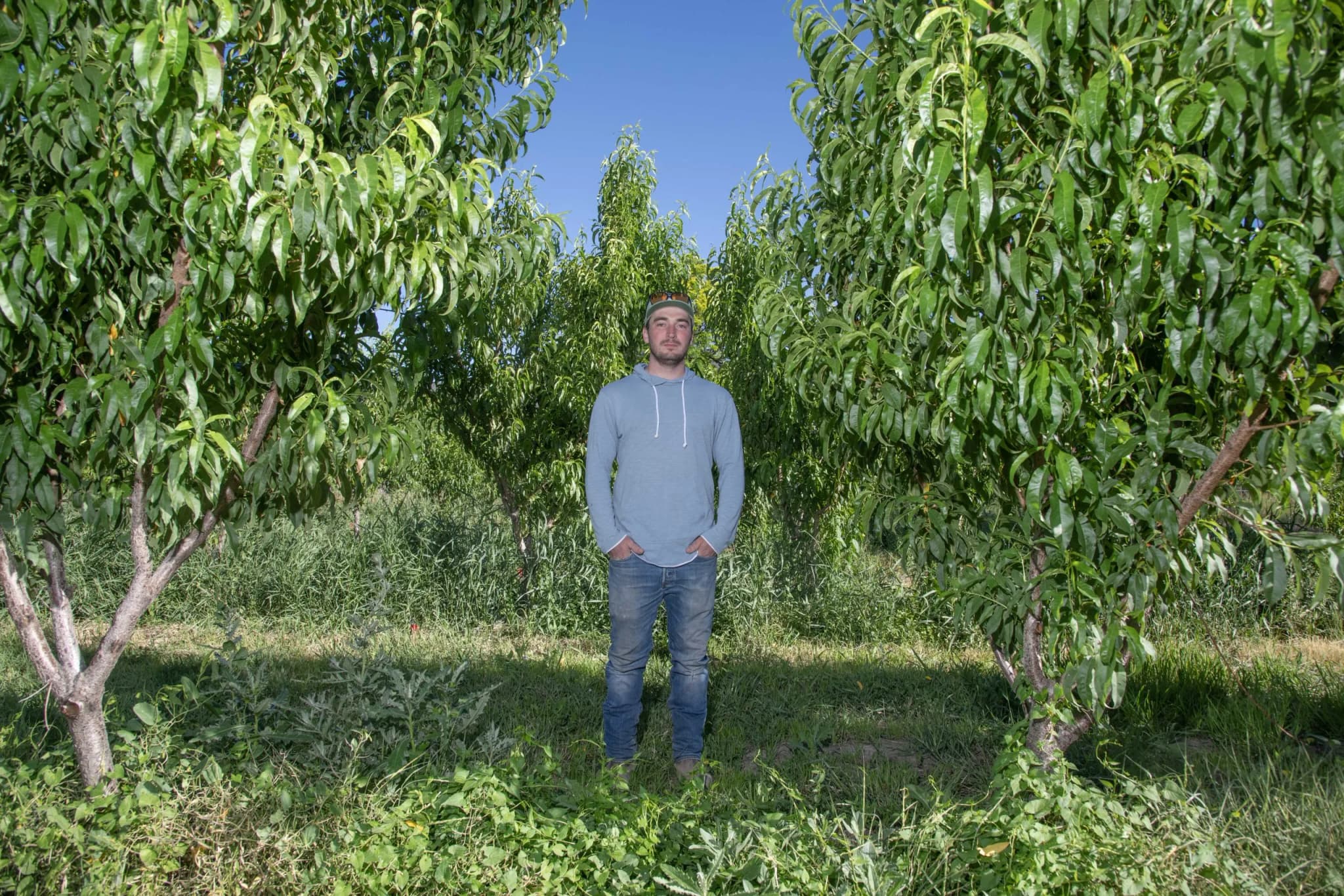
Colorado —The air in the North Fork Valley still holds that sharp, metallic bite of early spring, even as July heat settles over the orchards. Kevin Kropp walks past rows of trees that look, at first glance, perfectly healthy — the leaves are a vibrant, waxy green, and sprinklers hum in a steady rhythm against the dry earth. But if you look closely at the branches, there is an absence that feels heavier than the weight of fruit ever could. There are no cherries, no peaches, no plums hanging from the limbs that have stood for decades. Just leaves, and the quiet work of bees flitting between empty blossoms.
For Kevin and his brother Kris, who farm 140 acres near Paonia under the name First Fruits, this summer is a year of doing everything right while producing nothing. In nearly 50 years of growing fruit, Kevin Kropp has never seen a freeze strike with such total efficiency. On the night of April 17, temperatures plunged into the low 20s, catching crops that had been pushed prematurely forward by an unusually warm spring. Sweet cherries were nearing the size of a dime, and apricots had swelled to the size of quarters. They were in that fragile fruitlet stage, vulnerable and exposed. When the cold hit, it didn't just damage them; it obliterated them.
“It’s strange to go out and see trees with nothing on them when normally we’re evaluating and watching things grow,” Kropp said. “To see the trees completely devoid of fruit really makes you take a step back for a moment.”
The economic shockwave has rippled far beyond the orchard fences. While the North Fork Valley produces only an estimated 10% of Colorado’s total fruit harvest, it is home to many of the state’s premier organic orchards. These growers supply farmers markets, wholesalers, retailers, and community-supported agriculture (CSA) programs across the Western Slope and up to the Front Range. When the fruit fails, the money stops flowing, but the costs do not pause.
Regan Choi, co-manager of Ela Family Farms in Hotchkiss, noted that the first month and a half after the freeze was a period of suspended animation. “The first month or month and a half was a period of being in shock and waiting to see if it was really as bad as it looked like,” Choi said. “But after that month, it was pretty obvious that everything was dead.”
Now, growers are forced to flex business muscles they rarely use. They must continue to irrigate, fertilize, and spray for disease, even though there is no harvest to justify the expense. Year-round employees still require paychecks. Relationships with wholesale buyers and CSA members must be preserved, even when there is no product to deliver. The effects extend to seasonal farmworkers who might find themselves without work, and to packing sheds that stand idle.
The question facing the valley is no longer about weather prediction, but about survival strategy. How do you keep a business alive when the primary source of revenue vanishes overnight? For Kropp, it means looking at the trees not as fruit factories for a single season, but as long-term assets that require care regardless of the yield. The trees are there, healthy and green, waiting for next year’s bloom, while the farmers figure out how to keep their operations afloat in the meantime.
Outside First Fruits, an empty storage shed stands as a testament to what might have been. The sprinklers continue their rhythmic hum, watering roots that hold onto life, while the farmers inside make calls to buyers, explaining that the fruit is gone, but the partnership remains.
Keep up with Colorado
The day's Western Slope news, one email each morning. Free.


Federal Report Sets 200,000 Acre-Foot Water Conservation Target for Upper Basin
Colorado Parks and Wildlife Deploys Precision Drones for Weed Control