How Consumer Demand Drives Cattle Industry Innovation and Costs
The commercial cattle industry relies on high-stakes technology to produce beef, but ecological and health costs rise as consumers drive trends and dictate reinvestment through their purchasing power.
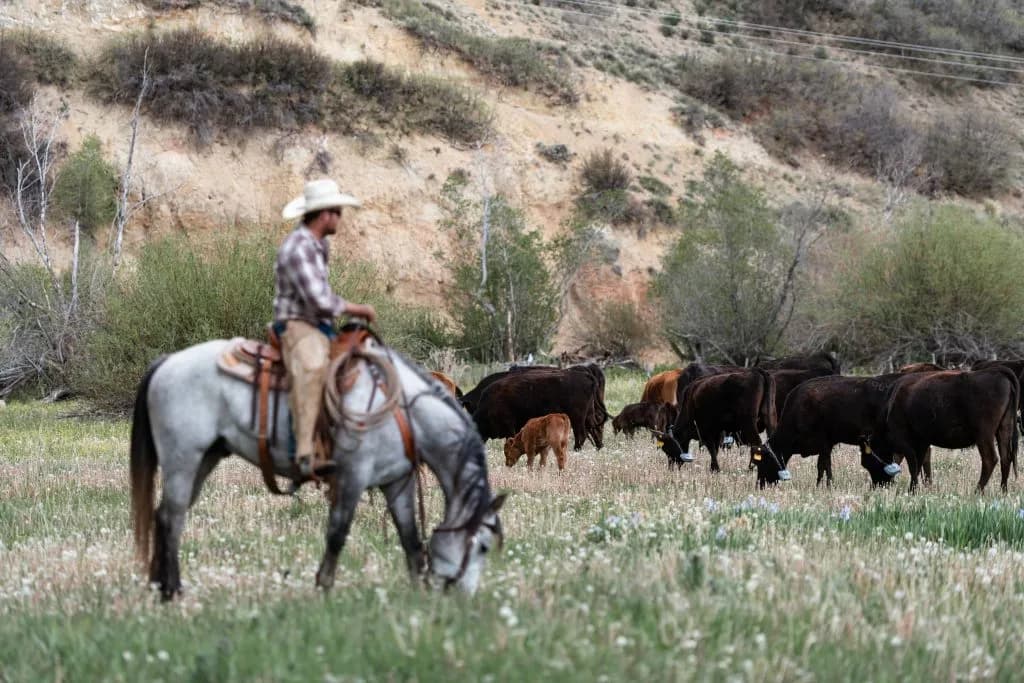
Steamboat Springs —What happens to the steak on your plate?
To hear the commercial cattle industry tell it, that steak is the result of a high-stakes technological marathon. It’s not just grass and rain anymore. It is insulin production, genomic testing, cryopreservation, and digestive monitoring devices all working in tandem.
The U.S. commercial cattle industry is an "absolute economic and innovative force," according to a recent analysis in the Steamboat Pilot. But that innovation comes with a trade-off. We have paid an ecological, environmental, and human health price for these advancements.
The catch? The consumer holds the power. Knowingly or not, you drive every trend. You dictate where reinvestment goes.
"The consumer... has all the power," the Pilot reported. "You dictate each and every industry trend and fad. You determine where we reinvest returns. You determine the direction of our industry."
That pressure to produce more beef with fewer resources has split the industry into specialized zones. It’s a relay race where each runner handles one specific leg of the journey from conception to consumption.
First, there is the foundation: the cow/calf operation. There are roughly 600,000 producers in this sector. They breed cows with bulls. After 283 days, a calf is born. These producers wean their calves at roughly 550 pounds or seven months old. They get paid by the pound of live calf produced.
Next comes the stocker or backgrounder phase. This is where the math gets fuzzy, but the objective remains simple: put weight on those calves cheaply and efficiently.
Stocker operations buy weaned calves from cow/calf producers. They typically take cattle at 550 pounds or seven months old and sell them around 850 pounds or 17 months old. Because there is significant overlap between cow/calf and stocker operations, the exact number of producers involved here is constantly shifting. It’s estimated at around 50,000 producers per year, but that number is not precisely known.
They get paid based on their cost basis for cattle, the cost of gain, and the sale price per live weight pound produced.
Then, the cattle move to feedlots. These facilities aggregate animals from stocker operations and consolidate them into centralized locations. The goal is to feed cattle until they reach slaughter weight.
Feedlots commonly buy cattle at 850 pounds or 17 months old. They feed them to a finished weight of 1,300 pounds and 20 months old. There are roughly 1,000 feedlots with a capacity of over 1,000 head on feed.
Their payment structure is more complex than the earlier stages. They get paid from their cost basis of cattle, the cost of gain, the grade of carcass produced, and the total pounds of beef produced.
The industry argues that this specialization creates efficiencies and economies of scale. It has been a proving ground for technologies that now infiltrate human society, improving biological efficiency in our modern world.
But the article notes these leaps are not infallible. Two paradoxical realities coexist, driven by one ultimate truth: the consumer decides whether those innovations are worth the cost.
Keep up with Steamboat Springs
The day's Western Slope news, one email each morning. Free.