Western Governors Launch Energy Task Force to Fix Aging Grid
Eleven western governors announced a new task force at Deer Valley to accelerate permitting and upgrade the aging regional power grid, aiming for energy superabundance through state-level action.
Steamboat Springs —Colorado Gov. Jared Polis didn’t just join the conversation. He helped lead it.
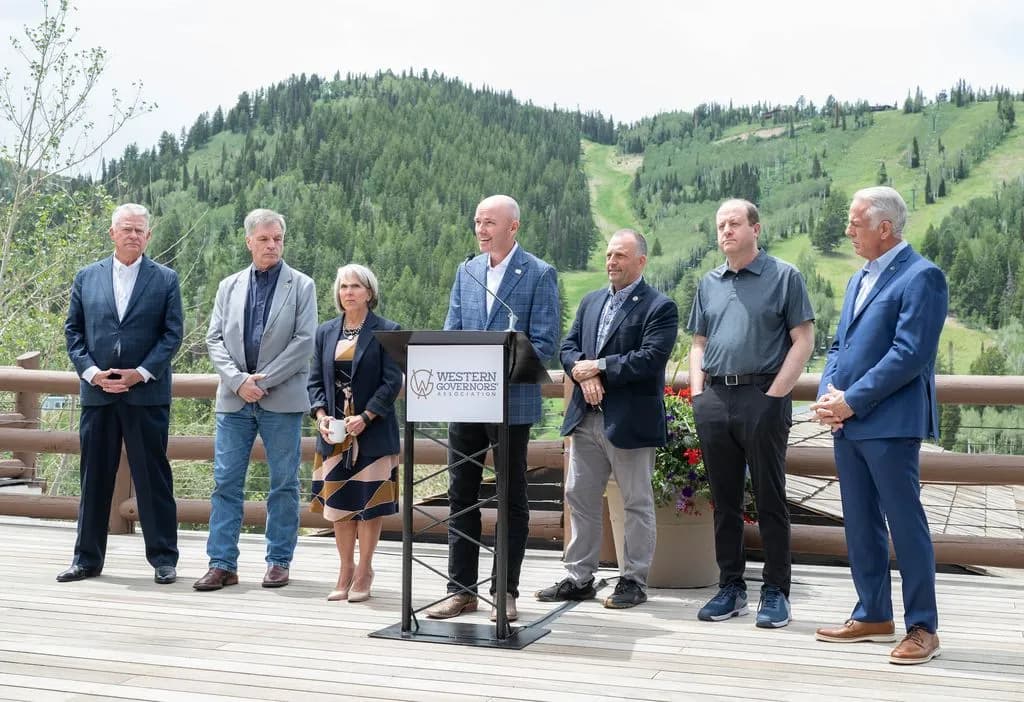
Eleven western governors stood together in Deer Valley on June 30. They announced a new task force. The goal is blunt: fix the region’s aging power grid. They want to speed up permitting. They want upgrades. They call it “energy superabundance.”
The name comes from Utah Gov. Spencer Cox. He’s the former chair of the Western Governors’ Association. He’s the one who spearheaded this agenda.
“Unfortunately, here in the West, like much of the country, our current power system was constructed over 60 years ago,” Cox said.
The transmission lines are old. They expand too slowly. They don’t meet today’s demands. The governors agreed.
This isn’t a pilot program. It’s a structural overhaul. The initiative will track permitting milestones on a new dashboard. It will create standardized schedules for high-priority interstate projects. It will coordinate with federal agencies, local governments, and tribes.
The catch? They claim they can do this without waiting for federal permitting reform. They’re betting on state-level action. They’ve endorsed the Western Transmission Expansion Coalition, or WestTEC. Cox called it an “industry-led effort.” It’s designed to tackle infrastructure challenges through collaboration.
“This is the West working at our best, working together across party lines,” Cox said.
The announcement wasn’t just a press release. It was followed by a panel discussion. Governors sat with energy industry leaders. They talked about development. They talked about emerging tech. They talked about regulatory reform.
Underpinning it all was a single, hard fact: locals need cheaper, reliable energy.
Ben Serrurier knows the drill. He’s the director of government affairs for FERVO Energy. The company is based in Texas. But its focus is the West.
Serrurier asked a simple question during the panel. Can we standardize the fuel source?
He’s talking about geothermal energy. It’s not just about drilling. It’s about predictability.
“Basically, go to Colorado, go to Utah, go to Nevada, go to New Mexico, go to Wyoming … and know how far down you have to drill to hit a certain temperature,” Serrurier said.
If you know the depth, you know the cost. You can engineer the reservoir for a specific flow rate. You can integrate that into an off-the-shelf standardized design generator.
“Then we’re really cranking these things out at low cost,” he said.
The barrier isn’t just engineering. It’s the regulatory environment. It’s the permitting process. Those two factors determine everything.
The group aims to cut through the red tape. A dashboard to track progress. Standardized schedules. Joint efforts across state lines.
It sounds efficient. It sounds like the solution locals have been waiting for.
But there’s a gap between the announcement and the ground. The governors are talking about mechanisms. They’re talking about dashboards. They aren’t yet talking about the specific bottlenecks in Colorado’s high country. They aren’t detailing how this impacts the ratepayer in Steamboat Springs or Grand Junction.
The “superabundance” label suggests plenty. But the grid is still old. The lines are still slow.
Serrurier’s point stands. If you can standardize the drill, you lower the cost. If you lower the cost, you change the market. But you need the permits. You need the speed.
The plan is the first step. The dashboard is the second. The third is whether the states can actually deliver on the promise of faster, cheaper power.
Cox said it’s working across party lines. That’s good. It’s also necessary.
The question for neighbors around here is simple. How fast does “accelerated” actually mean? And who pays for the upgrade?
The governors are watching the dashboard. We’re watching the bills.
Keep up with Steamboat Springs
The day's Western Slope news, one email each morning. Free.