Northwest Colorado Elk Herds Rebound After Harsh Winter
Elk herds in northwest Colorado are showing signs of recovery after a devastating winter in 2022-23, with population numbers increasing and hunting licenses likely to follow suit.
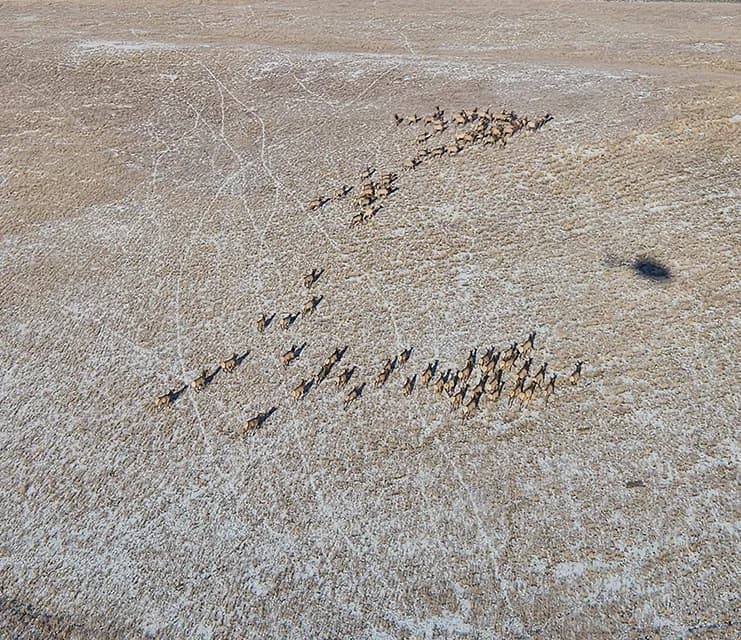
Craig —"We were experiencing the worst winter we had seen in 70 years" — that's how Darby Finley, Colorado Parks and Wildlife's terrestrial biologist in Meeker, described the 2022-23 winter that devastated elk herds in northwest Colorado. The impact was severe: elk populations north of Craig were reduced by half. But now, three years later, the herds are rebounding.
Finley's statement is a stark reminder of the challenges wildlife faced during that brutal winter. Significant snow accumulation and crusted snow conditions made it difficult for animals to travel and conserve energy, leading to widespread malnutrition and an abnormally large die-off of calves, fawns, and older animals. The conditions were particularly tough on ungulate herds that have historically been among the most productive in Colorado and the country.
The recovery is documented in the wildlife agency's annual winter classification flights, which estimate population sizes and track survival and birth rates of deer and elk herds. This winter, Parks and Wildlife reported that the Bears Ears and White River elk herds had returned to their population targets for the first time since the harsh conditions of three years ago. The Bears Ears herd's target population is between 15,000 and 18,000 animals, while the White River herd's target is between 32,000 and 39,000. At the end of 2023, Parks and Wildlife estimated the Bears Ears herd at around 10,500 elk and the White River around 30,300.
Make no mistake, the road to recovery was not easy. The winter of 2022-23 was a significant setback for these herds. But the latest numbers indicate a positive trend. Becca De Vergie, Parks and Wildlife's terrestrial biologist in Craig, noted that the lack of snow made it difficult to count elk blending into the sagebrush-covered hills. However, despite this challenge, area biologists were still able to observe and classify thousands of elk in overall good body condition.
The shift in elk distribution due to the unusual lack of snow cover is worth watching. In the Bears Ears herd, area biologists reported that several thousand elk still migrated into the typical winter range in the western portion of the management region. However, more elk than usual remained on the eastern side of Highway 13. This change in distribution could have implications for local ecosystems and hunting practices.
The short version is that elk herds in northwest Colorado are recovering, and this will likely lead to an increase in hunting licenses. Colorado Parks and Wildlife staff will be recommending a significant increase in hunting licenses within the area's herds. This decision is based on the latest population numbers and the agency's management plans.
Read that again: the herds are recovering, and hunting licenses will increase. This is not a surprise, given the latest numbers. But what's not being said is how this increase in hunting licenses will impact local communities and ecosystems. The community will be watching this development closely, as it has significant implications for the local environment and economy.
The recovery of the elk herds is a positive development, but the fact that they are rebounding after such a severe decline shows the resilience of these animals, and it also highlights the challenges they face in the wild.
In the end, the story of the elk herds in northwest Colorado is one of recovery and resilience. But monitoring their progress and adjusting management strategies accordingly will be necessary as the herds continue to grow. The elk herds may be recovering, but the story is far from over.
Keep up with Craig
The day's Western Slope news, one email each morning. Free.
Glenwood Springs Closes I-70 Interchange for $14 Million Road Overhaul

Colorado's New Digital Warrant Law Forces Social Media Platforms to Act Fast