Northwestern Colorado Lacks Wildfire Mitigation Resources
A new study reveals Northwestern Colorado's vulnerability to wildfires due to a lack of local resources, emphasizing the need for community action and resource allocation.
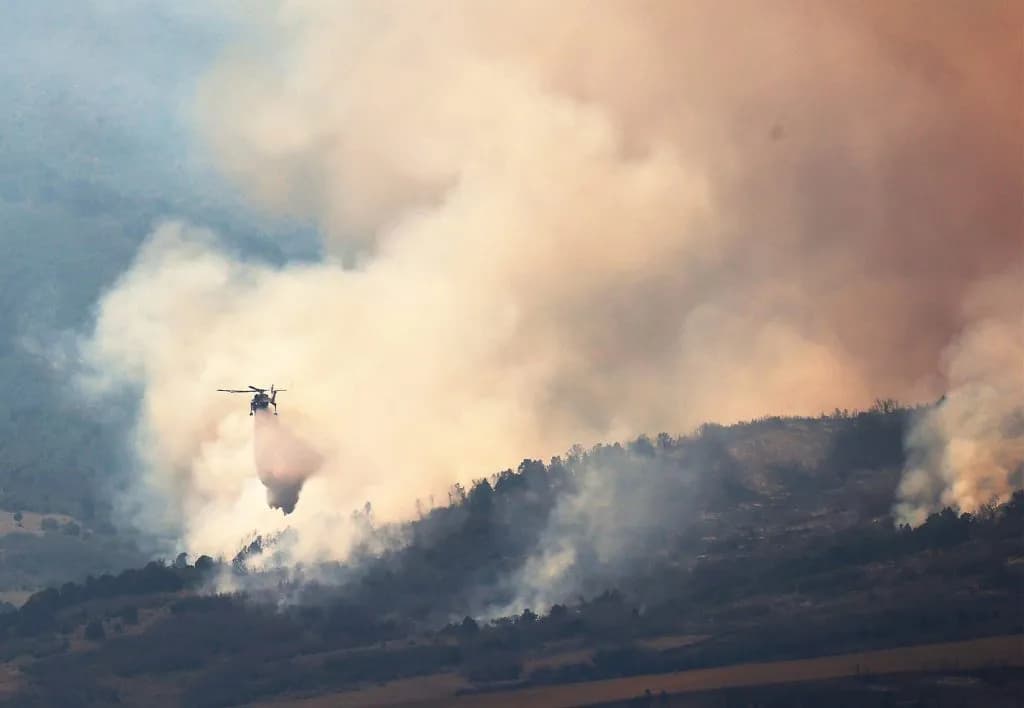
Craig —Standing at the edge of the White River National Forest, the charred remains of last summer's Lee Fire are a stark reminder of the wildfire vulnerability that plagues Northwestern Colorado. The fourth largest wildfire in state history left a trail of destruction in its wake, and a new study reveals a disturbing lack of local resources to mitigate such disasters. This will cost taxpayers — and the environment — in the long run.
The study, conducted by Colorado State University researchers, exposes a glaring mismatch between wildfire risk and mitigation resources in the region. Rio Blanco, Moffat, and Garfield counties are among the most at-risk areas, yet they have the least local capacity to reduce risk, respond to, and recover from wildfires. Make no mistake, this is a critical issue that demands attention from local authorities and residents alike.
Karissa Courtney, the study's lead author, notes that reducing vulnerability to wildfire requires a multi-faceted approach, involving private landowners, local organizations, and state and federal management authorities. However, the study found that many resources have been directed toward modeling and mapping wildfire risk, while complementary representations of local capacity have been largely lacking. The short version: we know where the risks are, but we don't have the resources to do much about it.
The researchers created an index of nine indicators to measure local wildfire mitigation capacity, including demographic features, past wildfire fuels treatment projects, and social factors like homeowners associations and FireWise USA-certified neighborhoods. The results are troubling, with areas like Rio Blanco, Moffat, and Garfield counties emerging as significant concerns due to their high wildfire risk and limited resources. Courtney emphasizes that the study can tell us where resources are absent, and in this case, the absence of pre-fire forest management work in these areas is a pressing concern that demands action.
As locals, we need to understand that wildfire response capacity is just as important as mitigation efforts. However, the study focused on mapping local capacity for pre-fire forest management work, such as creating defensible space around homes and neighborhoods, prescribed burns, and tree thinning. The fact that many of these resources are absent from these high-risk areas is a pressing concern that demands action. To address this issue, the community's ability to complete projects that reduce wildfire risk is crucial, and local authorities must take concrete steps to address the resource gap.
In the context of our local economy and environment, the cost of inaction will be steep. The study's results should serve as a wake-up call for our community to come together and demand more resources to mitigate wildfire risk. Many resources have been directed toward modeling and mapping wildfire risk, but now it's time to focus on building local capacity to reduce vulnerability. The fact that we're not doing enough to prepare for wildfires is a harsh reality that we need to confront head-on.
The lack of local resources in Northwestern Colorado is a story that needs to be told, and it's one that we'll continue to follow. For now, the question remains: what will it take for our community to prioritize wildfire mitigation and secure the resources needed to protect our homes, our environment, and our way of life? Read that again, it's a question that demands an answer.
Keep up with Craig
The day's Western Slope news, one email each morning. Free.
Glenwood Springs Closes I-70 Interchange for $14 Million Road Overhaul

Colorado's New Digital Warrant Law Forces Social Media Platforms to Act Fast