Perry-Mansfield Students Present Wonderland at Julie Harris Theatre
Perry-Mansfield students showcase their rigorous training in a Pre-Professional production of Wonderland at the historic Julie Harris Theatre in Steamboat Springs on June 26 and 27.
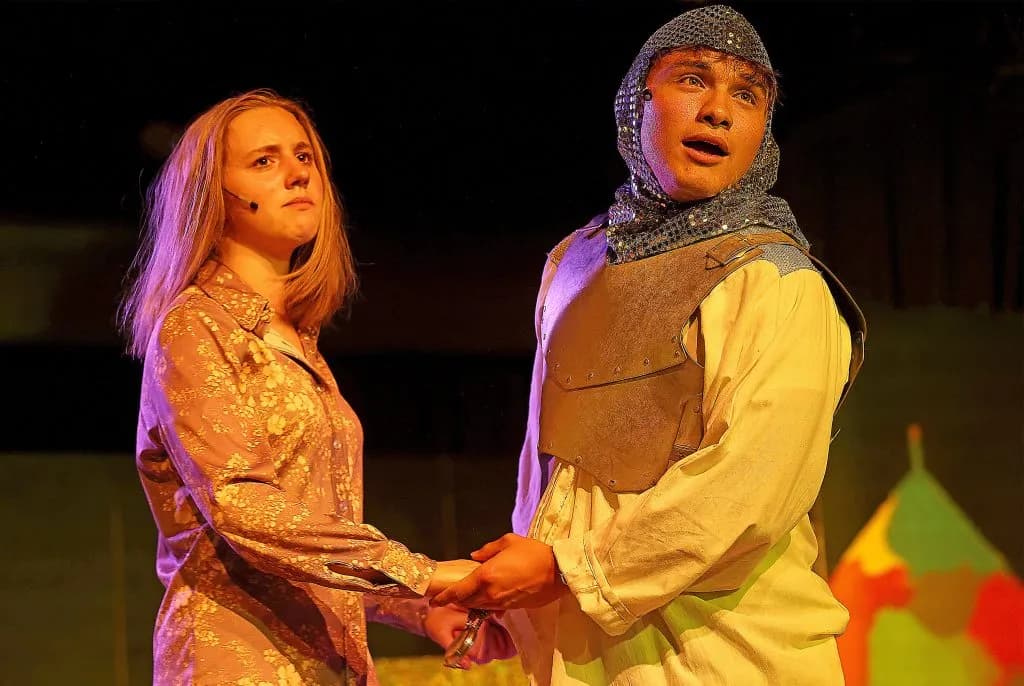
Steamboat Springs —The heavy velvet curtains of the Julie Harris Theatre are drawn tight against the June heat, sealing off the high desert air from the stage. Inside, the air conditioning hums a low, steady note that competes with the rustle of costumes and the sharp intake of breath from actors waiting in the wings. It is a controlled environment, a bubble of artifice set up on the campus of the Perry-Mansfield Performing Arts School & Camp, where the real work happens not just in the spotlight, but in the three-week grind that precedes it.
This is the Pre-Professional Musical Theatre Program, and for the last few weeks, the historic venue has been transformed into a training ground. Now, the focus shifts to the final product: Wonderland. The production runs June 26 and 27, offering locals a chance to see how the intensive translates into performance. It’s a classic story retold, but the execution relies on the specific, rigorous structure of the program itself.
The cast list reads like a who’s who of the program’s talent pipeline. Sloane Griebling steps into the role of Alice, navigating a world that is as much about discipline as it is about fantasy. She isn’t alone. Riley Webster holds court as the Queen of Hearts, bringing a necessary authority to the role. Supporting them are Keller Eichorst as the White Rabbit, Julia Kunstle as the Dormouse, and Sylvie Selko as Alice’s daughter, Chloe. Sean Oberbeck rounds out the key figures as the White Night. These aren’t just kids playing dress-up; they are participants in a structured educational model that has defined Perry-Mansfield for decades.
The venue itself is a significant asset. The Julie Harris Theatre isn’t a temporary tent or a converted gymnasium. It is a fixed, historic institution in Steamboat Springs. Using it for a three-week intensive provides a level of professionalism that smaller venues simply cannot match. The acoustics are built for it. The lighting grid is ready. The stage is measured and marked. This infrastructure reduces the friction of putting on a show. You don’t have to build the stage; you just have to inhabit it.
But let’s look at the logistics. The show runs for two days. June 26 and 27. That is a tight window. It suggests a focused effort, a burst of energy rather than a month-long residency. Tickets are available at perry-mansfield.org, which is the standard booking engine for the school. There is no mention of a massive marketing blitz or a celebrity guest star. The draw here is the program’s reputation and the quality of the students.
The production is part of a broader ecosystem. Perry-Mansfield is not just a summer camp; it is a performing arts school with a legacy. The "Pre-Professional" label in the program name is deliberate. It signals to parents and locals that this is a step toward a career, not just a hobby. The three-week timeline is intense. It requires commitment from the participants, who are likely balancing school, other activities, and the physical demands of singing, dancing, and acting simultaneously.
For the community, this is a cultural touchstone. Steamboat Springs has always valued its arts scene. The Perry-Mansfield Performing Arts School & Camp anchors that identity. It provides local youth with access to high-level training without needing to leave the valley for months at a time. The use of the Julie Harris Theatre keeps the arts visible and accessible.
The photos from the dress rehearsals show the preparation. The focus is on the interaction between the characters. Griebling and Webster share scenes that require chemistry and timing. Eichorst and Oberbeck provide the supporting structure. The result is a cohesive narrative. It reflects the teaching staff’s ability to condense months of learning into a few weeks of rehearsal.
The bottom line is simple. You pay for a ticket. You sit in the theatre. You watch young people demonstrate skills that took months to refine. It is a return on investment for the community that supports the arts. It validates the program’s model. And it provides a cultural event that is distinctly local, rooted in the specific history of Perry-Mansfield and the Julie Harris Theatre. There are no hidden costs, no complex subsidies to decode. It is a straightforward transaction: money for performance. And for a town that prides itself on its cultural depth, that is a fair exchange.
Keep up with Steamboat Springs
The day's Western Slope news, one email each morning. Free.

NWRM CASA Honors Judge O’Hara and Founders at 15th Anniversary

Craig Hosts Only Regional Special Olympics Bowling Competition