Roaring Fork Valley Transportation Funding Sparks Debate
The Elected Officials Transportation Committee discusses transportation funding and planning in the Roaring Fork Valley, highlighting the need for a comprehensive approach and fair distribution of resources.
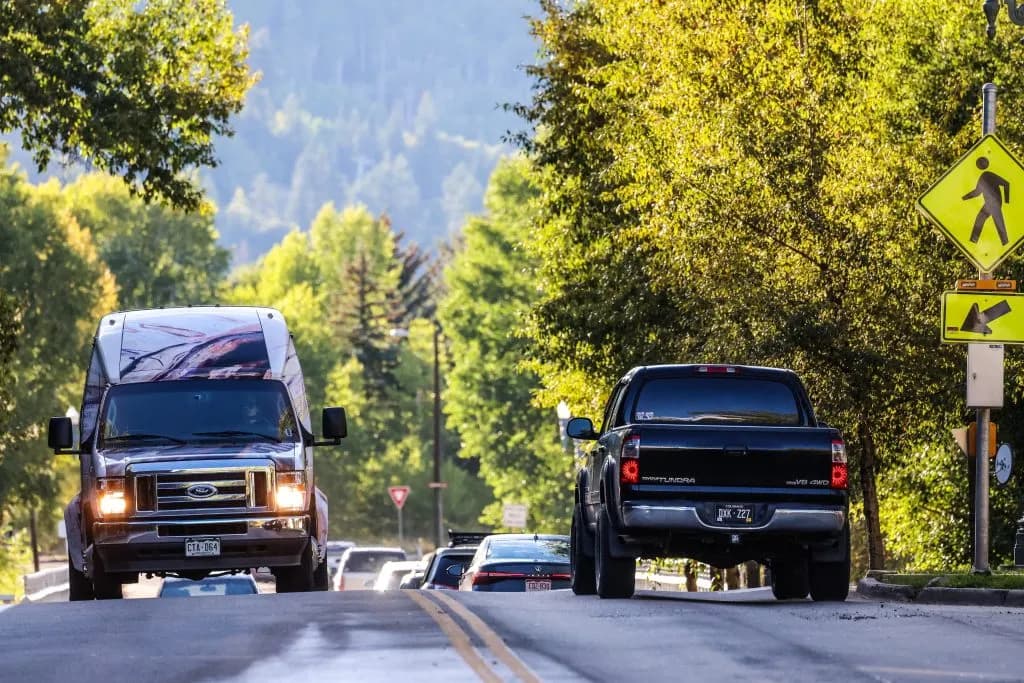
Aspen —It's unlikely that the Elected Officials Transportation Committee's recent meeting to discuss transportation issues in the Roaring Fork Valley will result in a straightforward solution, given the complex web of funding and geographic responsibilities at play. As the committee considers its 2026 budget, the question is whether the current scope of its focus and spending is equitable, with some members suggesting that the burden of funding transportation projects is not being shared fairly across the valley.
Aspen Mayor Rachael Richards pointed out that while 10% of Aspen's workforce commutes from as far away as Rifle, New Castle, and Parachute, "they're not contributing in the same way our public is" to solutions. This raises the issue of how to balance the needs of different communities within the valley, particularly when it comes to funding transportation projects. The numbers back that up, with the 1% Mass Transit Tax generating significant revenue, but with a disproportionate amount going to the Roaring Fork Transportation Authority (RFTA) and the city of Aspen.
Pitkin County Commissioner Francie Jacober emphasized that the committee needs to think about the impact of commuters on the community of Glenwood Springs, and to take responsibility by distributing efforts and spending money throughout the entire valley. However, she also noted that Garfield County should be contributing more to commuter efforts, highlighting that it is not currently a member of RFTA and does not fully contribute to the buses. "It's a glaring hole in the continuity in our valley," Jacober said.
The issue of Garfield County's lack of participation in RFTA is a significant one, with Snowmass Town Council Member Tom Fridstein agreeing that "Garfield County needs to step up and help out with the transportation, which they haven't done." Fridstein's comment underscores the challenges of coordinating transportation projects across different jurisdictions, and the need for a more comprehensive approach to addressing the valley's transportation challenges.
As the committee moves forward with its budget and project planning, it will be important to consider the geographic scope of its efforts and how to balance the needs of different communities. Aspen Mayor Rachael Richards voiced concern that it feels as though the EOTC is carrying the weight for RFTA, and that "it was anticipated that the downvalley community would start finding their own funding source." This comment highlights the tension between the need for coordinated planning and the reality of limited funding and resources.
The 2026 budget presented at the meeting shows a significant amount of funding available, with a beginning available fund balance of $11,971,217 and an ending available fund balance of $13,579,012. However, the question is how this funding will be allocated, and whether it will be sufficient to address the complex issues facing the valley's transportation system. As Jacober puts it, the committee needs to think about the impact of its decisions on the entire valley, and to take a more comprehensive approach to finding solutions.
The future of transportation in the Roaring Fork Valley depends on the committee's ability to navigate these challenges, but for now, it's clear that the issue of transportation funding and planning will remain a contentious one. As Richards said, "we can't solve everybody's problem," but the committee will need to find a way to balance the needs of different communities and to allocate its resources effectively. The committee's decisions will have a lasting impact on the valley, and as Jacober emphasized, "we need to think about the impact of those commuters to Aspen on the community of Glenwood Springs and to take responsibility by distributing efforts and spending money through the entire valley."
Keep up with Aspen
The day's Western Slope news, one email each morning. Free.