Colorado Parks and Wildlife Ends Search for Rogue Wolf
Colorado Parks and Wildlife has suspended its search for a wolf responsible for killing sheep in Rio Blanco County, leaving locals to deal with the ongoing problem.
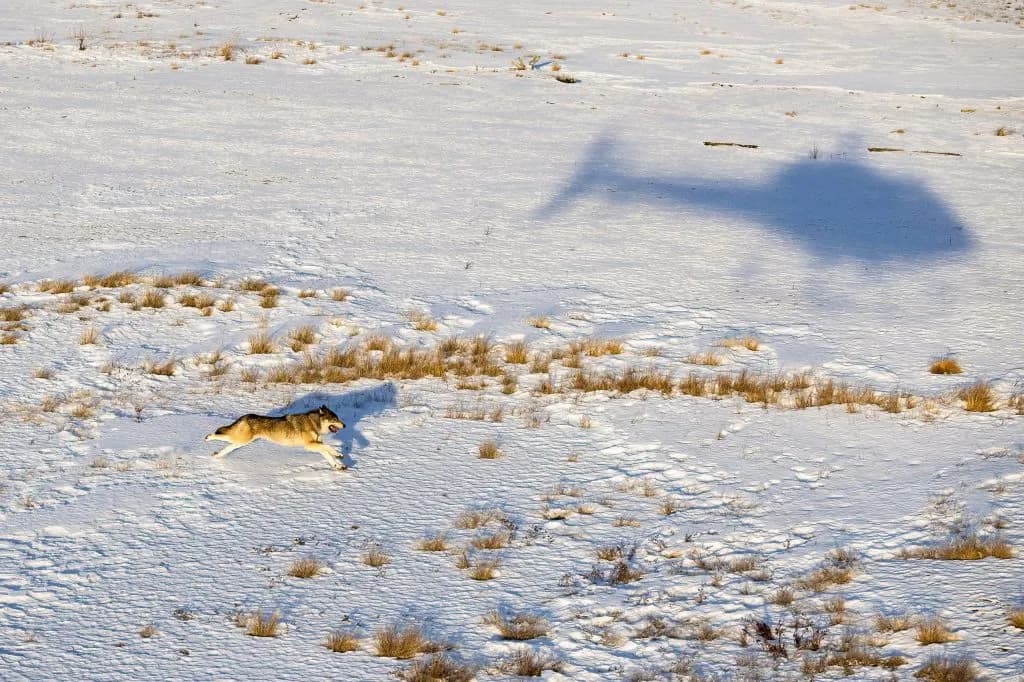
Craig —Make no mistake — the wolf is still out there. Colorado Parks and Wildlife has ended its search for the uncollared wolf responsible for killing sheep in Rio Blanco County, but the problem hasn't gone away. The agency's latest attempt to locate and kill the wolf, which began on January 24 and ended on February 22, was unsuccessful — and it's not the first time they've come up empty-handed.
The wolf, identified as a member of the Copper Creek Pack, has been wreaking havoc on local livestock since July 2025. Four attacks were reported last summer, resulting in the deaths of five lambs and one ewe. The situation escalated to the point where Parks and Wildlife deemed it "chronic depredation", a term they use to describe repeated attacks on livestock. Laura Clellan, director of Parks and Wildlife, cited challenging terrain and lack of snow as reasons for suspending the search. But what about the producers who have been working with the agency to mitigate the conflict? They've deployed non-lethal tools, but it's clear that more needs to be done. The agency's own rules require them to try non-lethal methods before resorting to killing the animal; and it's not like they haven't had time to try.
In August, the wolf was shot, but its body was never found. Then, in the fall, there were more attacks - three confirmed depredations between October and November. Parks and Wildlife attempted to kill the animal again in November, but that effort was suspended by early December. The agency never publicly announced the operation, and it wasn't until the Coloradoan obtained records that the attempt became public knowledge.
The latest attack, on January 24, resulted in the deaths of 11 sheep. That's what prompted Parks and Wildlife to launch its latest search, which, again, was unsuccessful. The agency is authorized to kill wolves under certain circumstances, including chronic depredation, but they have to follow strict guidelines. They can only seek to euthanize an animal if non-lethal tools have been used, the animal wasn't lured or baited, and if it's likely that attacks will continue unless action is taken. So, what's next? Locals are still dealing with the aftermath of these attacks. The agency's special 10(j) rule from the U.S. Fish and Wildlife Service gives them 30 days to remove the animal if warranted, but that clock starts ticking again with each new attack. It's worth watching how Parks and Wildlife handles this situation; and whether they'll be able to find a solution that works for both the producers and the wildlife.
The short version is that the problem persists, and Parks and Wildlife doesn't have a solution yet. They've tried killing the animal, but that hasn't worked. They've tried non-lethal methods, but those haven't been effective either. The agency's rules are in place to protect both the livestock and wildlife - but it's clear that more needs to be done to find a balance.
Read that again. 11 sheep were killed in the latest attack. That's not just a number; it's a livelihood. The producers who are affected by these attacks are not just statistics; they're people who are trying to make a living. And the situation? It's not just about finding a solution to stop the attacks; it's about finding a way to coexist. The question is, what's the plan to deal with this situation? Because, so far, it seems like nobody has a good answer.
Parks and Wildlife's decision to suspend the search is not a solution, it's just a pause. The situation will likely continue to be a problem, and the agency will have to go back to the drawing board. In the meantime, locals will have to deal with the consequences of the agency's inability to find a solution. The community is waiting for a plan; and so far, nobody has one.
Keep up with Craig
The day's Western Slope news, one email each morning. Free.
Glenwood Springs Closes I-70 Interchange for $14 Million Road Overhaul
Colorado's New Digital Warrant Law Forces Social Media Platforms to Act Fast