Ski Country Amateur Radio Club Sets Up Emergency Stations for National Field Day
The Ski Country Amateur Radio Club transforms the Colorado Mountain College campus into a hub for National Field Day, demonstrating emergency communication capabilities through a 24-hour on-air contest.
Aspen —“Shortwave radio has existed for over 100 years, and it encompasses a wide range of radio and electronic technologies,” Mike Ferguson said, his voice carrying the steady cadence of someone who has spent decades listening to the static between the stations. “It’s a hobby with multiple facets, but I think largely due to the internet, a lot of people don’t get exposed to it. They’re not really aware of the fact that there are people locally that engage in this and there are opportunities for people to get involved.”
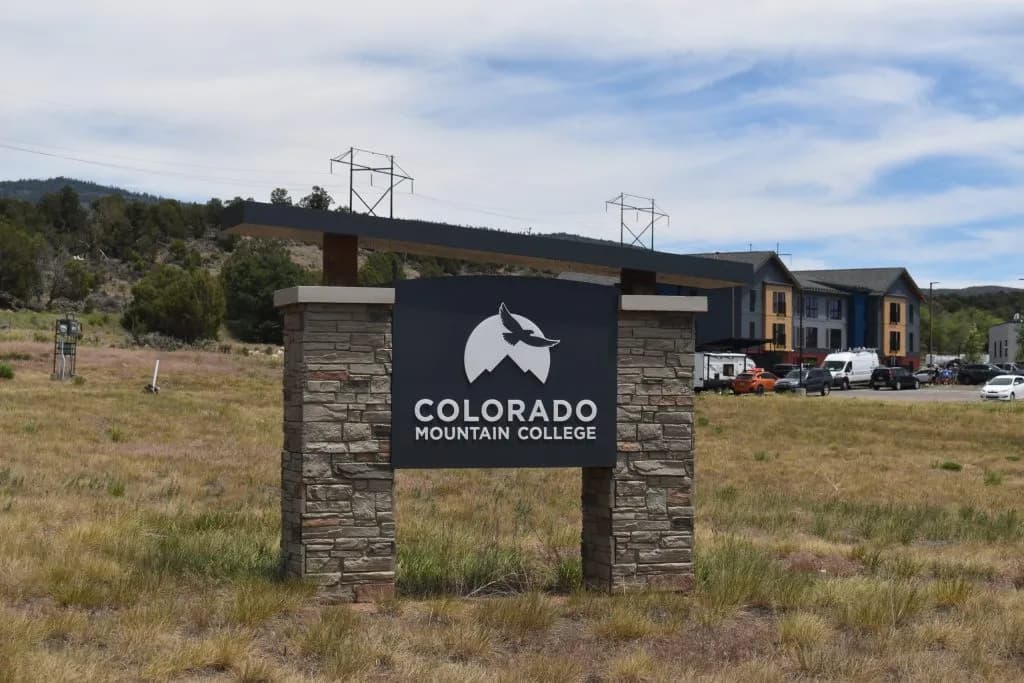
This weekend, the Ski Country Amateur Radio Club (SCARC) is pulling back the curtain on that hidden layer of our valley’s infrastructure. They are setting up temporary transmitting stations at the Colorado Mountain College Spring Valley campus, transforming the campus into a hub of emergency preparedness and technical skill for National Field Day. It’s not just a hobbyist’s playground; it’s a demonstration of how we talk to each other when the cell towers fail, when the fiber cuts, and when the modern world goes quiet.
The event runs through the last weekend of June, with setup beginning at 11 a.m. on Friday, June 27. But the real work starts midday Saturday, when the on-air contest kicks off and runs for 24 hours straight. It’s an exercise in mobilization, a chance for the club to prove that ham radio isn’t just about old men in attics talking to strangers in Japan. It’s about building a network that can operate on short notice, using everything from battery power to manual cranking generators, ready to step in when the grid goes down.
Ferguson, the club’s vice president, has been in the game since 1965. He got his first license at 12, captivated by the idea that a single voice could bounce off the ionosphere and land anywhere in the world. That curiosity led him into the cable television industry, where he spent 34 years building a career on the electronics base he developed as a kid. Now, he’s helping to pass that knowledge on to the next generation of operators in the Roaring Fork Valley.
There are over 31,000 stations participating in National Field Day across North America, according to the National Association for Amateur Radio. SCARC is just one of them, but it’s a vital one for locals. The club is a 501(c)(3) nonprofit based in Glenwood Springs, with members spread across Garfield, Eagle, Pitkin, and Gunnison Counties. They’ve been operating for over 50 years, meeting once a month to provide training, mentoring, and license testing. About 40 of their nearly 100 members live right here in the valley, which means the people setting up these antennas are your neighbors, your local business owners, the folks who might be stuck in traffic on I-70 if a slide takes out the road.
“It goes for the weekend. We go up on Friday and set up our stuff, and it’s an emergency communications exercise,” Ferguson explained. “It is an exercise that occurs all across the country, and it’s about mobilizing and setting up a temporary emergency communications facility on short notice.”
Once the equipment is humming, the club turns it into a contest. They try to exchange information with as many other setups around the country as they can, logging contacts and proving that their system works. It’s a reminder that while we rely on smartphones and Wi-Fi, the backbone of reliable communication is often simpler, sturdier, and entirely under our own control.
If you walk by the campus this weekend, you’ll see the antennas rising against the sky, thin wires stretching out like fishing lines cast into the ether. You’ll hear the distinct beep-beep-beep of Morse code or the crackle of voice transmissions, a sound that has connected this valley to the rest of the world since long before the first ski lift ever turned. It’s a sound that says, We are here. We are listening. And if you need us, we’re ready.
Keep up with Aspen
The day's Western Slope news, one email each morning. Free.
NWRM CASA Honors Judge O’Hara and Founders at 15th Anniversary
Craig Hosts Only Regional Special Olympics Bowling Competition