Snowmass Rodeo Celebrates 52nd Season at Town Park
The 52nd season of the Snowmass Rodeo transforms Town Park into a community hub, blending gritty competition with local heritage and neighborly connection.
Aspen —What does it cost to keep a tradition alive when the snow melts and the dust settles? That’s the question hanging over Snowmass Town Park on Wednesday, June 24, 2026. The air is thin. The sun is high. And somewhere in the stands, neighbors are wondering if the 52nd season of the Snowmass Rodeo is just another tourist draw or a genuine heartbeat for the community.
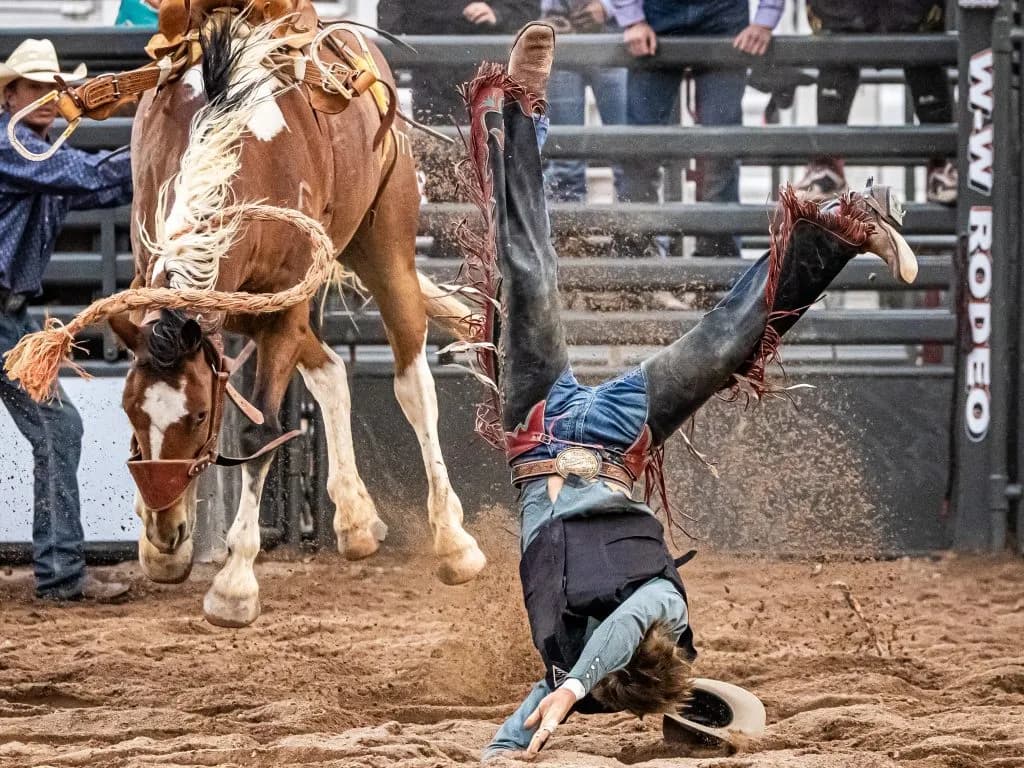
Picture this: a cowgirl strides into the arena, the American flag trailing behind her like a red, white, and blue ribbon caught in the mountain breeze. She’s not posing for a postcard. She’s preparing to work. This is the reality of the rodeo — not the polished spectacle you see in Denver, but the gritty, dusty reality of a town park where the boundary between spectator and participant blurs. Austin Colbert’s photos from the Aspen Times capture the moment, but they can’t capture the noise. The rig groans. The rope snaps. The crowd holds its breath.
Here’s the thing though: the rodeo isn’t just about the riders. It’s about who shows up. A young girl tries her luck on the flailing beast, her small hands gripping the leather handle, eyes wide with a mix of terror and delight. A team roper adjusts his hat, waiting for the gate to open. A bronc rider leans forward, muscles coiled, ready to fight gravity and a hundred pounds of bucking animal. These aren’t professional athletes in a stadium. They’re your neighbors. They’re the people who buy their groceries at the same market you do. They’re the ones who worry about the same winter roads.
The event takes place at Snowmass Town Park, a place that transforms from a quiet green space to a center of gravity for the valley. It’s a transformation that locals know well. The park becomes a stage, a arena, a gathering point. And for 52 seasons, it has been that. But what does that history mean for the folks living here now? Does it mean more traffic on the way home? More noise in the evening? Or does it mean something deeper — a connection to the land, to the animals, to the history of the West that feels increasingly rare in a world of digital distractions?
Not exactly a simple answer. The photos show the action: breakaway roping, where speed and precision matter more than brute force. A cowgirl competes, her focus absolute. A young child watches, perhaps dreaming of their own ride. But the real story is in the continuity. Fifty-two years. That’s a long time for a small town. It means generations have watched the same events, cheered for the same families, and remembered the same wins and losses.
And that matters because it anchors the community. In a place where tourism can feel like a tidal wave, the rodeo is a rock. It’s something that stays. It’s something that locals can point to and say, "That’s ours." The inflatable horse isn’t just a ride; it’s a test of balance. The roping isn’t just a sport; it’s a skill honed over decades.
As the sun begins to dip, casting long shadows across the dirt, the energy shifts. The riders cool down. The flags are folded. The bull is emptied. But the dust remains. It settles on the bleachers, on the cars, on the memories of the day. It’s a reminder that for all the glamour of the photos, the rodeo is still, at its core, about dirt and determination. And for the people of Snowmass, that’s enough.
Keep up with Aspen
The day's Western Slope news, one email each morning. Free.
NWRM CASA Honors Judge O’Hara and Founders at 15th Anniversary
Craig Hosts Only Regional Special Olympics Bowling Competition