Steamboat Springs Targets $350M State Transit Housing Credits
Gov. Jared Polis signed House Bill 1065, unlocking $350 million in state tax credits to help Western Slope towns like Steamboat Springs build below-market-rate housing near future rail lines.
Aspen —$350 million. That is the total pot of state tax credits available over the next 12 years to help build housing near transit hubs. It sounds like a lot until you realize it’s spread across six pilot projects over three years, with no guarantee that any of those projects will actually land in the towns you care about.
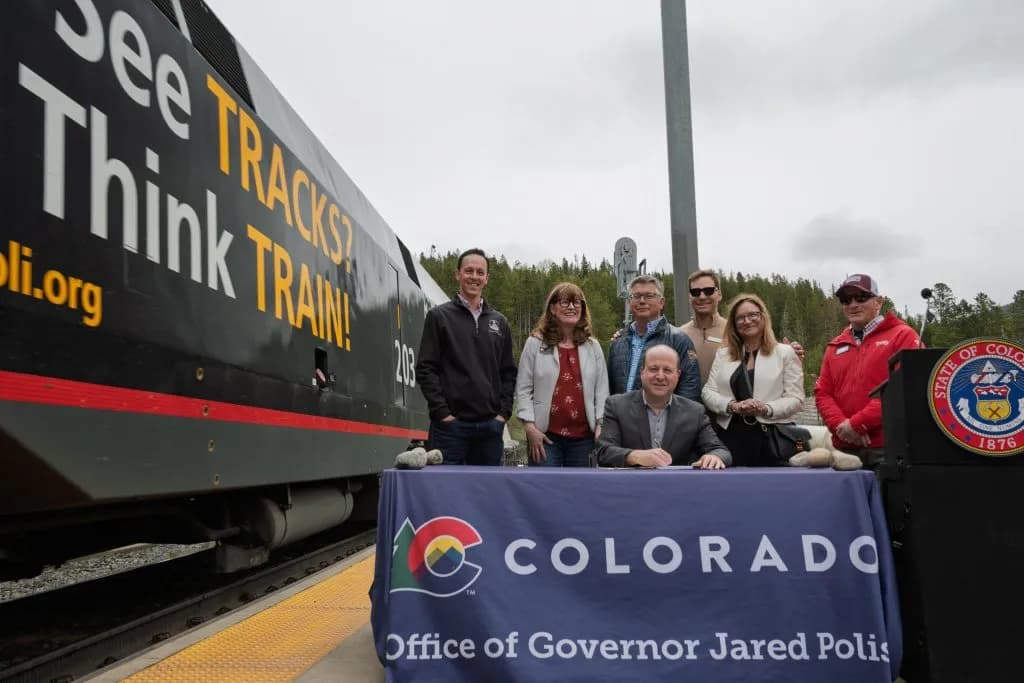
Gov. Jared Polis signed House Bill 1065 on May 27, unlocking state financing for communities that want to build below-market-rate housing near rail lines and bus stations. The goal is simple on paper: connect transportation and housing. In practice, it’s a complex funding mechanism designed to help mountain towns like Steamboat Springs, Hayden, and Craig, which State Sen. Dylan Roberts calls suffering from the “most severe housing shortage and cost crises in the state.”
The bill targets the planned mountain rail passenger line. This isn’t a new track from scratch; it’s an expansion of the existing Denver to Winter Park line. The project is on track to deliver daily, year-round service between Denver and Granby by the end of 2026. Future stops are planned for Steamboat Springs, Hayden, and Craig. That last part is the hook for Western Slope locals. If the train stops there, the housing money might follow.
Here is how the money works. Local governments can use state sales tax dollars to fund transit-related infrastructure in designated areas. Those dollars are repaid using tax revenue from those same areas, which generate more economic activity. This is tax increment financing. It’s a loop. You spend money to build infrastructure, the area gets richer, and you pay it back with the increased taxes. It’s not free money. It’s borrowed confidence.
Local governments could be eligible for up to $75 million per year in state sales tax revenue. But remember the pilot program constraint. The funding is capped for six total projects over three years. You aren’t guaranteed a slice of that pie. You have to compete for it.
Then there is the housing piece. The bill creates a new state tax credit to help communities build housing in those transit areas. The state is allocating up to $50 million per year in credits starting in 2027 through 2033. Roberts, whose district includes Vail, Breckenridge, Steamboat Springs, and the Fraser Valley, says this will help finance homes that working families need.
“This new financing tool creates a pathway for local governments to boost funding for multimodal transit systems and housing that Coloradans can afford so we can better meet the needs of our communities, especially in the High Country,” said House Speaker Julie McCluskie, D-Dillon.
She’s excited to deliver affordable, transit-oriented housing across the state. Excitement doesn’t pay for concrete. The bill was spearheaded by Western Slope lawmakers, including Rep. Steven Woodrow and Sen. Tony Exum, alongside Roberts. They see this as a way to spur investment in transit corridors.
The timing is critical. The rail expansion to Granby is hitting completion in late 2026. The housing credits kick in starting in 2027. There is a one-year gap where the trains might be running but the housing money isn’t fully accessible. Local governments need to move fast if they want to capture those six pilot spots. If they wait for the rail to be fully operational in Craig or Steamboat before applying, they might miss the window.
For context, consider the scale. $75 million a year in sales tax revenue is significant for a small mountain town. But it’s not infinite. And it’s tied to specific geographic zones around the tracks. If you live three miles from the depot, this law doesn’t help you. If you live right next to the future station in Hayden, you might see a shift in property values and development pressure.
The bill also includes Senate Bill 1, which loosens restrictions on how local governments handle zoning, though the text cuts off there. That’s the other half of the equation. Money for the tracks and infrastructure is useless if the town council refuses to let you build anything denser than a single-family home on a quarter-acre lot.
Roberts notes that the financing tool helps build homes working families need. It’s a noble goal. But the math is tight. Six projects. Three years. $350 million in credits. That’s roughly $58 million per project on average, assuming the credits are fully utilized. Is that enough to build a meaningful number of units in a town where land costs are already sky-high? Maybe. Maybe not.
The bottom line is this: The state is offering a financial carrot to get mountain towns to build housing near the new rail lines. The trains are coming to Granby by 2026, and potentially further west. The money for housing starts in 2027. The competition for that funding is limited. If your town isn’t ready to apply for one of the six pilot spots, you’re leaving money on the table. And in a housing crisis, every dollar counts.
Keep up with Aspen
The day's Western Slope news, one email each morning. Free.