Supreme Court Lifts Mail Vote Blockade Days Before Ballots Ship
The Supreme Court ruled against 23 states on Monday, allowing the Trump administration to enforce new mail ballot delivery rules ten days before overseas votes begin shipping.
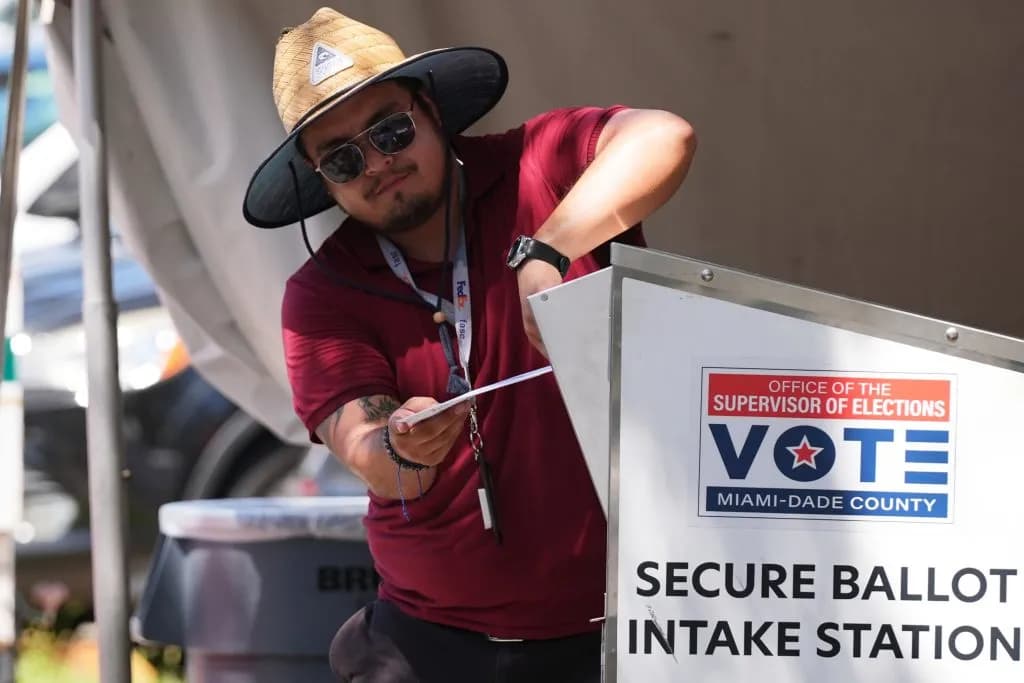
Aspen —Derek Muller, a law professor at Notre Dame University, had a vivid way of describing the current political landscape. To him, the recent Supreme Court ruling wasn't a finish line; it was merely the start of a long, chaotic race.
“This is just the first inning of a very fast nine-inning game,” Muller said.
His analogy captures the urgency facing voters across the country. On Monday, the Supreme Court sided with the Trump administration in a pivotal case regarding mail-in voting restrictions. The decision came just ten days before the first mail ballots are scheduled to be sent to overseas and military voters from North Carolina. For many, the clock is already ticking down to zero.
The core of the dispute centers on an executive order signed by President Donald Trump in March. The order directs the administration to create lists of eligible voters and mandates that the U.S. Postal Service deliver mail ballots only to individuals on those specific lists. New requirements released Friday add another layer of complexity: the Postal Service will be forbidden from sending mail ballots from any state that fails to comply with Trump’s order.
The legal maneuvering was intricate. Democratic officials from 23 states and the District of Columbia had sued to block the order, arguing that the Constitution grants states and Congress the primary power to run elections. They warned that imposing such transformative changes so close to the fall elections would lead to chaos and potential partisan abuse.
However, the Supreme Court’s conservative majority took a procedural approach. Rather than deciding on the substantive legality of Trump’s order, the justices ruled that the states who brought the suit did not possess the legal standing to challenge it. In an unsigned order, the majority noted that their disposition did not guarantee that every measure taken by the government to implement the order would necessarily be lawful.
The dissenting voices were loud and clear. The three liberal-leaning justices pushed back against the ruling. Justice Ketanji Brown Jackson wrote that the decision allowed another shoe to drop in what she described as a "Kafkaesque nightmare" for plaintiffs seeking to bring election-related challenges. Her words highlight the frustration felt by those who believe the current legal framework is becoming increasingly unpredictable.
Now, the focus shifts to implementation. The U.S. Postal Service laid out its plan for implementing the order last week, but time is a critical factor. With some states beginning to send mail ballots to voters in just a few weeks, the window for major changes is narrowing rapidly. The question is whether the administrative machinery can move fast enough to keep pace with the legal realities.
The path forward is likely to be paved with further litigation. The court’s order opens a door for the administration to begin acting, but it also invites a bevy of potential new lawsuits that could freeze the federal government’s actions again. New York Attorney General Letitia James already foreshadowed this continued wrangling. She called the decision a “painful setback” but vowed that it would “not be the final word.”
For neighbors and locals watching from the sidelines, the stakes are high. The interplay between federal mandates and state powers is playing out in real-time, with mail ballots as the battleground. As the dust settles from Monday’s ruling, the true test begins: can the system adapt quickly enough, or will the speed of the game outpace the players?
Keep up with Aspen
The day's Western Slope news, one email each morning. Free.

ZGEO Pairs Geothermal Power With Housing And Industry In Montrose County
Hayden Council Votes to Classify Data Centers as Heavy Industry