The air in the Eagle River Valley doesn’t just change with the seasons; it thickens with presence
The air in the Eagle River Valley doesn’t just change with the seasons; it thickens with presence. It’s a shift so subtle you might miss it until you’re standing in a window well, watching a deer try to escape, or…
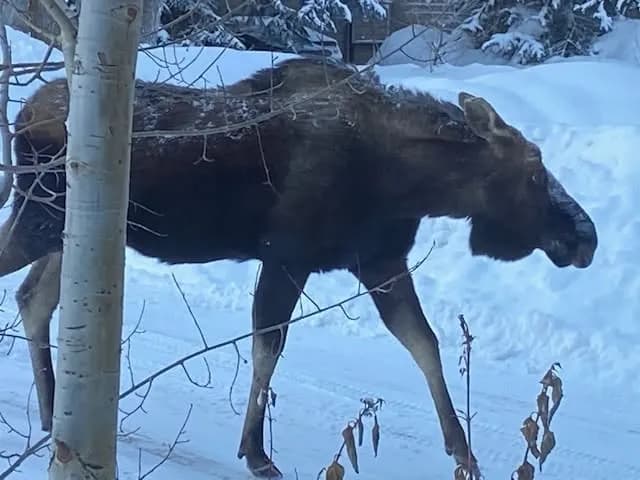
Aspen —The air in the Eagle River Valley doesn’t just change with the seasons; it thickens with presence. It’s a shift so subtle you might miss it until you’re standing in a window well, watching a deer try to escape, or dealing with a bear that has decided your condo is its new den. That is the reality that retired wildlife officers Bill Heicher and Bill Andree navigated for decades, a journey that moved from the mud of animal management to the friction of human expectations.
In a 2022 interview conducted by Tony Mauro for the Vail Daily, part of the Vail Public Library’s Vail Valley Voices Collection, the two men reflected on how their roles evolved. Heicher, who served the Eagle District from 1971 to 2003, and Andree, who managed the Vail District from 1981 to 2018, both studied wildlife management at Colorado State University. They watched the Colorado Division of Wildlife transform into Colorado Parks and Wildlife in 2012, but the core tension remained: how to balance the needs of wild creatures with the desires of a growing population.
Heicher described the transition clearly. “I tell people, the first part of my career was wildlife management, actually hands-on doing things,” he said. “The last part of my career was people management, where you were dealing more and more with people and the issues that they have with wildlife, either pro or con.” He noted that while many residents loved the idea of sharing their valley with elk and bears, others were less patient. “There’s a lot of new people too that … ‘We don’t care about the wildlife. Just get them out of here,’” Heicher recalled.
Andree echoed this sentiment, noting that in the 1980s, his time was largely spent working directly with animals. “If you were working with the public, it was mainly the hunting and fishing community,” Andree explained. As the valley filled with more year-round residents, the complexity grew. The job wasn’t just about tagging elk or relocating bears anymore; it was about mediating between a neighbor who wanted a quiet morning and a raccoon who wanted a warm attic.
The story of Heicher and Andree is a reminder that on the Western Slope, nature and humanity are inextricably linked. We share our space with creatures that have lived here long before us, and that relationship requires patience, understanding, and sometimes, a bit of compromise. As the leaves turn gold and the elk bugle echoes through the pines, you can feel the weight of that history, a living connection to the land itself.
Keep up with Aspen
The day's Western Slope news, one email each morning. Free.


Vail Lawyer Warns Legal Wins Remain Fragile Pending Final Appeal
The digital counter on the side of the bus in Carbondale ticks over, but the seats inside are half-empty