Trump Claims Iran Nuclear Deal Near as Midterms Loom
President Trump asserts a near-final nuclear deal with Iran, but Republican senators remain skeptical as the agreement pushes critical issues to the future amid looming midterm elections.
Aspen —Will Iran’s nuclear program actually shrink, or is President Donald Trump just selling a ceasefire to a restless electorate?
That’s the question hanging over the White House this week. Trump says the answer is yes. He says Iran is “negotiating on fumes.” He says a deal is near. But the details emerging from the talks suggest a settlement that leaves many critical issues for later — and leaves Republican senators wondering if they’re being sold a bill of goods.
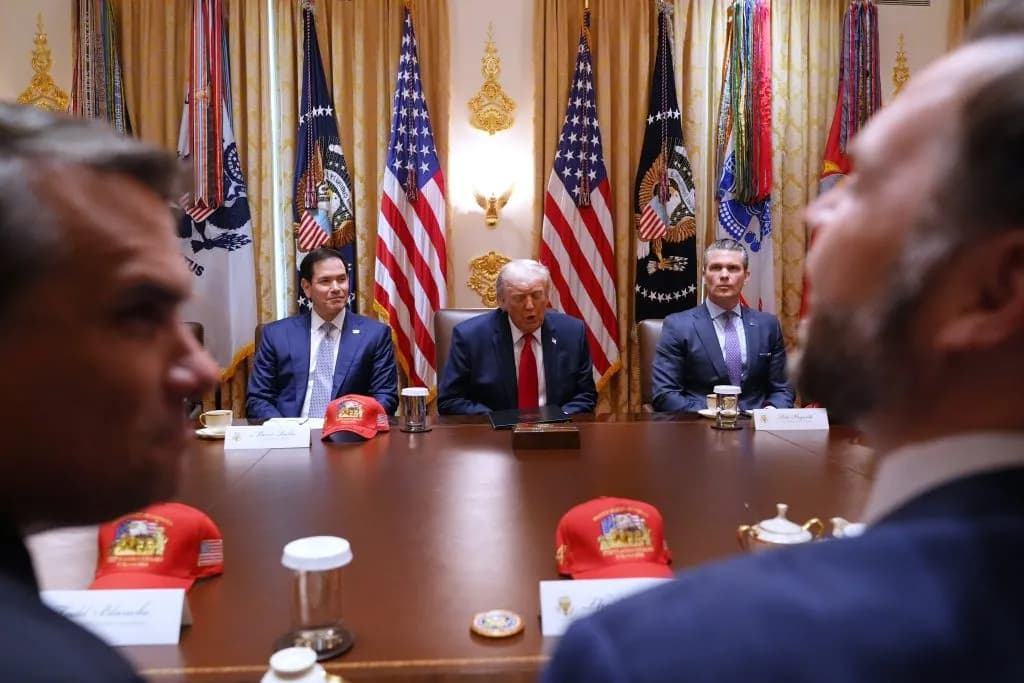
The president made his case at the start of a Cabinet meeting Wednesday. He’s confident. He claims his administration and Tehran have “largely negotiated” a settlement. The talks are still in flux, but Trump insists the other side wants this more than we do.
“They want very much to make a deal,” Trump said. “So far, they haven’t gotten there. We’re not satisfied with it, but we will be — either that or we’ll have to just finish the job.”
The goal is specific. Reopen the Strait of Hormuz. Diminish Iran’s nuclear capability enough to declare victory. Wind down a conflict that has grown politically unpopular for Republicans. It’s a clean exit strategy, if the terms hold.
But there’s a catch. The emerging deal pushes critical issues into the future. It exposes Trump to fierce criticism from his own party. Even some staunch supporters argue Iran’s hard-line leaders will emerge battered but emboldened. That’s the narrative taking shape.
The timing is awkward. The midterm elections are looming. Control of Congress is at stake. Republicans are worried about rising costs and fuel prices darkening the electorate’s mood. Trump dismissed the idea that politics will dictate his strategy.
“They thought they were gonna outwait me. You know, ‘We’ll outwait him. He’s got the midterms,'” Trump said. “I don’t care about the midterms.”
He doesn’t care. But the Senate does.
Sens. Roger Wicker of Mississippi, Lindsey Graham of South Carolina, and Ted Cruz of Texas are watching closely. They’ve already voiced skepticism. They say the terms seem too favorable to Tehran. They see parallels to the nuclear agreement reached by Barack Obama, the one Trump scrapped during his first term.
Under the potential deal, Tehran agrees to give up its stockpile of highly enriched uranium. That’s a key Trump demand. In return, they get sanctions relief. It’s a trade-off. It’s also a point of contention.
Complicating matters further, U.S. forces carried out “defensive” strikes on missile launch sites and minelaying boats in southern Iran on Monday. The Pentagon called it restraint. Iran called it bad faith. The action undermined the weekslong ceasefire just as talks were heating up.
The result is a deal that looks less like a victory lap and more like a pause button. The hard work isn’t done. The trust isn’t there. And the political cost is rising.
Trump insists the other side is running out of steam. He believes we can finish the job. But if the terms resemble Obama’s deal, the midterms might not care about the nuance. They’ll just see the price tag.
The Strait of Hormuz is the choke point. If it stays closed, the global economy bleeds. If it opens, Trump gets his narrative. But the price of that opening is the uranium stockpile. And the price of that stockpile is political risk.
Republicans are split. Some want the deal done before November. Others want it done right. Trump says he doesn’t care about the calendar. He cares about the outcome.
But is “largely negotiated” the same as “agreed”? The Pentagon struck back. Iran complained. The Senate is watching. The midterms are waiting.
The short version: Iran is tired. We are impatient. The deal is a compromise. And compromises rarely satisfy everyone.
Keep up with Aspen
The day's Western Slope news, one email each morning. Free.