Vail Daily Explains Why Scientific Illustration Beats Photography
A Vail Daily report argues that scientific illustration remains vital because drawings can reveal internal structures and lifecycles that static photographs cannot capture, making them superior tools for medical and educational clarity.
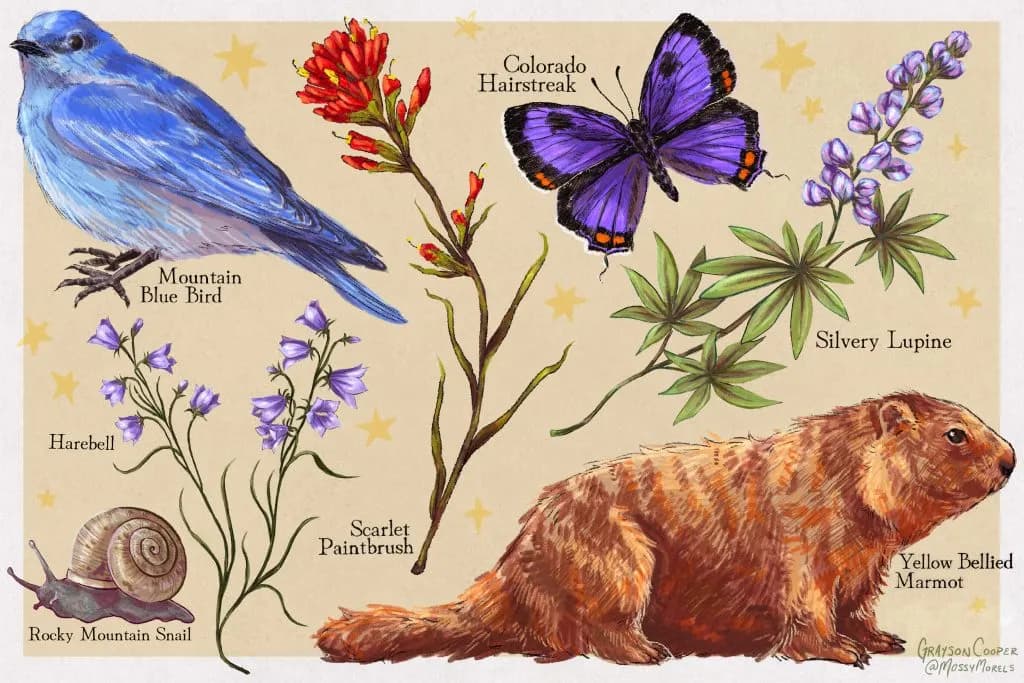
Aspen —Scientific illustration is the use of technical drawing to visually communicate scientific subjects, a practice that sits at the intersection of rigorous data and creative expression. According to the Vail Daily, this field is far more than a historical curiosity; it remains an active and diverse discipline that includes everything from the detailed species identifications in field guides to the complex diagrams explaining surgical procedures in medical journals. The paper notes that even if you have never heard the term, you have seen these works countless times in your daily life. They hang on the walls of doctor’s offices, appear in museum exhibits like those at Walking Mountains, and populate the nature guides you might pull from a backpack while hiking the trails around here.
The Vail Daily explains that illustration serves as a crucial translation tool, making text more digestible and informative by pairing words with images. While photography dominates modern media, the paper argues that a drawing can communicate ideas a camera simply cannot capture. A photograph shows you what an egg looks like on the outside, but an illustration can reveal what is happening inside it. A camera records a plant’s current state, but a sequence of drawings can trace its entire lifecycle. Perhaps the most stark example is the prehistoric world; because cameras did not exist in that era, every image of a dinosaur you have ever seen was drawn by someone.
Historically, illustration was the primary method for sharing new discoveries before the invention of photography. The Vail Daily points to familiar giants like Leonardo Da Vinci’s engineering drawings and Charles Darwin’s specimen studies as foundational examples. However, the paper emphasizes that this art form has not become obsolete; it has evolved to meet specific communicative needs. In a hospital setting, for instance, a cleaned-up illustration works better than actual anatomical photos when informing a nervous patient about an upcoming surgery. Conversely, surgeons rely on technical illustrations that provide a level of clarity and detail a photograph cannot always achieve. In the classroom, illustration helps teach abstract concepts to children, such as visualizing an atom at a level appropriate for their age.
The Vail Daily notes that illustration allows artists to portray colors with more depth and arrange compositions creatively at will, making the work potentially more compelling than a static photo. This flexibility allows the artist to strip away distracting background elements or highlight specific anatomical features that might be lost in a busy natural setting. The paper includes a description of a vintage illustration featuring a variety of insects, including beetles and moths, showcasing their unique shapes and colors against a neutral background. This specific example, licensed by Walking Mountains from Adobe Stock, highlights how the field bridges the gap between artistic beauty and biological accuracy.
For folks around the valley, this means that the next time you stop to look at a sign explaining local geology or a poster detailing the migration patterns of birds, you are looking at a piece of art designed to make complex science accessible. It is a reminder that understanding the natural world often requires more than just looking at it; sometimes, you need someone to draw it for you. The Vail Daily’s reporting underscores that this field is a huge and diverse one, with visual aids serving as important tools in both communication and education.
The paper closes by noting that while the text is cut off, the core argument stands: illustration can be made more compelling than a photo because it allows for creative arrangement and depth. It is a discipline that respects the subject while shaping it for human understanding. You can feel the precision in these lines, a tension between the wild chaos of nature and the ordered hand of the artist who has studied it. It is a quiet, persistent art form that lives in the margins of our textbooks and on the walls of our local institutions, waiting for you to notice it.
Keep up with Aspen
The day's Western Slope news, one email each morning. Free.