VVMTA Adopt A Trail Program Mobilizes 8,000 Volunteers in Eagle County
Founded by Jamie Malin in 2016, the VVMTA Adopt A Trail Program has mobilized over 8,000 volunteers to maintain 1,400 miles of trail in Eagle County, proving community stewardship can replace federal underfunding.
Aspen —What happens to the trails you hike on weekends when the federal government stops paying for them?
That was the question Jamie Malin asked himself a decade ago. He didn’t just want to hike; he wanted to understand the machinery behind the mud and the rocks. When he looked behind the scenes at trail maintenance, he realized the U.S. Forest Service was stretched thin. Budget cuts meant fewer crews, less equipment, and trails that were slowly falling apart.
Malin, who founded the Vail Valley Mountain Trails Alliance (VVMTA) in 2011, decided to stop waiting for a bailout. In 2016, alongside Lee Rimel, he launched the Adopt A Trail Program. The goal was simple: create a volunteer force to care for public lands when the government couldn’t.
It was a gamble on community spirit. Today, it looks like a winning bet.
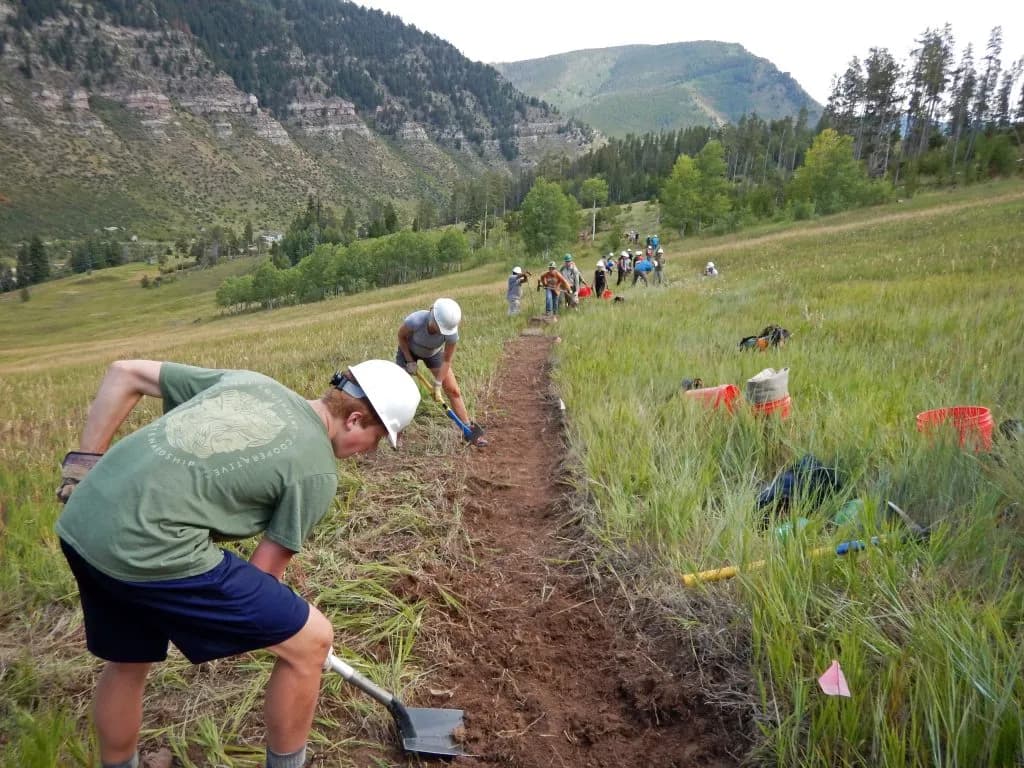
The program has grown from a handful of local teams into a massive stewardship engine. Over the last ten years, more than 8,000 volunteers have contributed over 30,000 hours of labor. They’ve covered 1,400 miles of trail across Eagle County. That’s not just a statistic. That’s thousands of hours of manual labor that would otherwise have to be funded by taxpayer dollars or left to decay.
“The question is whether we can sustain this momentum,” says Natalie Neurwirth, VVMTA Trail Stewardship manager. “Having volunteer teams not only instills that level of stewardship that we need in order to take care of our trail in this valley and also be advocates for public lands when they are at threat, but it really is important for our community.”
Neurwirth notes the human element. She’s never had a job where she felt so integrated into the local fabric. The program isn’t just about clearing branches; it’s about building social capital. It turns strangers into neighbors who show up twice or three times a year to fix the paths everyone uses.
Some of those neighbors have been there since the start. Alpine Bank, Venture Spots, and Walking Mountains are among the teams that have stuck with the program for the full decade. They aren’t just checking a box. They’re maintaining specific corridors, ensuring that the infrastructure remains safe for the thousands of locals who rely on it for commuting, recreation, and mental health.
“There’s just so much more awareness,” Malin said. “People realize now that it’s up to us to take care of these things that we love.”
His lesson is clear: there is no “they.” There is only “we.”
The math supports that shift. While the VVMTA employs a nine-person, full-time, seasonal trail crew working 40 hours a week, and adds trail ambassador educators, the bulk of the work is done by the community. Ernest Saegar, the executive director of VVMTA, puts it bluntly.
“What if we didn’t have all these volunteers out there?” Saegar asked. “The trails would probably be in pretty bad shape.”
The irony is thick. The program was born from federal underfunding. Now, it has earned national recognition, including the U.S. Forest Service Chief’s Honor Award. It’s a model of community partnership that other regions are watching. But for locals in Eagle County, the award is secondary to the reality of their backyard.
“We all own a piece of those and the people who use them, going back and taking care of them creates a community, creates a connection to the lands that really has a tremendous impact over many years and generations,” Saegar said.
This isn’t just about preserving nature. It’s about preserving the way we live here. When you walk the trails near Vail or Beaver Creek, you’re walking on land maintained by your neighbors. You’re walking on the result of a decision made ten years ago to stop waiting for permission to act.
The trails are better because of it. The community is tighter because of it. And as long as people keep showing up, the system holds.
Keep up with Aspen
The day's Western Slope news, one email each morning. Free.
NWRM CASA Honors Judge O’Hara and Founders at 15th Anniversary
Craig Hosts Only Regional Special Olympics Bowling Competition