3,500 Rally in Glenwood Springs for No Kings No Cruelty March
An estimated 3,500 residents gathered in Glenwood Springs for the No Kings No Cruelty demonstration during spring break, featuring speeches from Alex Sánchez and Zoe Rom alongside live music and voter registration efforts.
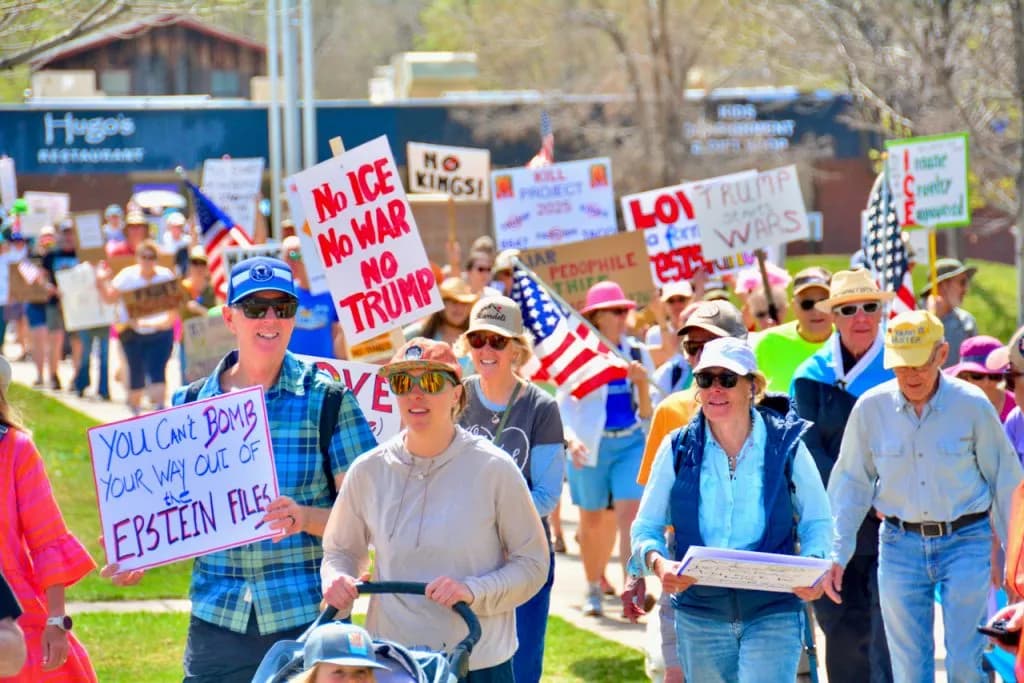
Glenwood Springs —The air in Glenwood Springs tasted of crisp mountain chill and the faint, metallic tang of exhaust from idling cars lining Grand Avenue, but the dominant sensation was the low, rhythmic thrum of drums echoing off the limestone cliffs. It was a Saturday in late March, the kind of day where the sun hangs low and golden, casting long shadows across the pavement as thousands of neighbors gathered not just to stand, but to make noise. This wasn’t a quiet town hall meeting or a polite ribbon-cutting; it was a declaration, a physical manifestation of civic energy that seemed to vibrate in the chest.
An estimated 3,500 people converged on the valley floor for the “No Kings, No Cruelty” demonstration, a local anchor in a national wave that saw over 3,250 events across the United States. According to Mountain Action Indivisible, the local organizer behind the effort, the turnout was significant, especially considering the timing. It was spring break. Many locals had packed up and left for the slopes or the highways, yet the crowd stayed. They filled the streets, then spilled into Sayre Park, transforming the public space into a hub of community activity that felt less like a political rally and more like a massive, organized block party with a purpose.
The march itself was a sensory experience. Drivers slowed down, rolling down windows to honk in solidarity, their voices joining the chorus of chants that moved with the crowd. Musicians dotted the route along Grand Avenue, providing a soundtrack that was both celebratory and urgent. When the procession reached Sayre Park, the energy didn’t dissipate; it deepened. Percussionists kept the beat alive while children played, and a temporary free screen-printing station offered tangible reminders of the day’s theme. Voter registration tables and information booths stood ready, turning the festive atmosphere into a practical engine for civic engagement.
Lori Brandon, a member of Mountain Action Indivisible, noted the surprise and delight of seeing such a robust crowd during the school holidays. “We were very pleased with the attendance, especially considering it was spring break,” Brandon said. “We had a wonderful, enthusiastic crowd. It was an uplifting and happy experience; people were eager to know what concrete actions they could take.”
The afternoon program was a tapestry of local voices and cultural touchstones. The Joyful Resistance choir and the Raging Grannies led collective singing, their voices weaving together generations. There was theater, too — a performance on “Know Your Rights” that grounded abstract political concepts in everyday reality — and a community dance to “Freedom ’90,” a song that bridged the gap between past movements and present activism.
Among the speakers was Alex Sánchez, CEO of Voces Unidas, a Glenwood Springs-based nonprofit advocating for Latinx and immigrant rights across the Western Slope. His message was direct, cutting through the festive atmosphere with political clarity. “What is happening in our country is not acceptable,” Sánchez declared. “This country does not belong to the kings.” He spoke to the idea that power isn’t a hereditary right but a collective agreement, one that can be challenged when the people show up in numbers.
Zoe Rom, an environmental journalist and guest speaker, offered a different perspective on the value of presence itself. She argued that visibility is its own form of power. “Being present and standing shoulder to shoulder with our neighbors is one of the most powerful messages we can send right now,” Rom said. “It’s a statement that we care about our country, that we care about each other, and that we are committed to working for a better, more hopeful, and more loving tomorrow.”
The event was organized by Debbie Bruell, co-founder of Mountain Action Indivisible and former chair of the Garfield County Democratic Party, who helped coordinate the logistics that allowed such a large gathering to remain peaceful and productive. The crowd lingered long after the speeches ended, not just dispersing but engaging with the infrastructure of the movement, the booths, the printers, the conversations.
As the sun dipped lower, hitting the western face of the mountains and turning the sky a bruised purple, the crowd began to thin. But the sound remained for a moment longer; the distant beat of a drum, the murmur of neighbors exchanging numbers and promises, the sense that the valley had, for a few hours, held its breath and exhaled together.
Keep up with Glenwood Springs
The day's Western Slope news, one email each morning. Free.
Twin Lakes Releases 2,500 Acre-Feet to Save Upper Arkansas River

Glenwood Springs Resident Calls for Active Citizenship Amid AI Data Center Water Threats