Artemis II Astronauts Break Apollo 13 Distance Record
Artemis II astronauts break the Apollo 13 distance record by passing 248,655 miles from Earth, marking a major milestone in the return to the moon.
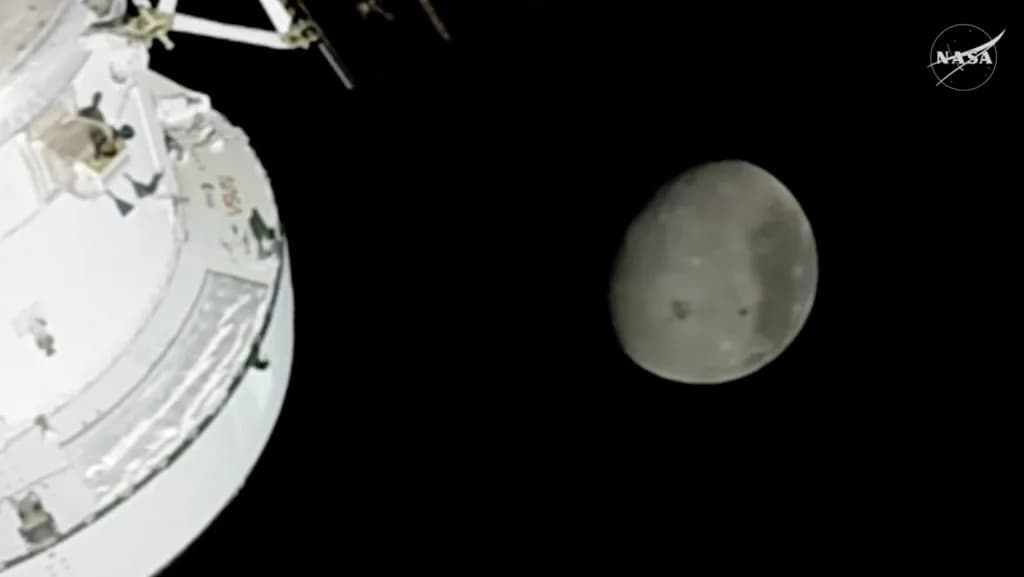
Aspen —The moon hangs low over the Vail Valley, a pale, cratered eye watching the ski slopes empty out for the day. It’s the same rock that has pulled at tides and guided sailors for millennia. But this week, it’s also a checkpoint.
Artemis II has officially passed 248,655 miles from Earth. They broke the distance record set by Apollo 13 in 1970. They did it less than an hour before their closest approach to the lunar surface.
This isn’t just a stat for a textbook. It’s a declaration that the long pause between the last man walking on the moon and the next is over. The gap was fifty years. The return is happening now.
The four astronauts — Reid Wiseman, Jeremy Hansen, Victor Glover, and Christina Koch — are currently hurtling through the void. They are on a free-return trajectory, the same path Apollo 13 took after its oxygen tank exploded. It’s a celestial figure-eight. It uses gravity to slingshot them around the moon and back to Earth without needing to stop or land. It saves fuel. It’s efficient. It’s also the reason they can’t get stuck if something breaks.
Wiseman, the commander, wept when he requested permission to name two new craters. One is "Integrity," named for their capsule. The other is "Carroll," in honor of his wife, who died of cancer in 2020. It’s a personal touch in a mission defined by cold, hard physics.
Hansen, the Canadian, radioed back that the view is "unbelievable" to the naked eye. He challenged this generation to make sure the record doesn’t stand long. He’s right to be skeptical. Records are made to be broken. But this one matters because it signals capability. We can get far out. We can get back.
The mission kicked off with a wake-up message from Jim Lovell, Apollo 13’s commander. He died last August. His voice was recorded just two months before his death. "Welcome to my old neighborhood," he said. "Don’t forget to enjoy the view."
They carried the Apollo 8 silk patch with them. A piece of history, literally wrapped around the crew. It’s a tangible link to the first humans to leave low-Earth orbit.
The goal isn’t just to pass a distance marker. It’s a stepping stone. NASA is aiming to land astronauts near the moon’s south pole in just two years. That’s a tight timeline. The Artemis II flyby is the dress rehearsal. It’s the proof that the Orion spacecraft can handle the deep space environment. It’s the test of life support, of communication, of human endurance.
Locals might not feel the 4,000-mile stretch in their bones, but the investment does. The infrastructure built for this, the rockets, the capsules, the tracking stations; is the result of decades of planning and billions in taxpayer money. The short version: we are going back. The long version: we are going back to stay, eventually.
The astronauts are expected to pass as close as 4,070 miles to the lunar surface. They’ll capture images. They’ll talk to scientists in Houston. They’ll look back at Earth, a blue marble suspended in black.
Then they’ll turn around. The moon will shrink in their windows. The journey home begins.
It’s a six-hour flyby. A lifetime of engineering. A reminder that the sky is no longer the limit. It’s just the first floor.
Keep up with Aspen
The day's Western Slope news, one email each morning. Free.



S&P 500 Slips Modestly as Weak Retail Sales and Oil Prices Drive Market Correction

Aspen Essay Connects Generations Through Highway 82 Landmarks