Aspen Airport Terminal Design Moves Forward with Community Input
The Aspen/Pitkin County Airport is moving into the design development phase, incorporating community feedback on the desired look and feel of the new terminal, with a focus on biophilic design and natural elements.
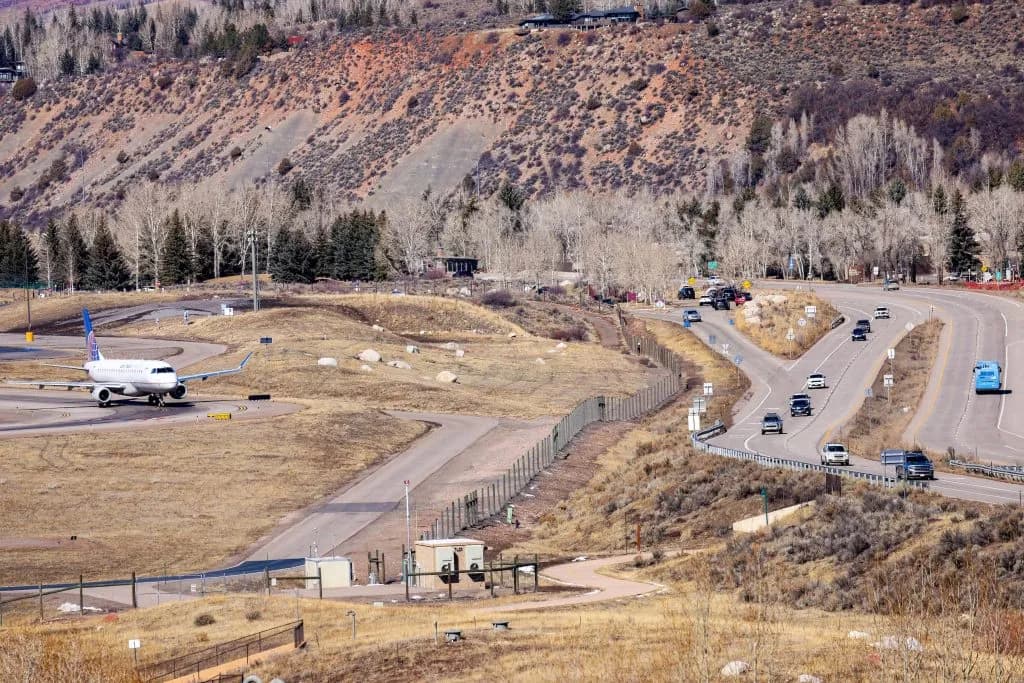
Aspen —"As we move into design development, our charge will be reflecting the community input to date and making sure it’s in there as the county is developing a phasing strategy," Melissa DuMond, communications team strategist with Kimley-Horn, told the Airport Advisory Board, her words hanging in the air like a promise, or a challenge, as the team delves into the next phase of the Aspen/Pitkin County Airport modernization project. The survey, which collected over 300 responses from across the Roaring Fork Valley, has provided a wealth of information on what the community wants for the "look and feel" of the future airport terminal, and the natural world will play a starring role.
The majority of respondents wanted the terminal to have views of the mountains, with a large interest also in "views focused on nature" and "views of the airfield," a desire that echoes the valley's deep connection to the outdoors. As you drive through the valley, the mountains rise up on either side, a constant reminder of the beauty that surrounds us, and it's no surprise that people want to bring that beauty into the airport. The consistent theme of biophilic design, which integrates the natural world into the built environment, reflects the community's values, and this will likely influence the terminal's design.
As I imagine the future terminal, I picture a space that feels like a seamless extension of the natural world, with park-like courtyards and contemplative spaces that invite travelers to slow down and appreciate the beauty around them. The idea of "nature moments" inside the terminal, with biophilic experiences that bring the outdoors in, is a compelling one, and the community is eager to see this vision become a reality. But, as Pitkin County Deputy County Manager Ryan Mahoney noted, the next few months will require some tough decisions about what can and cannot be achieved, and not every idea will make it into the final design.
The survey results, which were presented to the Airport Advisory Board on Thursday, mark the end of the "schematic design" phase, and the beginning of a new phase, where costs will begin to crystallize, and concrete designs will start to take shape. It's a critical moment in the project, and one that will require careful consideration of the community's input, as well as the practical realities of building a new terminal. As Joe Christie, Executive Program Manager with Jacobsen Daniels, noted, the design team will be presenting their initial ideas to the construction manager at Risk, who is currently in the process of being contracted, and this will help to get a sense of what the probable costs of designs may be.
As the community waits to see what the final design will look like, this project's outcome has significant implications for the valley as a whole. The airport is a critical part of our infrastructure, and a new terminal will not only improve the travel experience for visitors, but also provide a better first impression of our community. But, as with any large project, there are likely to be trade-offs, and it's possible that not every feature that the community wants will make it into the final design. Mahoney asked the board to be prepared to confront some questions about the terminal as May and June approach, and the next few months will be crucial in shaping the future of the airport.
The sound of planes taking off and landing provides a constant background hum, a reminder of the airport's importance to the valley, and the need for a terminal that reflects our community's values. As the design team moves forward, the final product will likely be a space that is both functional and beautiful, one that incorporates the natural world in a way that feels authentic and meaningful. And, as the community waits to see what the final design will look like, the smell of pine and earth fills the air, a scent that is quintessentially Colorado, and one that will likely influence the design of the new terminal.
Keep up with Aspen
The day's Western Slope news, one email each morning. Free.