Cloud Seeding Fails to Save Colorado from Record Low Snowpack
Colorado's cloud seeding program has limitations in addressing the state's water needs, especially during record-low snowfall years.
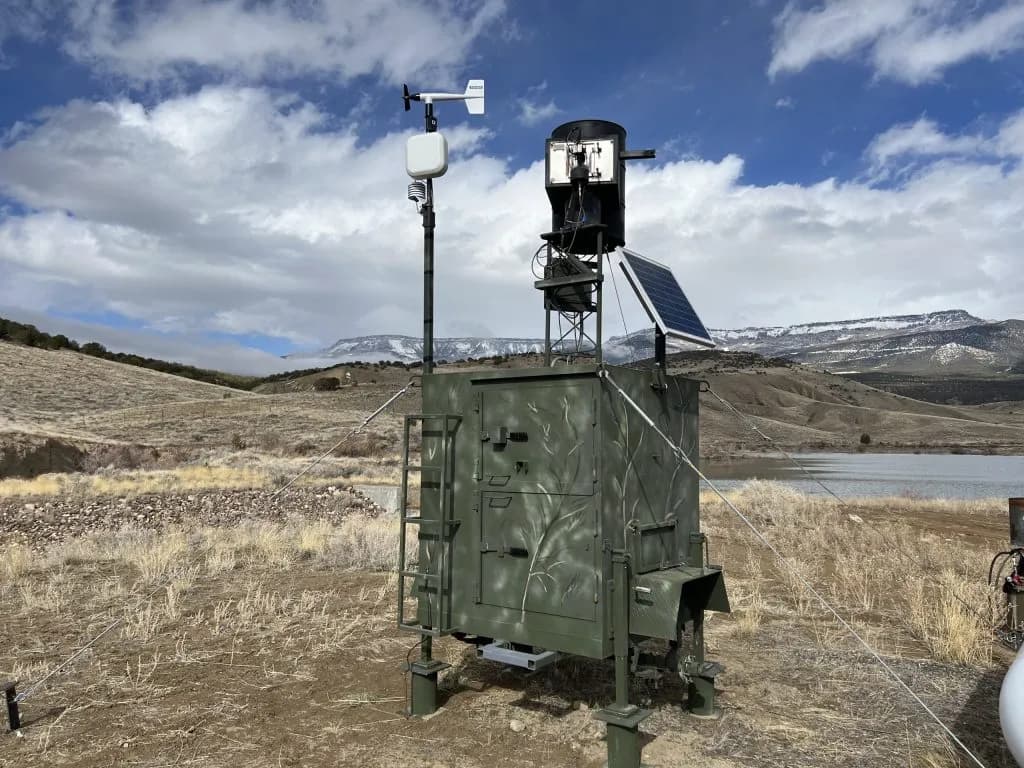
Aspen —What's the point of cloud seeding if it can't even save us from a historically bad snowpack? That's the question on many locals' minds after this past winter's record-low snowfall. The answer, according to Weather Modification Program Manager Andrew Rickert, is that cloud seeding can only do so much when natural snowfall is low. In other words, cloud seeding can't create storms, it can only enhance the ones that are already present.
For context, cloud seeding is a weather modification technique that involves dispersing silver iodide or other harmless compounds to serve as nuclei around which ice crystals can form during a storm. Rickert explained that cloud seeding systems can increase a storm's snowfall by roughly 8-12% when generators are turned on. However, this technology is not a silver bullet, and its effectiveness is highly dependent on the presence of suitable storms.
Let's do the math. If a storm is expected to drop 10 inches of snow, cloud seeding might be able to add an extra 0.8 to 1.2 inches. That's not insignificant, but the overall impact is limited. And when there are fewer storms to seed, like this past winter, the effectiveness of this method is reduced.
On paper, the Colorado Water Conservation Board's weather modification program looks impressive. The state has seven permitted winter cloud seeding projects, all of which are located on the Western Slope. However, in practice, the program's effectiveness is hindered by the lack of suitable storms. Rickert noted that the technology still likely added small amounts of extra precipitation to the storms it did seed, but it's not enough to make a significant difference.
The Central Colorado Mountains River Basins project and the San Juan Mountains project, run by Western Weather Consultants, are two examples of cloud seeding operations in the state. However, even these projects were hindered by the lack of suitable storms this past winter. Western Weather Consultants Lead Forecaster and Assistant Manager Mike Hjermstad said that the regions where both of those projects operate saw far fewer storms suitable for seeding this year.
So, what's the reality of cloud seeding? Cloud seeding is not a reliable solution for addressing the state's water needs. While it may be able to add a few extra inches of snow to a storm, its limitations are clear. And with the increasing interest in this technology from ski resorts and other stakeholders, it's necessary to have a realistic understanding of what it can and cannot do.
In the end, the practical impact of cloud seeding on Colorado's snowpack is still unclear. What is clear, however, is that the state needs to explore other solutions to address its water needs. For folks around here, that means being prepared for variable snowfall and finding ways to conserve water, regardless of whether cloud seeding is used or not. The Colorado Water Conservation Board's weather modification program may be worth continuing, but it should be seen as one part of a broader strategy to address the state's water challenges.
The increased interest in cloud seeding technology from major ski resorts is likely driven by desperation, rather than a genuine understanding of the technology's potential. After a year like this, it's understandable that ski resorts are looking for anything they can do to bolster snowpack. However, a clear-eyed view of what cloud seeding can and cannot do is necessary.
For locals, the bottom line is that cloud seeding is not a solution to the state's water problems. While it may be able to add a few extra inches of snow to a storm, it's not a reliable way to address the state's water needs. As the state moves forward, prioritizing other solutions, such as water conservation and more efficient use of existing resources, will be necessary. Cloud seeding may be a useful tool in certain circumstances, but it's no substitute for more comprehensive planning and management of the state's water resources.
Keep up with Aspen
The day's Western Slope news, one email each morning. Free.