Colorado District Receives $5 Million Geothermal Energy Grant
A Colorado district has been awarded $5 million in funding for a geothermal energy project, aiming to reduce greenhouse gas emissions and promote energy autonomy.
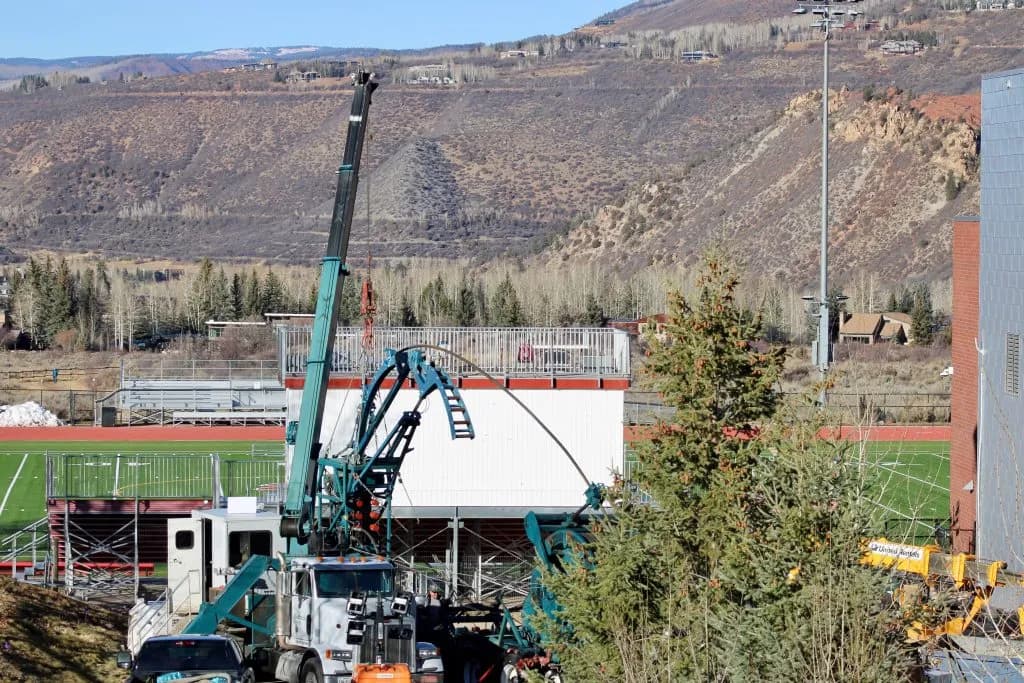
Aspen —Make no mistake — the $5 million funding award for a geothermal energy project is a significant win for the community. This will cost taxpayers nothing — the funding comes from the Geothermal Energy Grant Program and Geothermal Energy Tax Credit Offering. The project aims to reduce greenhouse-gas emissions and promote energy autonomy, a crucial step towards creating a net-zero economy in Colorado by 2050.
The district plans to install geothermal heat pumps, harnessing the Earth's below-ground temperature to provide heating and cooling to three instructional, administrative, and athletic buildings. This is not a small undertaking; the project will cover over 400,000 square feet of conditioned space. The funding award is part of a larger $12.4 million announcement supporting seven geothermal projects across the state.
Lille Haecker, Geothermal Energy Tax Credit Offering Program Manager, notes that energy autonomy in mountain towns is critical to meeting the state's pollution reduction goals. The innovative nature of the system is impressive - it's something the state wants to prioritize. But what's not being said is how this project will impact the local community in the long run. Will it create jobs? Will it increase property values?
The project's feasibility study was funded by a $50,000 grant from Aspen's Community Office for Resource Efficiency and a $78,400 Geothermal Energy Grant Program from the Colorado Energy Office. The study provided a better understanding of the project's scope and direction, according to Lauren M. Suhrbier, director of Strategic Development for Clean Energy Economy for the Region. However, Suhrbier also notes that they're still in the design phase, which means there are many unanswered questions about the project's timeline and potential roadblocks.
The short version is this: the geothermal energy project is taking a significant step towards reducing its carbon footprint. But the devil is in the details, and those details are still being worked out. The proposal includes installing geothermal heat pumps to provide "significantly decarbonized heating and cooling" to the campus. This is a complex project that requires careful planning and execution.
As the project moves forward, it's worth watching how the goals of reducing greenhouse-gas emissions are balanced with the potential costs and challenges of implementing such a system. The state's goals are ambitious; creating a net-zero economy by 2050 will require significant investments in renewable energy and energy efficiency. But what's the plan for maintaining and upgrading the system in the long term? These are questions that need to be answered as the project progresses.
The community will be watching closely as this project unfolds. The commitment to reducing carbon footprint is commendable - but it's only the first step. The real challenge will be in the implementation and maintenance of the system. Read that again. this is a complex project that requires careful planning and execution. The success of this endeavor will depend on its ability to navigate the challenges ahead and create a sustainable energy system that benefits the community for years to come.
In the end, this project is not just about reducing greenhouse-gas emissions, it's about creating a legacy for future generations. The goal is to promote energy autonomy and reduce fossil fuel use. But what's the ultimate goal; and how will it be achieved? These are questions that need to be answered as the project moves forward. The community is waiting to see how this project will impact the local environment and economy. The $5 million funding award is a significant step in the right direction, and its impact will be closely monitored in the years to come.
Keep up with Aspen
The day's Western Slope news, one email each morning. Free.