Yampa Valley Faces Severe Drought Restrictions
The Yampa Valley is experiencing severe drought, prompting strict water conservation measures and restrictions on outdoor irrigation. Learn how the community is coming together to address this challenge.
Steamboat Springs —The crunch of dry grass beneath your feet, the parched earthy smell that fills the air, and the sight of wilted plants all signal that this summer, the Yampa Valley will not be boasting its usual lush, green lawns. As municipalities strengthen outdoor irrigation watering restrictions and conservation measures, the days of vibrant, water-guzzling grass may be behind us, at least for the time being. If you look closely, you'll notice the subtle yet significant shift in the valley's landscape, which reflects the community's efforts to conserve water in the face of drought.
According to Julie Baxter, Steamboat Springs water resources manager, and Bryan Richards, Hayden public works director, having a bright green lawn this summer will be a dead giveaway that you're not adhering to the new regulations. "If you have (bright) green grass this summer, then everybody's gonna know that you're not following the rules," Baxter said, her words a stark reminder of the importance of conservation. Richards echoed this sentiment, "When your yard is bright green and everybody else's is brown, that might draw some attention to yourself." The message is clear: this summer, a brown lawn is not only acceptable but also desirable.
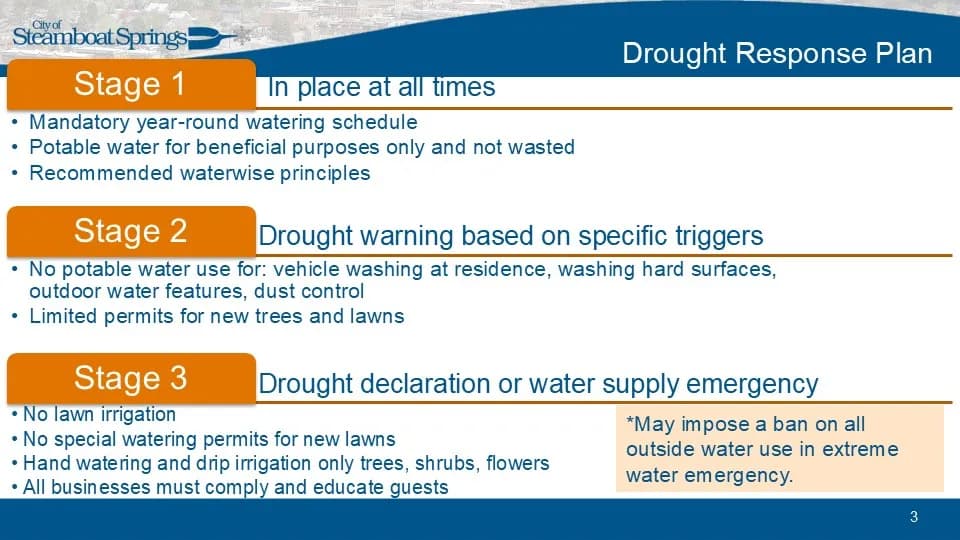
The city of Steamboat and Mount Werner Water have already entered Stage 2 drought restrictions, which prohibit certain water-intensive activities like vehicle washing at home and running decorative outdoor water features. These restrictions are a response to the region's historically low snowpack, with this winter being the warmest on record and producing the lowest snowpack ever measured in the Yampa/White/Green River basins. The numbers are alarming, with snowpack at just 21% of median, the lowest on record for the state. As Jayla Poppleton, resilient water and watersheds director for Western Resilience Center, noted, "We've entered the 2026 water year, which officially kicked off on April 1, with runoff ahead of schedule and likely already past its peak."
In light of these conditions, officials are urging property owners to voluntarily refrain from turning on irrigation systems until June 1 and to limit watering to no more than two days per week. This conservation effort is crucial, as outdoor irrigation accounts for one-third of the treated water use in Steamboat Springs, and keeping as much water in high-elevation storage in Fish Creek Reservoir and Long Lake as long as possible is vital. Baxter emphasized the importance of early conservation, stating, "We're asking everyone to do their part to help stretch our limited water supplies through the spring and summer. Early conservation makes a real difference later in the year." As you walk through the valley, you might notice the subtle changes in the landscape, the way the dry grass crunches beneath your feet, and the earthy smell that fills the air. It's a reminder that conservation is a collective effort, and every small action counts. You can feel it in the air, a warmth that comes from people working together to address the challenges posed by drought. The goal is not to have the most vibrant lawn but to work together to preserve this beautiful region for future generations. In the midst of this drought, the community's response has been heartening, with people coming together to support conservation efforts. For now, the focus is on preserving water, and the sound of dry grass rustling in the wind, accompanied by the smell of parched earth, will linger, a poignant reminder of the challenges we face and the importance of working together to address them.
Keep up with Steamboat Springs
The day's Western Slope news, one email each morning. Free.