Aspen Elementary ASL Lunch Club Fosters Inclusion
The ASL Lunch Club at Aspen Elementary has grown into a tri-campus movement, fostering genuine inclusion and communication for the Deaf and Hard of Hearing community through student-led sign language learning.
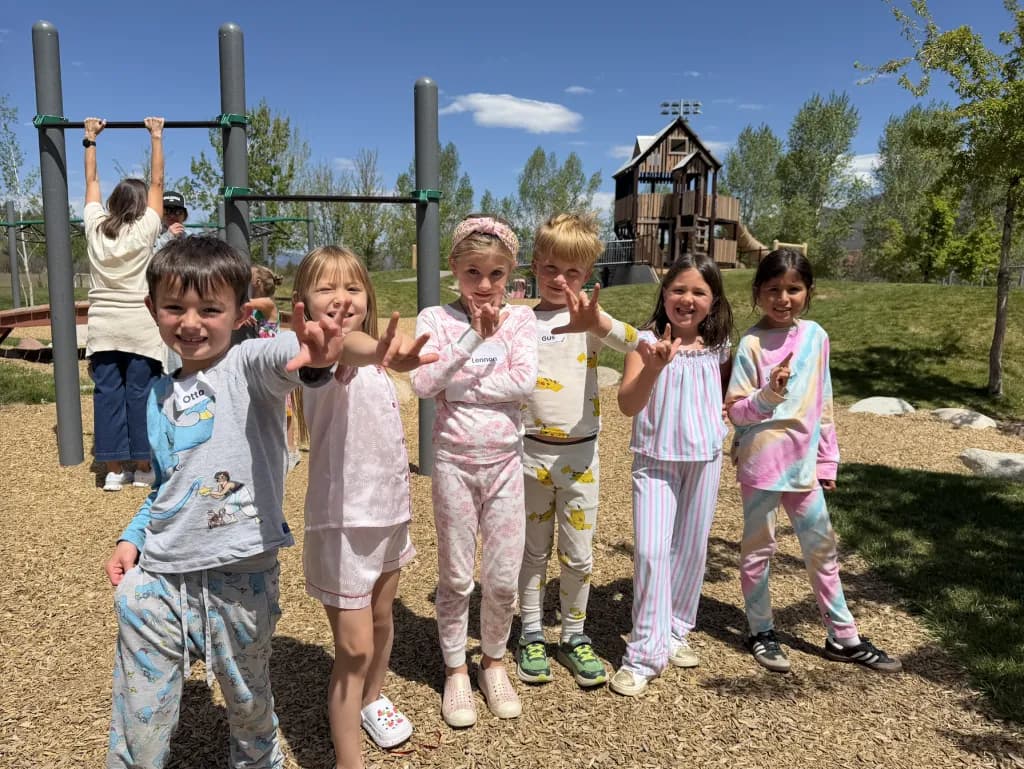
Aspen —The cafeteria at Aspen Elementary School hums with a different kind of chatter on Friday afternoons. It’s not just the usual clatter of trays and the shrill call of recess-bells, but a rhythmic, visual language that fills the air — hands moving in sharp, deliberate arcs, faces lighting up with recognition, the soft thud of sneakers on linoleum as kids converge. Over a hundred students gather here, not to eat, but to connect, their hands weaving a silent narrative that bridges the gap between hearing and deaf worlds.
This is the ASL Lunch Club, a program that has quietly transformed from a handful of curious kids into a tri-campus movement within the Aspen School District. Spearheaded this spring by a coalition of parent volunteers, educators, and community partners, the initiative didn’t start with a mandate from the district office or a splashy marketing campaign. It started with curiosity. It started with students asking, “How do we learn sign language?” and finding that the answer was right there, in the palm of a classmate’s hand.
Katrina Gallant, a parent volunteer and advocate, notes that while the effort was collective, the momentum was driven by the students themselves. Her son, Otto, who is part of the Deaf and Hard of Hearing community, became the catalyst. It wasn’t that his peers were learning ASL because they had to; they were learning it because they wanted connection with him. “One of the most emotional parts has been watching students naturally choose inclusion without being prompted,” Gallant said. “Otto’s classmates and peers are not learning ASL because they have to. They are learning because they genuinely want connection with him and with one another.”
The support structure is robust, anchored by the Aspen Camp of the Deaf and Hard of Hearing, which provided leadership, instructors, and vital support. But the execution relies heavily on the ground-level energy of volunteers like Liz Bollinger, a special education teacher and club leader. Bollinger describes the enthusiasm as “truly amazing,” noting that the signing doesn’t stay confined to the lunchroom. Students take it to the playground, teaching their peers and even showing off new signs to their parents at home. It’s a ripple effect that builds confidence and empathy, fostering a deeper understanding of Deaf culture that feels less like a lesson and more like a lived experience.
While the elementary school has embraced the program with open arms, the vision extends upward. Gallant is particularly excited about the rising fifth-grade group, including her older son Galileo, who will carry the torch into middle school. The program has even trickled down to pre-K, creating a continuum of inclusion that starts early. And looking ahead, there’s talk of a dedicated high school ASL elective for the 2027-28 school year, a potential academic recognition of a skill that is currently being mastered in the lunchline.
Summer programming is already in the works, ensuring that the momentum doesn’t stall when the school year ends. But for now, the focus remains on the immediate, tangible joy of communication. You can see it in the way a child’s eyes widen when they realize they can say “friend” without speaking, or the way the room settles into a focused, visual quiet when a new sign is introduced. It’s a reminder that inclusion isn’t just about accessibility; it’s about the active, joyful choice to reach out. As the Friday lunch hour winds down, the hands go still, the trays are cleared, and the silence that follows isn’t empty — it’s full of the things that were just said, and the promise of more to come.
Keep up with Aspen
The day's Western Slope news, one email each morning. Free.
NWRM CASA Honors Judge O’Hara and Founders at 15th Anniversary
Craig Hosts Only Regional Special Olympics Bowling Competition