Aspen One Builds 163 Workforce Homes to Counter $7M Pitkin County Prices
Aspen One plans 163 workforce housing units to retain staff as Pitkin County's median home price hits $7 million, addressing a 60% rent burden rate among local employees.
Aspen —The median home price in Pitkin County is $7 million.
That figure, presented to the Snowmass Town Council Tuesday, sets the stage for a housing crisis that has nothing to do with luxury buyers and everything to do with the barista, the teacher, and the nurse who keep the Roaring Fork Valley running. According to the presentation, homes in Basalt average $2 million and in Carbondale $1.5 million — prices the document describes as “beyond reach for the entire workforce in this valley.”
The result is a rent burden that is squeezing every other expense dry. Heather Henry, Aspen One’s Vice President of Housing and Childcare, told The Aspen Times that over 60% of the valley’s population is now “housing burdened,” spending a significant portion of their income on rent. That is noticeably higher than the state average of roughly 50%.
Henry pointed out a specific dynamic driving up costs: even high-income earners can’t buy into the open market. So they rent. And when people with six-figure salaries are competing for the same one-bedroom apartments as service workers, the price goes up.
A one-bedroom, one-bathroom in Willits averages $3,000 a month. In Carbondale, it’s $2,800.
Aspen One’s response is not to hire more people. It’s to keep the ones they have.
The company is planning to provide over 300 units of housing for long-term, year-round employees. This is a defensive move. Henry was clear about the goal: “These are not new jobs. These are not new people.”
The urgency comes from a demographic cliff. A wave of retirement is hitting Aspen One in the next five to 10 years. Those employees will either age in place or sell their homes into the commercial market. If the current workforce can’t afford to stay, the company loses the institutional knowledge and stability it needs to operate.
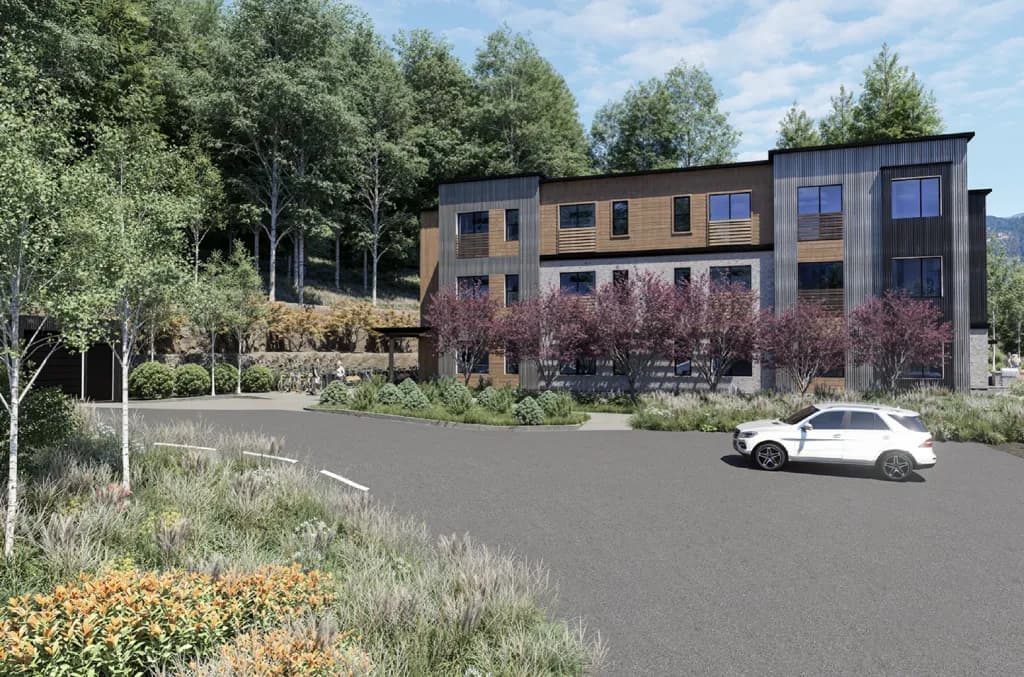
To solve this, Aspen One is leading a project called EJ Crossing. It is a mid-valley development currently moving through the Eagle County land use review process. The plan is for 163 units of 100% workforce-only housing. The tenants would be people who work for local employers, including Aspen One and partner businesses the company is curating.
The logic is simple math. If an employee lives in Aspen but works in Carbondale, they are commuting. If they live in Carbondale, they save time. If they pay $3,000 for a one-bedroom in Willits, they are likely spending 50% or more of their household income on rent.
Henry explained that the goal is to let employees “work their way up” within the company while living in secure housing. “The only way they can do that is to be able to feel stabilized, feel like they’re part of the community, feel like they can move through the housing continuum in an affordable way,” she said.
The part everyone skips past is that this isn’t a charity case. It’s a supply chain issue. If the employees leave, the services stop. The $7 million median price tag isn’t just a statistic; it’s the wall between the workforce and the community they serve.
Aspen One is trying to build a door through that wall. Whether EJ Crossing clears the land use hurdles is still to be determined, but the intent is clear: stabilize the base before it erodes entirely. The valley’s economy depends on people who can’t afford to live in it. The company is betting that if it pays for the housing, the people will stay.
For now, the 60% of residents who are housing burdened are just paying the rent. But stand there long enough and you’ll see the cracks forming. The $3,000 apartment in Willits isn’t just expensive; it’s a signal that the open market has failed the very people it claims to serve. Aspen One is stepping in to fill that gap, not with new jobs, but with new roofs.
The 163 units at EJ Crossing are small compared to the $7 million median price. But they are aimed directly at the problem. They are for the people who work there. They are for the people who are priced out. They are for the people who are about to leave.
If they stay, the workforce stabilizes. If they don’t, the erosion continues. The choice is between paying the rent or paying the price of losing the community. Aspen One is choosing to pay the rent.
Keep up with Aspen
The day's Western Slope news, one email each morning. Free.