Study Finds Fast Wildfires Turn Western Forests Into Shrubs
A new study in Science Advances links rapid fire spread to reduced seed sources, predicting western forests may permanently shift to shrublands as climate change accelerates flame velocity.
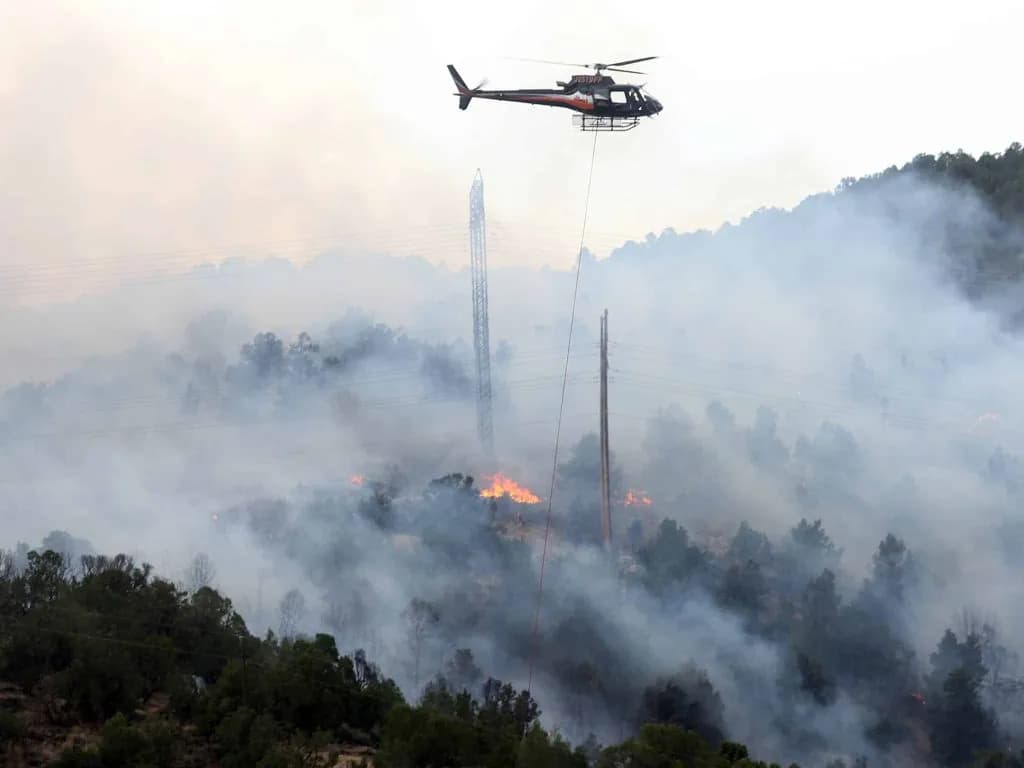
Aspen —In the summer of 2020, the East Troublesome Fire didn’t just burn; it sprinted. It consumed more than 100,000 acres in less than 24 hours, a speed that left researchers scratching their heads. That event prompted a new study out of Western Colorado University, which suggests that these rapid-fire events are fundamentally changing the biology of our forests.
The study, published in Science Advances, analyzed 3,500 wildfires that scorched over 100 million acres of conifer forests across western North America between 2012 and 2023. The team, which included researchers from Colorado State University, UC Berkeley, and the U.S. and Canadian Forest Services, looked at the correlation between how fast a fire moves and what happens to the trees afterward.
“The faster a fire grows across the landscape, the more impact it has to those landscapes,” said Jonathan Coop, a professor at Western Colorado University and the study’s author.
The mechanics are straightforward but brutal. For a forest to regenerate, it generally needs seeds from living trees nearby. The study found that as fire spread rates increased, the distance to surviving trees capable of reseeding the area also increased. In other words, the faster the fire, the fewer "seed banks" remain.
This creates a threshold effect. If the fire is slow, enough trees survive to drop seeds. If the fire is fast, it kills the seed source before it can act.
Coop noted that under current climate trends — warmer temperatures and drier conditions — these fast-moving fires are becoming the norm rather than the exception. This shift threatens to push certain ecosystems past a tipping point where they can no longer support the tree species we currently recognize.
“In southern Colorado and northern New Mexico or parts of Utah, we might see shifts from ponderosa pine or dry mixed-conifer to oak shrub,” Coop explained. “In other places, we might lose pinyon-juniper and it’s turning into more of a weedy, cheatgrass-dominated landscape, where prior to the fire there was a juniper woodland.”
This isn't just a cosmetic change to the landscape; it’s a functional one. Shrublands and grasslands hold less carbon and support different wildlife than dense forests. The transition Coop describes implies a permanent alteration of the ecosystem, driven by the sheer velocity of the flames.
The implications for local land management are significant. If the forest is transitioning to shrubland, traditional forest management practices may no longer apply. We may need to start planning for a different kind of landscape, one that is more resilient to heat and drought but less familiar to those of us who grew up in the pines.
Coop emphasized that the root cause is tied to human-caused climate change, specifically the burning of fossil fuels. He pointed out that until carbon emissions reach zero, the trend toward faster, more intense fires is likely to continue.
“Fire can catalyze that transition very rapidly,” Coop said.
The study serves as a warning that the West’s forests are under pressure from two sides: a changing climate that makes them drier, and fires that move too fast for them to heal. The question now is whether we can adapt our expectations - and our management strategies; to match the reality of these fast-moving flames.
As we look toward the future, the outlook is clear. We are moving toward a landscape defined by speed and resilience.
“Until (carbon) emissions are zero, the problem is only going to get worse,” Coop concluded.
Keep up with Aspen
The day's Western Slope news, one email each morning. Free.