CDOT Fire Brigades Protect I-70 Tunnels from Fires
CDOT's fire brigades are working to protect the I-70 tunnels from fires, a critical lifeline for the Rockies, with a significant economic impact in case of closure.
Vail —What's being done to protect the I-70 tunnels from fires — a critical lifeline for the Rockies? CDOT has its own firefighting teams — one stationed at the Eisenhower-Johnson Memorial Tunnels and one at the Hanging Lake Tunnel in Glenwood Canyon. These teams are made up of CDOT employees who have other jobs at the tunnels, but will jump into action at a moment's notice to respond to an emergency. At the Eisenhower-Johnson Memorial Tunnels, the fire brigade has 22 members, they're not just fighting fires, they're protecting the infrastructure of the tunnel itself, as well as the people moving through it.
The Eisenhower-Johnson Memorial Tunnels are a critical part of I-70; they see an average of about 35,000 vehicles pass through each day. CDOT spokesperson Stacia Sellers calls them a "gateway from the Front Range to the mountains" and a key route for freight moving across the country. A long-term closure of the tunnels due to a fire could have serious ripple effects - the state's economy takes an almost $2 million hit for every hour I-70 is closed. That's what Delta County spends on road maintenance in a year. Make no mistake, the economic impact of a tunnel closure would be felt across the Western Slope.
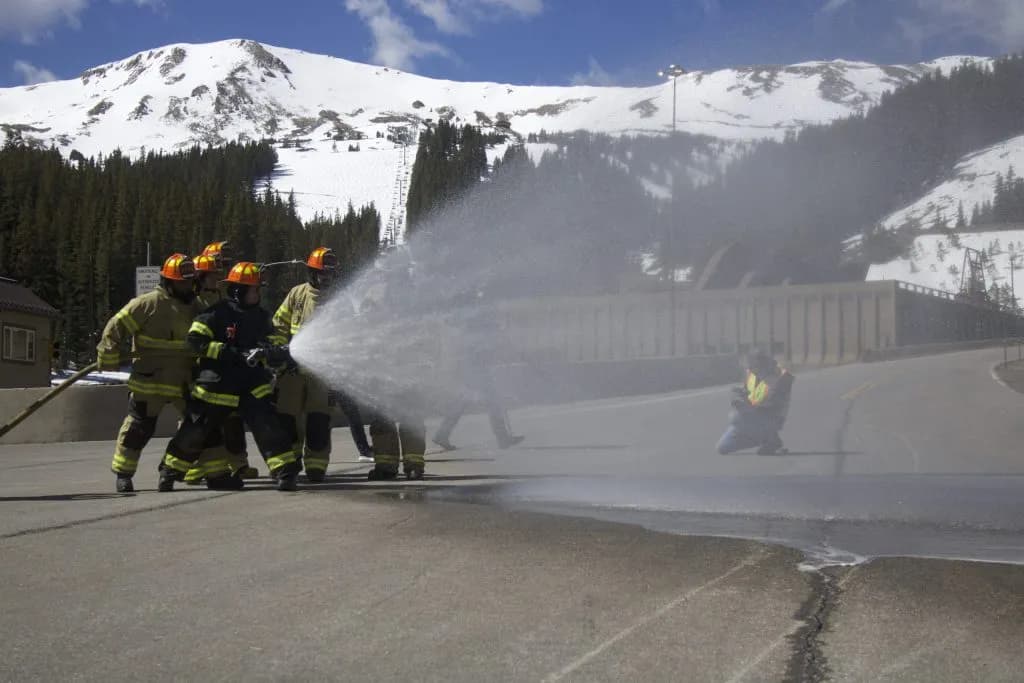
CDOT Fire Program Manager Peter Igel says the fire brigade's goal is to quickly extinguish any blaze and prevent damage to the infrastructure. They have mutual aid agreements with Summit Fire & EMS and Clear Creek Fire Authority. they'll respond if there are vehicle fires or wildfires along I-70 near the tunnels. The brigade trains regularly, during a recent training exercise, firefighters practiced deploying a hose and spraying water in a nearby parking lot. There was no fire, but the seriousness on their faces was clear. CDOT Tunnel Superintendent Paul Fox says the fire brigade is "ready to go at all times"; they need to be, given the importance of the tunnels.
The short version: CDOT's fire brigades are a crucial part of the state's emergency response plan. They're not just fighting fires - they're protecting the economic lifeline of the Rockies. Read that again: for every hour I-70 is closed, the state's economy takes an almost $2 million hit. That's a staggering figure. and it's one that CDOT is clearly taking seriously. The fire brigades are a key part of the state's efforts to keep this critical infrastructure safe and open.
Fire Brigade Training
The fire brigade's training is intense, they practice responding to emergencies, deploying equipment, and working together as a team. It's not just about fighting fires; it's about protecting the people and infrastructure of the tunnels. CDOT Fire Program Manager Peter Igel says the brigade's training is focused on "quickly extinguishing the blaze and preventing damage to the infrastructure." They're not just responding to emergencies - they're working to prevent them from happening in the first place.
The community relies on the tunnels for transportation. they're a critical part of the state's network. A closure would have serious impacts, on businesses, on commuters, on the entire economy of the Western Slope. CDOT's fire brigades are working to prevent that from happening. They're a crucial part of the state's emergency response plan; and they're taking their job very seriously. The question is, what happens if they're not enough? What happens if a fire breaks out and the brigade can't respond in time? Those are questions that CDOT and the state are clearly thinking about - and they're taking steps to prevent them from becoming a reality. Worth watching: how CDOT's fire brigades continue to train and respond to emergencies in the future. The safety of this infrastructure is a top priority. and it's clear that CDOT is taking it very seriously. CDOT's investment in the fire brigades shows they understand the risks and are committed to mitigating them. But the fact remains, the safety of the tunnels is paramount. What's the plan if the fire brigades can't respond in time? That's a question that still needs to be answered.
Keep up with Vail
The day's Western Slope news, one email each morning. Free.