CDOT Repurposes $12 Million Snow Funds for Highway Wildfire Mitigation
CDOT Deputy Director Bob Fifer announces a strategic pivot, using $12 million in leftover snowplowing funds to target vegetation management and reduce wildfire risks along the state's highways amid historic drought conditions.
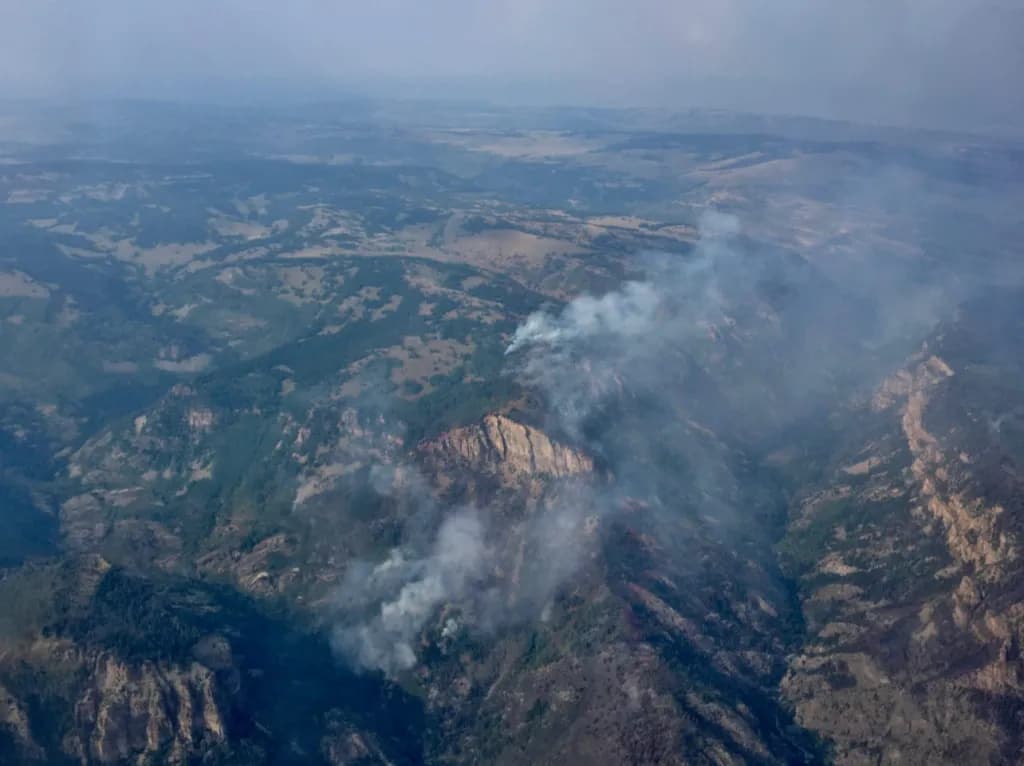
Steamboat Springs —“It just doesn’t look good for us.”
That’s the blunt assessment from Bob Fifer, CDOT’s Deputy Director of Operations, delivered at a March 18 work session. He wasn’t talking about potholes on I-70 or a delay on the Glenwood Canyon ramp. He was looking at a state-wide snowpack that peaked early and melted fast, leaving behind a landscape primed to burn.
The result is a strategic pivot: $12 million in leftover snowplowing funds will be repurposed for summertime wildfire mitigation along the state’s highways.
The logic is simple, even if the execution is complex. The winter was historically hot and dry. Most years, Colorado’s snowpack holds its breath until April. This year, it peaked early and vanished rapidly. The U.S. Drought Monitor confirms the reality on the ground: more than half the state is in severe drought. The northwest corner is in extreme drought. Parts of Summit, Grand, Eagle, Routt, Garfield, and Pitkin counties are staring down exceptional drought, the highest level on the scale.
By June, the Western Slope — specifically the I-70 mountain corridor — is expected to face above-average risk for significant wildland fires, according to the National Interagency Fire Center.
So, what do you do with $12 million when you don’t need to plow as much? You try to keep the fire from taking the road with it.
“When you have 9,000 miles, or 24,000 lane miles, of road, where do you start mitigation?” Fifer asked the commission. “What’s the most surgical area? How can we do it to get the most bang for the limited dollars we have?”
The answer lies in data. CDOT is leveraging a Colorado State Forest Service Wildfire Risk Map to target vegetation management. They aren’t just cutting brush everywhere. They are starting with the most vulnerable areas, the places with the highest probability of burning.
The plan is specific. Crews will remove diseased trees and those that are 50% dead or more, particularly within the first 15 feet of the right-of-way. Most of the wood will be chipped and slashed, then left on site to decompose. Larger blocks and diseased trees will be hauled away. They’ll also clear “ladder fuels”, lower branches that allow fire to climb from the forest floor into the tree canopy. Stumps will be cut to about 4 inches off the ground.
Jim Fox, CDOT’s Deputy Director of Maintenance, noted that crews typically mow the right-of-way twice a year, in spring and fall. This new funding accelerates and refines that effort. But the goal isn’t just aesthetic. Highways are natural fire lines. They are fire breaks. If managed correctly, they can slow the spread of wildfires and give firefighters a strategic place to hold the line.
For locals, this means a different kind of maintenance crew on the shoulder of the road. It means more chipped wood and fewer standing dead trees near the commute. It also means a higher likelihood that when the next big fire starts; and it will - the road out might still be open.
The question is whether this surgical approach is enough to counteract the sheer scale of the drought. Fifer says they’re starting with the most vulnerable areas. But with the entire state in the red on snowpack, the vulnerability is widespread.
The outcome remains uncertain. But for now, the strategy is clear: use the money we saved on snow to buy time against fire.
“We’re going to use this data to drive that decision-making,” Fifer said. “And we’re going to start with the most vulnerable areas.”
Keep up with Steamboat Springs
The day's Western Slope news, one email each morning. Free.