Colorado Crane Conservation Coalition Watches for Sandhill Crane Hatch in Hayden
The Colorado Crane Conservation Coalition monitors a single sandhill crane egg in Hayden as rising Yampa River waters threaten the nest, awaiting the moment Eleanor and Franklin’s chick hatches.
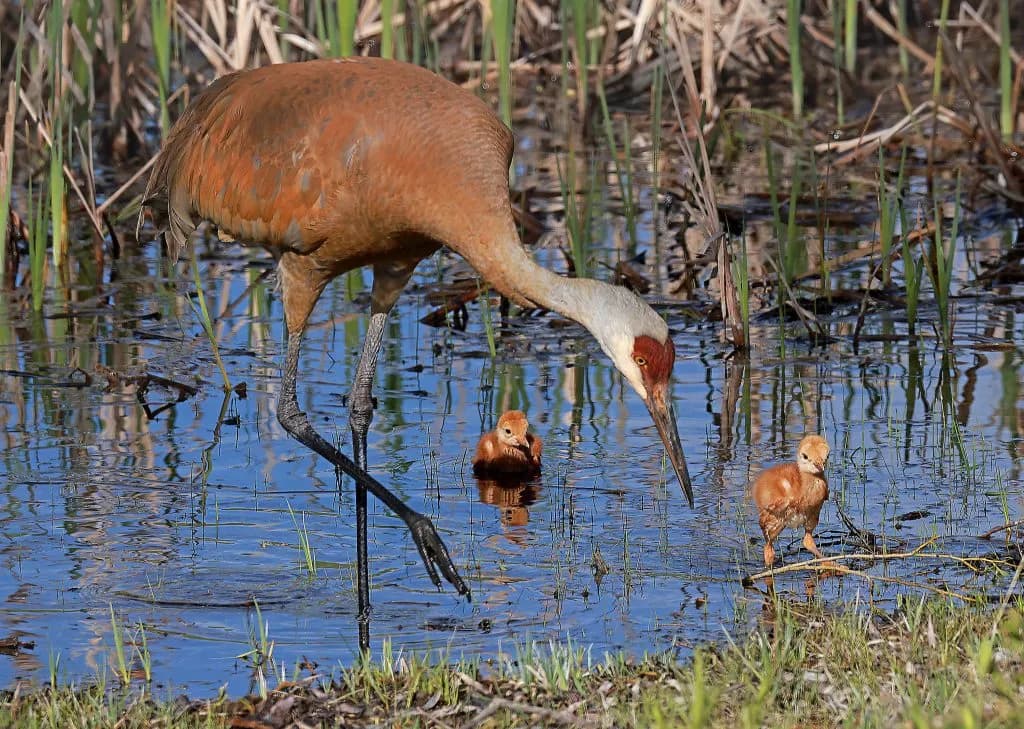
Steamboat Springs —The Yampa River is rising. The banks are swelling, turning the low-lying Hayden meadows into a wet, unpredictable trap for anyone foolish enough to build a home in the floodplain. But for Eleanor and Franklin, the local sandhill crane pair, the rising water is both a threat and a necessity.
Inside the Colorado Crane Conservation Coalition office, the mood isn’t just hopeful. It’s tense. Executive director Megan Karschner describes the feeling as "anticipation, excitement and cautious optimism." That’s a polite way of saying they are waiting with bated breath.
The group is watching a single egg. It has been incubating for nearly 30 days — the average gestation period. It is ready to hatch. It might not.
Last year was a disaster. Two pairs fell under the coalition’s lens. Neither survived. One nest was predated; the other sat on the Yampa’s banks, too close to the water, and was inundated. It was a "heartbreaker," Karschner said.
This year, the coalition has set up cameras in the Hayden area to document the saga of one specific pair: Eleanor and Franklin. They arrived on private land this spring. Their story has been messy. Their first nest had a "super beautiful, clear view," allowing volunteers to see everything. But that nest failed. The egg was taken by another animal.
The pair didn’t give up. They moved. They picked a different spot. They produced another egg on April 14.
That new nest sits in a "little bit of a depression that’s more secluded." It is harder to see through the camera feed. It is better protected from predators. It is also right in the splash zone.
"Every morning they’re spending a lot of time building up the nest, so it doesn’t get inundated with water," Karschner said. "So, we’re like: ‘Come on guys, hatch’."
The water levels are rising. The area is getting wetter. If the egg hatches now, the chick will be vulnerable to a sudden flood. If it waits, it risks being too late. The group is watching 10 volunteers, board members, and staff operate the camera to catch the moment.
Why does this matter to locals? Because sandhill cranes are secretive. We don’t know much about them unless we force the issue. The nest camera provides behavioral observations. It logs the nuances of every nesting pair. It reveals how these birds adapt to changing water levels and predation pressures. It turns a private event on private land into public data.
Karschner won’t celebrate yet. She is holding off until the shell breaks. That is the smart move. A chick in a nest is not a guaranteed survivor. It is a fragile thing in a wet world.
The camera is live at ColoradoCranes.org. Anyone can watch. You can see the water rising. You can see the birds working. You can see the uncertainty.
The short version: The egg is ready. The water is high. The group is waiting. If it hatches, it’s a win. If it doesn’t, it’s another year of data. Either way, the community gets a front-row seat to the struggle.
There is no press release here. No guaranteed success. Just a bird, an egg, and a rising river. Watch the feed.
Keep up with Steamboat Springs
The day's Western Slope news, one email each morning. Free.