Vice President JD Vance Announces $1.3 Billion Medicaid Deferral to California
Vice President JD Vance announces a $1.3 billion Medicaid funding deferral to California, citing suspected inefficiencies in home care spending, while Governor Newsom disputes the claims as necessary efficiency.
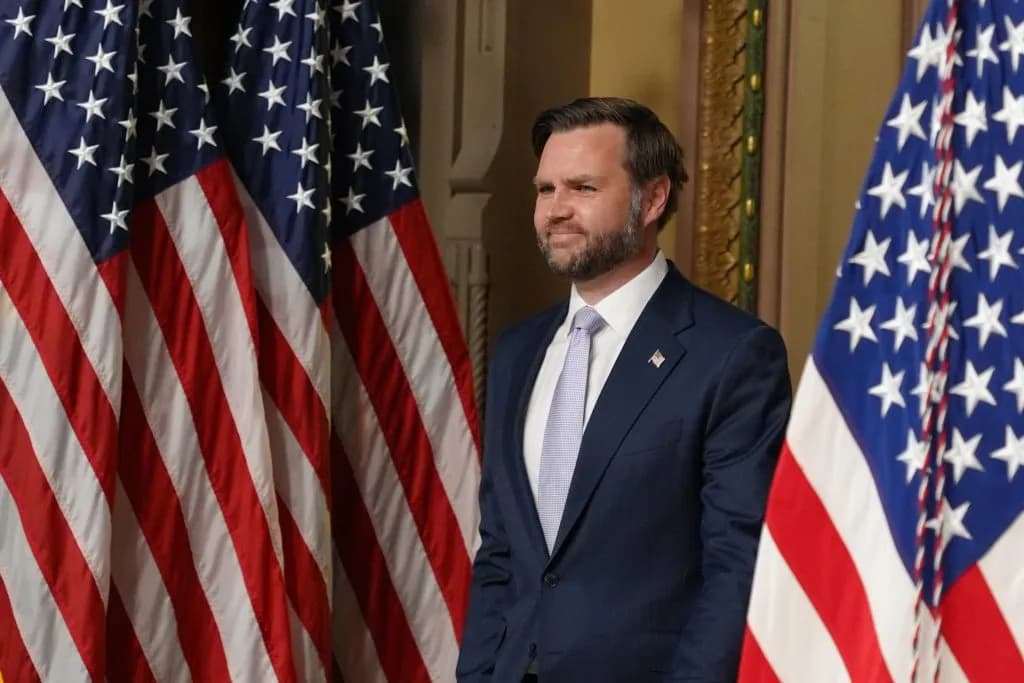
Aspen —“'How long are people going to pay into programs if they know that that money doesn’t go to a low-income kid who needs healthcare, but that money goes into a fraudster getting rich?'”
Vice President JD Vance asked that question at the White House on Wednesday, setting the stage for a $1.3 billion deferral in Medicaid funding to California. It’s a simple hook for a complex bureaucratic maneuver: the federal government is holding back cash because it suspects the state is spending it inefficiently, or perhaps dishonestly.
The move is part of a broader anti-fraud initiative led by Vance, who is using the high-profile assignment to remind Americans struggling with rising costs that the administration is actively clawing back taxpayer dollars. But for folks on the Western Slope, the headline isn’t just about Washington politics. It’s about the ripple effect of federal health policy decisions that trickle down to local hospitals, nursing homes, and the wallets of residents who rely on Medicaid for everything from dental care to long-term support.
The administration contends these vigorous efforts will prevent wrongdoing while preserving resources for those who actually need them. But the devil is in the details, and the details here are sparse.
Dr. Mehmet Oz, who leads the Centers for Medicare and Medicaid Services (CMS), announced the deferral as the “largest we’ve ever made.” He pointed to questionable expenditures and anomalies, specifically noting a higher rate of growth in California’s home care program compared to other states. He didn’t provide concrete examples of documented fraud, just a general sense that the numbers looked off.
“We’d like the state to at least come to the table and explain to us how these outlier payments have been generated,” Oz said.
The state of California didn’t wait long to push back. The press office for Governor Gavin Newsom disputed the claims, arguing that the growth in home care wasn’t due to waste, but necessity. They argued the state is keeping more people out of far more expensive nursing homes, which is a more efficient use of funds.
“We hate fraud,” the office wrote on X. “But that’s NOT what this is.”
It’s a classic federal-versus-state tug-of-war. Washington sees a spike in spending and assumes fraud. Sacramento sees a spike in spending and assumes efficiency. The $1.3 billion figure is significant, but it’s a fraction of the total picture. California’s Medicaid program is expected to cost about $222 billion for the upcoming budget year. So, while $1.3 billion sounds like a lot, it’s roughly 0.6% of the total pot.
The timing is strategic. Vance’s anti-fraud task force is taking more aggressive steps to investigate states ahead of the November elections. Vance, a potential 2028 White House hopeful, has already been promoting this work during campaign stops for Republican candidates. He’s expected to focus on the effort in Maine next, a state that has closely watched primary races scheduled for June 9.
The question for locals is whether this federal scrutiny will eventually impact how federal health dollars flow to Colorado. We don’t have the specific data on California’s home care growth rates, but we know that rural hospitals across the Western Slope are already feeling the strain of rising health costs and barriers to access. New work requirements in Medicaid are expected to strain hospitals around the country, potentially resulting in millions of enrollees losing their health coverage.
If the federal government is serious about clawing back money to help low-income kids, as Vance says, they need to be clear about what they’re taking back and why. Right now, the administration is pointing to anomalies. The state is pointing to efficiency. Until the auditors dig deeper, it’s hard to say who’s right.
As Oz put it, they want the state to explain the outlier payments. Whether California’s explanation satisfies Washington, or if this is just the opening salvo in a larger battle over how federal health money is spent, remains to be seen.
Keep up with Aspen
The day's Western Slope news, one email each morning. Free.