Colorado Drills Less Oil But Per-Well Pollution Spikes on Front Range
Colorado's total oil and gas emissions dropped in 2025 due to fewer permits, but per-well pollution intensity rose sharply, particularly with methane spikes on the Front Range.
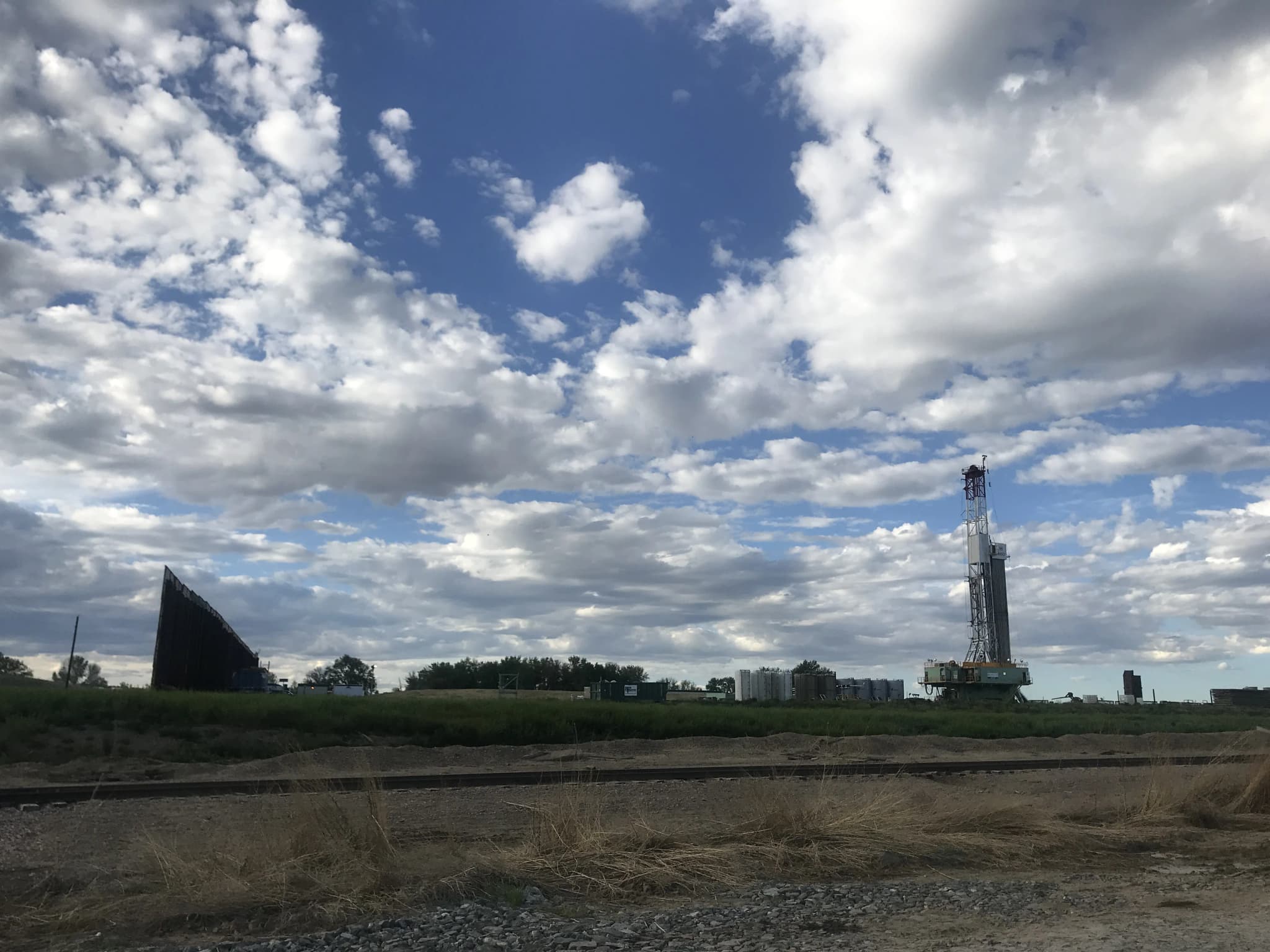
Colorado —The air over the Front Range still tastes like exhaust. It’s a sharp, metallic tang that clings to the back of your throat on a Tuesday morning commute along I-70. You can’t see the source, but you know it’s there. It’s the same smell that has plagued this corridor for decades, only now, the math says it’s getting worse.
Colorado drilled less oil and gas in 2025. But the stuff coming out of the ground? It’s dirtier.
The state Energy and Carbon Management Commission (ECMC) released its annual cumulative impacts report Tuesday. The headline is deceptively simple: total emissions dropped. But look closer at the per-well data, and the picture changes. Each new well is pumping out more pollutants than the last.
The commission approved 48 development plans last year. That’s 20% fewer than in 2024. They authorized 801 wells on 81 sites. In 2024, they approved 1,168 new wells. The drop in total air emissions was 30% — down to 12,676 tons. That includes nitrogen oxides, carbon monoxide, methane, ethane, and volatile organic compounds.
The single largest emission was carbon dioxide. It fell 21% to 867,047 tons.
Why the dip? New rules kicked in late 2025. Companies rushed to get permits before the pause hit. Then applications stalled for two months. Heidi Leathwood, a climate policy analyst with 350 Colorado, called the drop in total emissions “an outlier.” It wasn’t a structural fix. It was a timing glitch.
The Front Range did the heavy lifting. Thirty-two drilling plans. 44 sites. 695 wells. That’s 88% of all Colorado wells. The Western Slope? Not so much. Seven plans. 67 wells. Five plans on the Eastern Plains. Just 14 wells.
But here’s the rub for the rest of us watching the skies: the emissions per well are rising. Everywhere.
Nine Front Range counties are now designated “severe” nonattainment areas for ozone. The federal EPA flagged them. Ozone forms when nitrogen oxides and volatile organic chemicals hit sunlight. It’s corrosive. It’s bad for lungs. It’s bad for kids playing outside.
Nitrogen oxide emissions per well on the Front Range jumped 23% in three years. They hit 6.5 tons per well in 2025. Volatile organic chemical emissions rose 10% to 1.12 tons.
Methane tells an even starker story. Statewide, methane emissions climbed 27% to 1,120 tons. Fewer wells. More gas. The Front Range drove that increase. Methane from fracking and drilling there more than tripled compared to 2024. That’s 1.15 metric tons. Emissions from onsite engines went up almost tenfold.
Why the spike? The ECMC points to scale. Projects are getting bigger. Horizontal wells are getting longer. The Front Range favors large pads — 13 to 18 acres of construction disturbance. One pad serves multiple horizontal wells. You drill once, you pollute a lot.
The short version: we are drilling less, but what we drill is heavier. The total tonnage might look better on paper because there are fewer wells. But the intensity is up. And the Front Range, where the people live, is breathing in more of it.
The Western Slope isn’t immune. We’re not seeing the Front Range’s triple-digit methane jumps, but we’re part of the state’s output. And as the industry shifts focus to efficiency and larger pads, the per-well burden stays high.
The commission isn’t saying the new rules failed. They’re saying the rules changed the rhythm, not the volume of the noise. A two-month pause doesn’t fix the fact that each well is a bigger polluter.
Read that again. Fewer wells. More pollution per well.
It’s a trade-off locals need to watch. We get fewer new rigs in our backyards. But the ones that stay up are working harder. And the air doesn’t care how many permits were approved. It only cares what comes out of the ground.
Keep up with Colorado
The day's Western Slope news, one email each morning. Free.
Federal Report Sets 200,000 Acre-Foot Water Conservation Target for Upper Basin
Colorado Parks and Wildlife Deploys Precision Drones for Weed Control