Colorado Drought Mutes Aspen Fall Colors This Year
Nearly 94% of Colorado faces drought conditions, causing aspens to turn early and muted this fall. Meteorologists warn peak foliage will lack the vibrancy of wet years.
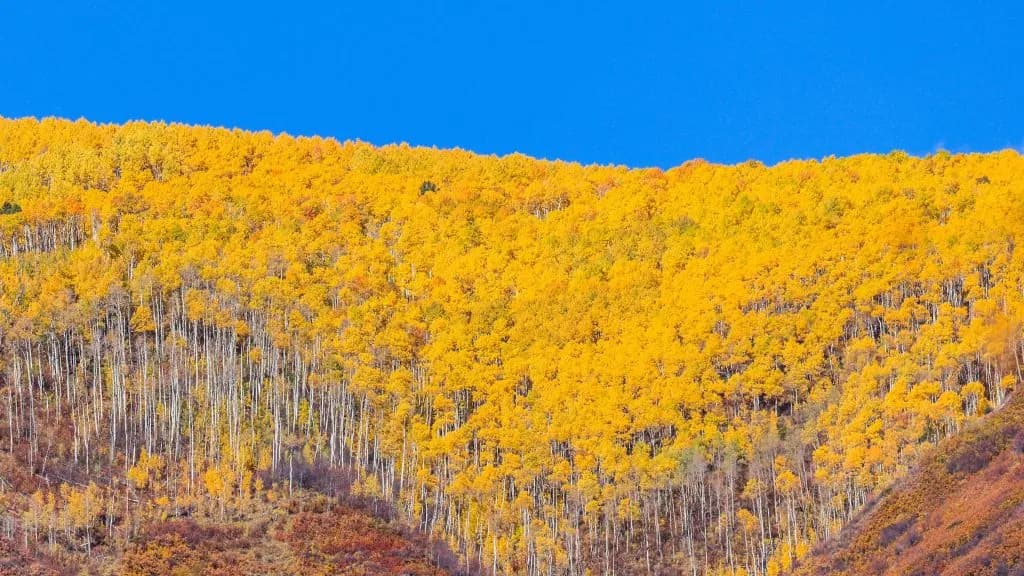
Aspen —The air in the High Country is crisp, carrying that specific scent of drying pine needles and cooling soil. It’s a smell locals know well, a signal that the long summer heat is finally breaking. But this year, as you drive up I-70 toward Glenwood Canyon or take the back roads into the Roaring Fork Valley, something feels different. The aspens are turning, yes, but they aren’t doing it with the fiery intensity of a good wet year. They are turning early, and they’re turning muted.
Dan West, a forest entomologist with the Colorado State Forest Service, put it plainly in an email to the Aspen Times: “It’s still a bit early to have a clear picture of what this year’s fall colors will look like across Colorado.” He noted that aspen color change varies considerably from one region to another, influenced by local weather, elevation, and moisture conditions throughout the growing season. But when you look at the data behind those variables, a clearer — and less romantic — picture emerges.
The problem isn’t just the temperature; it’s the thirst. Alan Smith, a meteorologist at OpenSnow, wrote in a blog post that while predicting the exact timing of falling leaves is “tricky to nail down,” climate patterns offer clues. Leaves tend to turn earlier than normal when there are drought conditions, below-average late-summer rainfall, and cooler-than-average early fall temperatures. That is precisely the recipe Colorado has been cooking with all year.
The past winter brought a dismal snowpack. The summer followed with extreme heat that continued to smash records, while precipitation remained stubbornly below normal. Smith wrote that areas with extreme to exceptional drought, such as Colorado and New Mexico, may experience a less vibrant fall foliage season than usual. He acknowledged that while above-average summer warmth can sometimes delay foliage, that factor is likely negligible for areas already under excessive drought.
And the drought is not a minor inconvenience; it is a state of being for most of us here. According to the latest Sept. 3 report from the U.S. Drought Monitor, nearly 94% of Colorado is currently experiencing some drought conditions. Nearly 44% of the state sits in extreme or exceptional drought, the two worst categories on the scale. On the Western Slope, these conditions have persisted and deepened since the start of the water year on Oct. 1, 2025.
Smith added that while there will still be “good color to be found,” the peak won’t look like the postcards. The most vibrant colors typically require wet or non-drought conditions in spring, near-normal mid- to late-summer rainfall, and warm days with cool nights in the fall. We have the warm days. We do not have the rain.
So, if you’re planning a weekend trip to see the aspens at their peak, adjust your expectations. The colors will come, but they may be a paler shade of gold than you remember. It’s a subtle shift, easily missed if you’re not looking for it, but it’s there. It’s the visual echo of a dry year, written in chlorophyll and decay.
Stand on a ridge above the valley floor as the sun dips behind the peaks, and you’ll see it. The trees are changing, but they’re doing it quietly, conserving what little moisture they have left. The landscape is holding its breath, waiting for a rain that hasn’t come yet.
Keep up with Aspen
The day's Western Slope news, one email each morning. Free.