Colorado Law Holds Social Media Companies Accountable
A new Colorado law requires social media companies to respond to search warrants in a timely manner, aiming to protect children from online harm and expedite investigations into illegal activities.
Glenwood Springs —Snow-capped peaks tower over the Western Slope — a reminder of the region's rugged beauty. But in the shadows of these mountains, a different kind of landscape is taking shape — one of online activity, where social media companies operate with relative impunity. That's about to change.
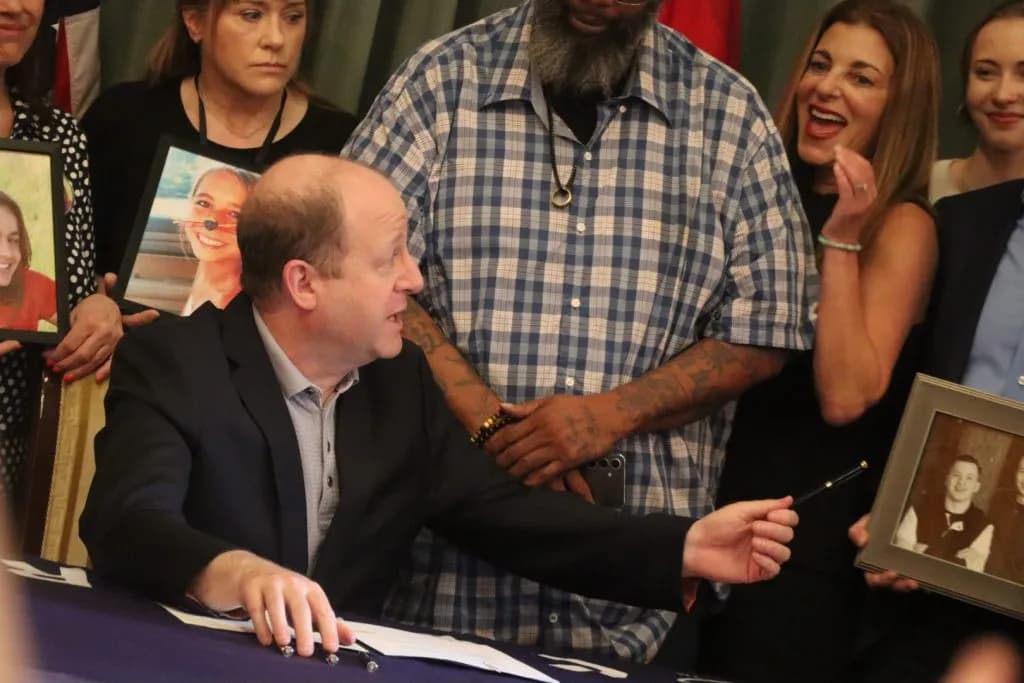
Colorado Gov. Jared Polis signed Senate Bill 11 into law, forcing social media companies to respond swiftly to search warrants. This new law will impact locals, particularly in cases involving criminal activity online that poses harm to children. Proponents argue it will expedite investigations into illegal online activity, such as the sale of drugs and weapons.
The law requires social media companies to acknowledge a search warrant within eight hours and comply within three days, a timeline that can be extended by a court. Companies must also provide law enforcement with a staffed hotline and contact information. This measure applies to social media companies with at least 1 million Colorado-based users and carries a $5,000 civil penalty for non-compliance.
Sen. Dylan Roberts, who co-sponsored the bill, says this measure is a response to social media companies' "blatant disregard of Colorado's laws and court orders." Roberts believes this will help get justice for families who have dealt with tragedy and prevent future injustices. His co-sponsor, Sen. Lisa Frizell, thanks family members and advocates who pushed for the bill, acknowledging their persistence in ensuring law enforcement has the tools needed to solve crimes.
The bill's passage is a significant development for the Western Slope, where online activity can have real-world consequences. Law enforcement officials and family members testified that social media companies took weeks to months to comply with investigations, costing lives. This law aims to change that.
Make no mistake; this law is a direct result of bipartisan efforts. The bill passed the legislature with broad support, and its lead sponsors include Reps. Andrew Boesenecker and Jarvis Caldwell. While Gov. Polis opposed broader measures around data reporting last year, he supported the requirements around warrants, which were revived in this year's bill.
The short version: one of these platforms will now be held accountable for responding to search warrants in a timely manner. This will cost them $5,000 if they don't comply - a figure that's roughly what Delta County spends on road maintenance in a month.
As locals, we should be aware of how this law will impact our community. The law's focus on protecting children from online harm is worth watching, particularly in cases involving the sale of drugs and weapons. Read that again: they will be required to acknowledge a search warrant within eight hours. That's a significant shift from the weeks or months it took them to respond in the past.
This law raises questions about the role of online platforms in our community. What does it mean for locals who use these platforms every day? How will this impact the way law enforcement operates in our region? The fact that they will be required to provide a staffed hotline and contact information is a significant development.
In the town of Grand Junction, where the Colorado River flows through the heart of the city, locals will be watching how this law plays out. The same is true for folks in nearby Fruita, Palisade, and Delta. One of the key changes is that they will no longer be able to ignore search warrants without facing consequences.
The community will be waiting to see how this law is enforced and what impact it has on our region. For now, the fact remains: they will be held accountable for responding to search warrants in a timely manner. That's what the people of Colorado have demanded, and that's what they will get.
As the sun sets over the Western Slope, casting a golden glow over the landscape, locals can take comfort in knowing that their lawmakers are taking steps to hold them accountable. The real test will be in how this law is enforced and what consequences they face for non-compliance. It's a change that will be enforced with real consequences for those who don't comply.
Keep up with Glenwood Springs
The day's Western Slope news, one email each morning. Free.
Twin Lakes Releases 2,500 Acre-Feet to Save Upper Arkansas River

Glenwood Springs Resident Calls for Active Citizenship Amid AI Data Center Water Threats