Colorado Lawmakers Reject Separate Wolf Capture Budget Line
Lawmakers rejected a plan to create a separate budget line item for wolf capture and release, opting to keep the costs buried in the general wildlife budget despite CPW nearly doubling its cost estimates.
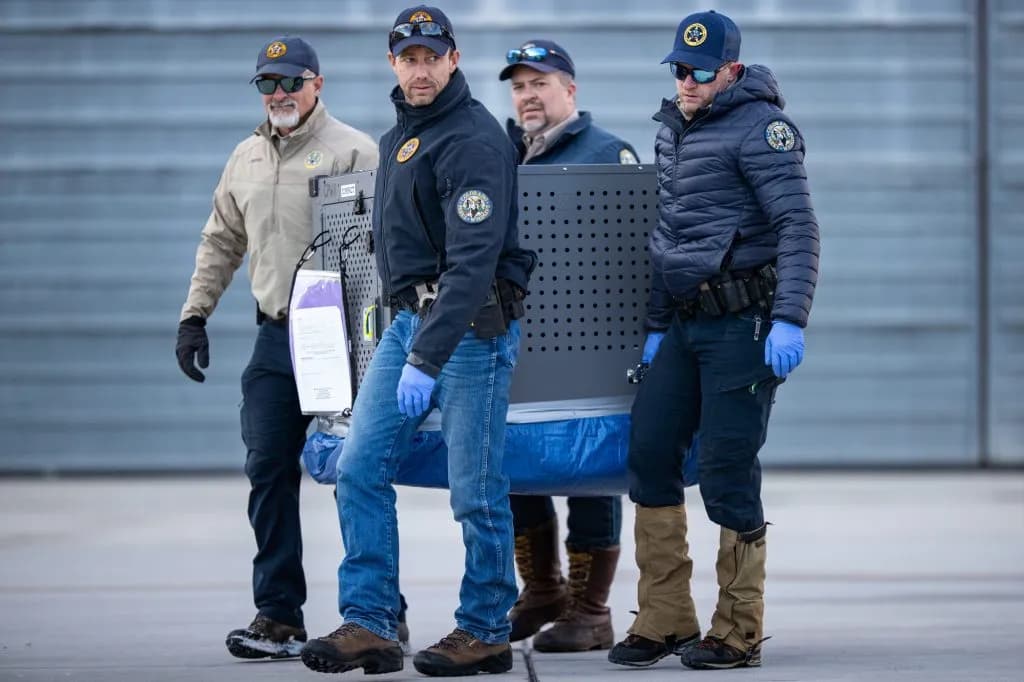
Steamboat Springs —How much does it actually cost to put a wolf back in the wild, and why does the state keep changing the answer?
That’s the question rattling around the Joint Budget Committee this week. The answer, apparently, is that it costs more than anyone thought, and separating that cost from the general wildlife budget isn’t as simple as drawing a line on a spreadsheet.
Lawmakers rejected a plan to create a separate budget line item for wolf capture and release costs. They decided to stick with existing reporting methods instead. The decision came as Colorado Parks and Wildlife (CPW) nearly doubled its previous estimates for what it costs to capture and release new wolves.
The debate happened on Monday, March 23. The issue was transparency. For years, wolf translocation expenses have been lumped into a broad line item with all other wildlife costs. Separating them wouldn’t require new money from the state’s general fund — it would just move money already allocated. But the Department of Natural Resources, which oversees CPW, didn’t want to do it.
Kelly Shen, a Joint Budget Committee staff member, told lawmakers that separating the line item “could allow for increased transparency and clarity.” But the department had a “strong preference” against it.
“The department has indicated that the appropriation already has a decent amount of transparency and reporting associated with it,” Shen said. She listed the current requirements: two budget footnotes, an annual depredation compensation report, an annual wolf report, and an annual expense report requested by the committee.
The numbers tell a different story than the comfort level of the department. CPW receives $2.1 million annually from the General Fund for wolf reintroduction, a program initiated by a ballot measure in 2020. Lawmakers also created a Wolf Depredation Compensation Fund in 2023, which takes $350,000 a year from the general fund to pay ranchers for livestock losses.
The friction point is the cost of the animals themselves. CPW recommended an appropriation of $450,000 for a separate wolf translocation line item. That’s not new money; it’s a slice of the $2.1 million pie. But it’s a significantly larger slice than previously assumed.
The $450,000 figure is nearly twice the $257,000 CPW spent on the January 2025 capture and release operations in British Columbia. That operation moved 15 wolves to Colorado. Shen noted that the prior figure was “based on a best-case scenario for how a wolf capture would go.” The higher recommendation accounts for weather delays and other complications.
Rep. Rick Taggart, R-Grand Junction, used that price jump to argue against the new line item. He wasn’t comfortable with the premise that costs were so volatile they needed a dedicated bucket.
The rejection of the separate line item means locals won’t see a distinct charge for wolves on the state budget sheet. They’ll still see the $2.1 million for the program and the $350,000 for livestock compensation. But the real cost of keeping those wolves in the system — capturing them, transporting them, and releasing them into the western slopes, is now acknowledged to be higher than the initial estimates.
As Shen wrote in the report, the department proposed the higher amount “in order to ensure adequate funds for a less-than-ideal capture scenario.” The question is whether taxpayers want to see that volatility broken out separately, or if they’re fine with it staying buried in the broader wildlife budget.
For now, they’re fine with it buried. The department’s preference won. The money stays in the pot. And the cost of doing business with wolves just went up.
Keep up with Steamboat Springs
The day's Western Slope news, one email each morning. Free.