Colorado Lynx Population Estimates 65 Amid Fire Threats
Colorado Parks and Wildlife estimates a stable lynx population of roughly 65, with sightings near Aspen and Independence Pass, though fire remains the primary threat to their habitat.
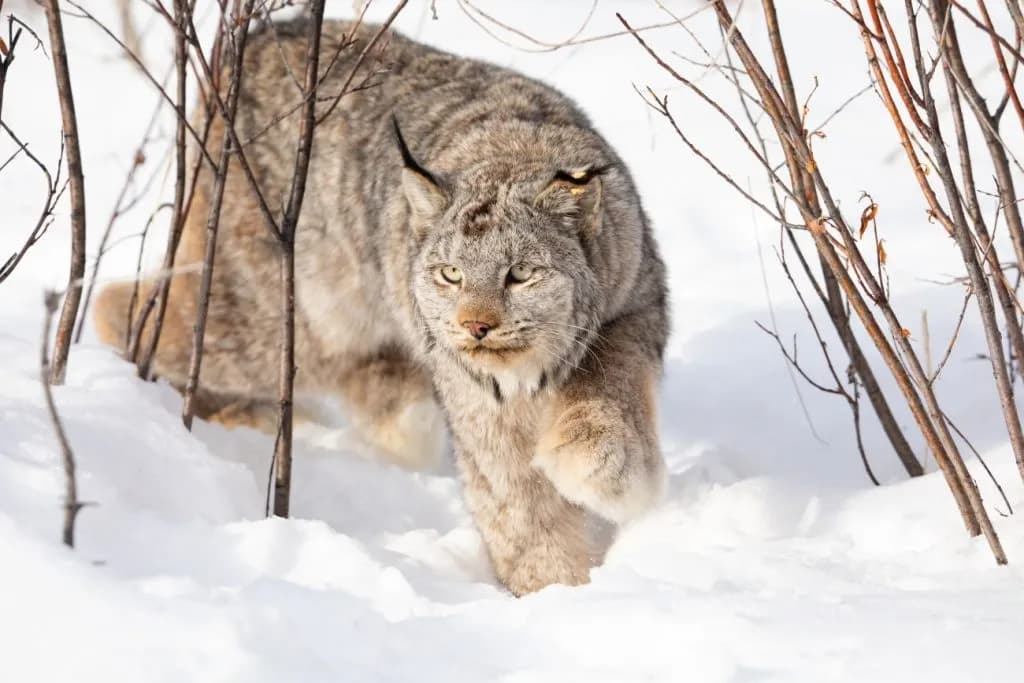
Aspen —Colorado Parks and Wildlife estimates there are roughly 65 lynx in the state, with a credible range of 45 to 92. That number includes animals spotted in the Aspen area, specifically toward Independence Pass and within the White River National Forest near Copper Mountain.
The agency is preparing to submit a paper detailing this count. It’s a small population, but it’s a persistent one. For a decade, CPW has been monitoring the species, primarily in the San Juans where annual surveys are standard. But every five years, they conduct a broader survey to get a snapshot of where the cats are now.
“The numbers back that up,” says Jake Ivan, a CPW Mammals Researcher. “According to records I have, lynx have been recorded in the Aspen area (toward Independence Pass) and White River National Forest (e.g., near Copper Mountain) periodically up through winter 2024-25.”
This isn’t just state data. Locals on the pass are seeing it too. Karin Teague, executive director of the Independence Pass Foundation, confirmed she’s spotted lynx tracks on the pass over the last five to ten years.
The habitat is right there. Recent mapping labels a lot of the forest around Aspen as “Likely Lynx Habitat,” stretching west, south, and east of town. But the monitoring effort here relies heavily on the U.S. Forest Service, since CPW doesn’t run its own frequent surveys in this specific zone.
“Lynx or lynx sign are regularly documented through monitoring efforts on the White River National Forest, including during the spring and winter of 2025,” said White River National Forest Public Affairs Officer David Boyd.
It’s a long way back from the brink. Lynx were native to Colorado but were wiped out by the 1970s due to unregulated trapping, poisoning, and habitat loss. They were gone. Then came a “pie-in-the-sky” idea during a rafting trip between biologists and agency leadership. The result was a reintroduction effort that released 96 lynx between 1999 and 2000, eventually totaling more than 200 animals from Alaska and Canadian provinces into the San Juans.
They’ve held on. Listed as state endangered since 1976 and federally threatened since 2000, the species remains in the same precarious position today. But the threats have shifted. Trapping is no longer the primary enemy. Fire is.
“There are other threats, but in my opinion they pale in comparison to fire, which can impact large chunks of habitat in a hurry, and render much of the impact zone largely useless to lynx for decades,” Ivan said.
Other risks exist. Bark beetle outbreaks, dispersed winter recreation, and certain forest management practices all play a role. Recent research suggests lynx can endure bark beetle outbreaks fairly well, though the negative impacts of the beetles on habitat structure are still a factor.
The question is whether the current population of 65 is enough to withstand a major fire event or a surge in winter recreation pressure. The habitat is there. The tracks are there. The management plan is in place. What remains to be seen is how resilient the system actually is when the big events hit.
Ivan is watching closely. He’s seen the tracks. He’s seen the maps. He’s just waiting to see if the forest can keep them.
Keep up with Aspen
The day's Western Slope news, one email each morning. Free.



S&P 500 Slips Modestly as Weak Retail Sales and Oil Prices Drive Market Correction

Aspen Essay Connects Generations Through Highway 82 Landmarks