Colorado River Faces Historic Low as Heatwave Drives Lake Powell to 23 Percent Capacity
Record-breaking March heat accelerated snowmelt, causing the Colorado River to deliver just 1.4 million acre-feet to Lake Powell, leaving it at 23% capacity and triggering federal management decisions for 40 million people.
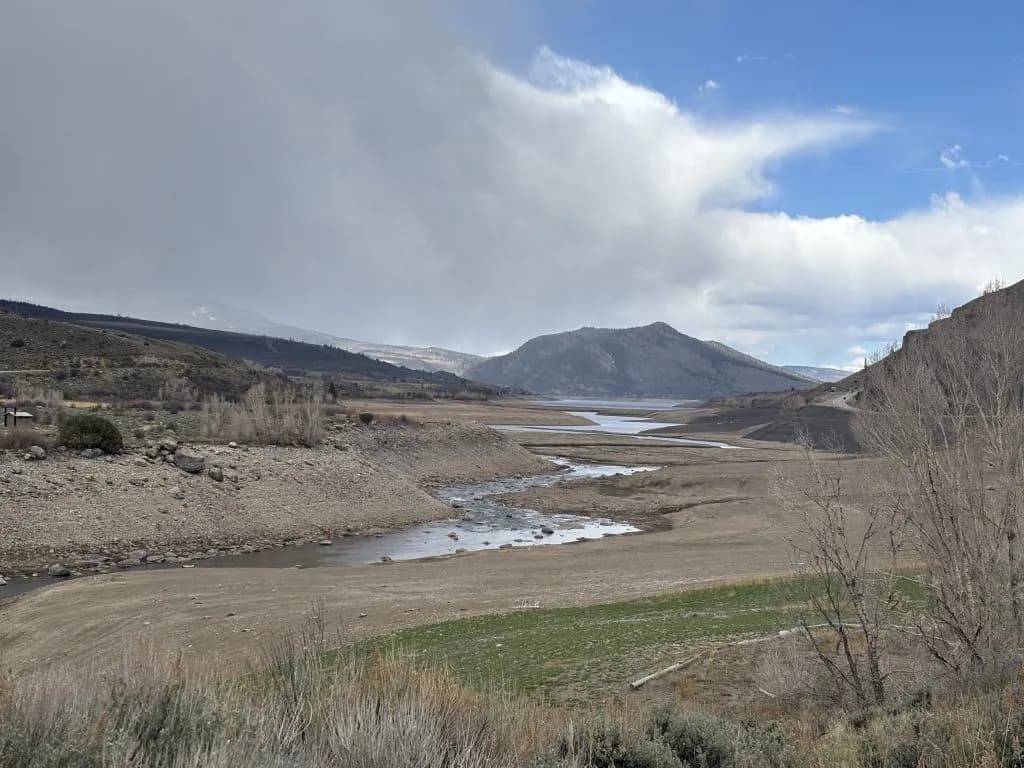
Steamboat Springs —The Colorado River is projected to deliver just 1.4 million acre-feet of water to Lake Powell this year. That is roughly one-fifth of normal. It is the lowest amount in the reservoir’s 63-year history, or close to it.
Forecasters are shrinking estimates again. The latest models confirm what hydrologists feared after an “astonishing” March heatwave. The snowmelt happened too fast. It happened too hot. The water didn’t stay in the ground. It rushed to the river and then to the lake. Now the lake is sitting at just 23% capacity.
Cody Moser, a hydrologist with the Colorado River Basin Forecast Center, put it plainly. “We are on the extreme end of things.” He said the huge heatwave at the end of March caused significant snowmelt. The result is a third-lowest delivery in recorded history.
This matters for the Western Slope. It matters for everyone downstream. The basin serves 40 million people across seven states and two countries. Lake Powell acts as a bank account. Lower Basin states draw from it during dry years. Upper Basin states add to it after using their share. Right now, the account is nearly empty.
The timing is critical. States failed to reach an agreement by the crucial deadline earlier this year. They couldn’t decide how to manage the river. So the federal government is taking over. The question of how to cut the pie is now Washington’s problem.
The trouble started before the heatwave. Snowpack was already low at the start of March. Projections for spring runoff were weak. Concerns about water shortages were high. A dangerous fire season loomed across the West.
Then the heat hit. Moser called it a “very dry March.” It shattered records. It melted snow from the “most crucial areas for spring runoff.” Nearly all these areas had less than 50% of average precipitation in March. They’ve seen less than half their average precipitation since October.
A map of the basin shows dozens of snow telemetry sites with the lowest snowpack on record at the start of April 2026.
“The heatwave moving through melted a bunch of snow,” Moser said. “It was the warmest March on record across the Southwest.”
The Colorado Climate Center reported March was the warmest in the state’s 132-year history. It wasn’t close. It was “by a large margin.” This past March was hotter than 90% of past Aprils. It set 227 new monthly high temperature records across the state.
Scientists with World Weather Attribution say the heatwave would have been “virtually impossible” without human-caused climate change. Burning fossil fuels drove the heat. The result is less water.
Locals watch the snowpack like hawks. They know what happens when the melt is too fast. The water hits the river all at once. It doesn’t trickle down. It doesn’t seep into the ground. It floods out. Then it’s gone.
The short version: The water is gone. The heat took it. The delay took it. Now we wait to see if the river can keep the lights on for 40 million people with one-fifth of its usual flow.
The federal government has the pen. They hold the keys. They have to decide who gets cut. They have to decide who pays. The Western Slope has been quiet. That silence ends now.
Keep up with Steamboat Springs
The day's Western Slope news, one email each morning. Free.