NASA Spent $10 Million on Colorado Training for Artemis II
NASA invested $10 million in a Colorado training course for the Artemis II mission, which successfully tested the Orion spacecraft and marked a new era in lunar discovery.
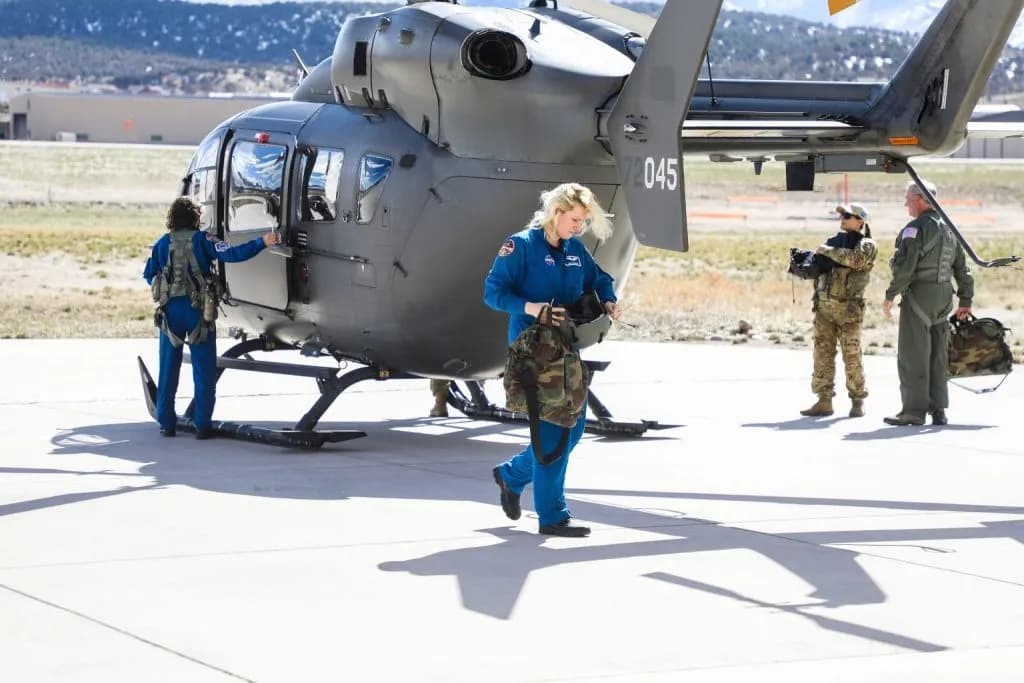
Steamboat Springs —$10 million — that's what NASA spent on a training course in Colorado for the Artemis II mission. The course, developed in partnership with the Colorado National Guard, is based out of the High-Altitude Army National Guard Aviation Training Site in Gypsum.
The three American astronauts on the Artemis II mission — Reid Wiseman, Victor Glover, and Christina Koch, participated in the course in August, eight months before they left Earth's orbit on April 1 aboard the Orion spacecraft.
Their 10-day flight around the moon marked the beginning of a new era of lunar discovery under NASA's Artemis program. The mission's primary goal was to test the new Orion spacecraft and its life-support, launch, navigation, and ground systems in deep space.
The training in Gypsum focused on the human landing system, provided by SpaceX and Blue Origin, which will be used for future Artemis missions. The course gave the astronauts a real-world environment to practice flight skills, in addition to ground and simulation training they received in Ohio and Texas.
The mountains and surrounding area around Gypsum offer unique visual illusions and flight conditions; thin air, varied landscapes - making it an ideal location for the training.
Make no mistake, this training was crucial for the astronauts. The Artemis II mission set several records and hit milestones while in flight, including venturing further from Earth than any other humans and becoming the first to view parts of the moon's far side.
The mission also carried the first woman and person of color to the moon and captured a full lunar eclipse. Artemis II touched back down on Friday evening off the coast of San Diego, marking the end of its 10-day journey.
The short version: NASA spent $10 million on a training course in Colorado, and it paid off. The Artemis II mission was a success, and the training in Gypsum played a significant role in that success.
Read that again: $10 million. That's a significant investment in the state's space industry. Worth watching: how this investment will impact the local economy and the future of space exploration in Colorado.
The High-Altitude Army National Guard Aviation Training Site in Gypsum is a unique facility. one that offers a real-world environment for astronauts to practice flight skills. The site's thin air and varied landscapes make it an ideal location for training.
The Colorado National Guard partnered with NASA in 2021 to develop the training course. The partnership has been successful, with the Artemis II astronauts participating in the course in August.
The Artemis program aims to reestablish frequent human travel to the moon and future missions to Mars. The program's success relies on the training and preparation of astronauts, which takes place in part in Colorado.
Folks around here should take notice: the space industry is growing in Colorado, and it's not just about the money. It's about the innovation, the technology, and the exploration. The success of the Artemis II mission marks a significant milestone.
The community in Gypsum and surrounding areas should be proud; they're playing a significant role in the success of the Artemis program. The training site in Gypsum is a unique asset, one that will continue to be used for future missions.
The next step for NASA's lunar ambitions is unclear - but the training in Colorado will continue to play a crucial role in the success of future missions. The investment in the state's space industry will pay off, and the local economy will benefit.
That's what locals need to know: the space industry is growing, and it's growing in Colorado. The Artemis II mission has ended, but its impact will be felt for years to come. Colorado will be at the forefront of future space exploration.
The training in Gypsum was a success, and it will continue to be used for future missions. The partnership between NASA and the Colorado National Guard has been successful, and it will remain an important part of NASA's training efforts.
People in the valley should take notice: the space industry is growing, and it's not just about the technology; it's about the people, the innovation, and the exploration. The success of the Artemis II mission demonstrates the importance of the training in Colorado.
The community should be proud - they're playing a significant role in the program's success. The training site in Gypsum is a unique asset, one that will continue to be used.
The next step is unclear, but the training in Colorado will remain crucial to the program's success. The investment in the state's space industry will have a lasting impact, and the local economy will benefit.
That's the fact.
Keep up with Steamboat Springs
The day's Western Slope news, one email each morning. Free.