Did you know that 60 years ago this month, Vail wasn’t even a town
Did you know that 60 years ago this month, Vail wasn’t even a town? On Aug. 23, 1966, Vail officially became an incorporated town. The vote was 43 to 19 in favor of incorporation. That wasn’t a close call; it…
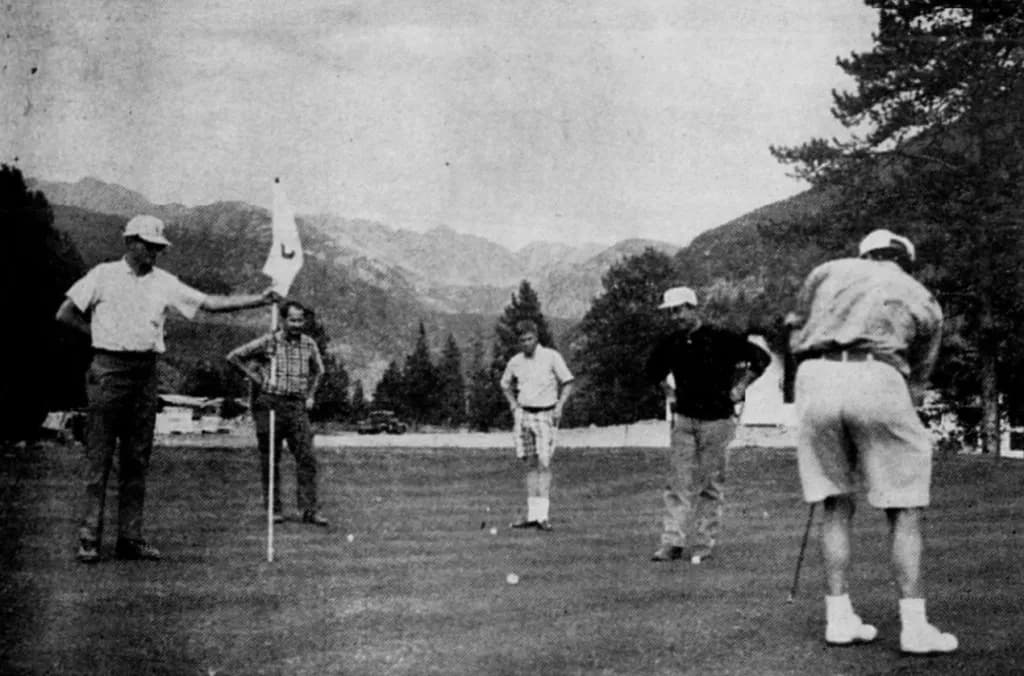
Aspen —Did you know that 60 years ago this month, Vail wasn’t even a town?
On Aug. 23, 1966, Vail officially became an incorporated town. The vote was 43 to 19 in favor of incorporation. That wasn’t a close call; it was a landslide.
The Vail Daily’s "Time Machine" column highlights the reporting from that era, specifically citing The Vail Trail. The Sept. 2, 1966, issue of the Trail noted that almost 100% of qualified and registered voters went to the polls. That turnout number is staggering by modern standards, but it makes sense when you look at the scale of the community then.
The short version: Vail was a small, tight-knit entity where every vote counted visibly. A 43-19 margin in a town that size means the outcome was decided by a handful of neighbors.
After the Aug. 23 vote, the next step was holding a regular November election to determine who would become trustees in the new town. The Trail reported that interested parties had until Sept. 19, or "at most a day or so later," to register. Registration wasn’t done online. Residents had to go to the Eagle County Courthouse or, more locally, to the Town Clerk’s house in Minturn.
Think about that logistics. To have a say in your own local government, you had to drive to Minturn or Eagle and stand in line. There was no digital ballot. No absentee mail-in convenience that takes weeks to process. You showed up, you voted, and you waited for the November 8 general election to pick your leadership.
The Vail Daily piece also looks back at two other anniversaries from the same month, offering a broader look at how the Western Slope operated in the mid-20th century.
Seventy years ago, on Aug. 30, 1956, the $3 million effort to divert Eagle County’s water to Front Range cities was set to begin. The Eagle Valley Enterprise reported that construction of the Homestake water diversion tunnel would start immediately. John Elliott, a Denver engineer and the "father of the plan," outlined the project: a 5-mile boring effort to take water from Homestake Creek, a tributary of the Eagle River, to the Lake Fork of the Arkansas River near Leadville.
From there, water would be piped to Trout Creek Pass. At a point known as Divide, Colorado Springs would take its share through another pipeline. Aurora’s water was destined for Antero Reservoir on the South Platte system. A total of 75,000 acre-feet of Homestake water was to be diverted. Colorado Springs and Aurora were each contracted for one-third. The remaining third would go to other Denver suburbs, provided current negotiations went through.
That was a massive infrastructure project for its time. It moved water from our valley to the plains. It’s worth remembering that this wasn’t just a local issue; it was a regional water war fought with tunnels and pipelines.
Eighty years ago, on Aug. 30, 1946, the Enterprise reported the death of Bill Lucksinger. A World War I veteran born in Basalt, he died in Glenwood on Aug. 26 after an explosion in his home. The Enterprise reported that Lucksinger applied a distillate to a smoldering fire in his kitchen range. The resulting blast threw him across the room and set the kitchen on fire. Windows and doors were blown out. He was critically burned on his face and upper body.
He was taken to Hopkins’ hospital in Glenwood Springs, where he died a day later. Funeral services were held three days later, with many people from Eagle and Gypsum attending. Lucksinger was born Sept. 8, 1896, in Basalt and attended local schools before enlisting for service in World War I on April 10, 1918. He joined Battery C of the U.S. Army’s 49th Artillery.
These stories aren’t just trivia. They map the physical and political evolution of our region. Vail went from a voting district to a town in 1966. Water left the valley in 1956. Local lives were cut short by domestic accidents that would be unthinkable today, as seen in 1946.
The Vail Daily’s retrospective reminds us that the infrastructure we take for granted — town governance, water rights, emergency medical care — was built piece by piece.
Vail is a town now. It has been for 60 years. The vote was 43 to 19.
Keep up with Aspen
The day's Western Slope news, one email each morning. Free.