Eagle County Pays $1.18 Million to Defeat Uinta Basin Railway
Eagle County spent $1.18 million in legal fees challenging the Uinta Basin Railway before the Supreme Court ruled against them, clearing the way for the oil rail line.
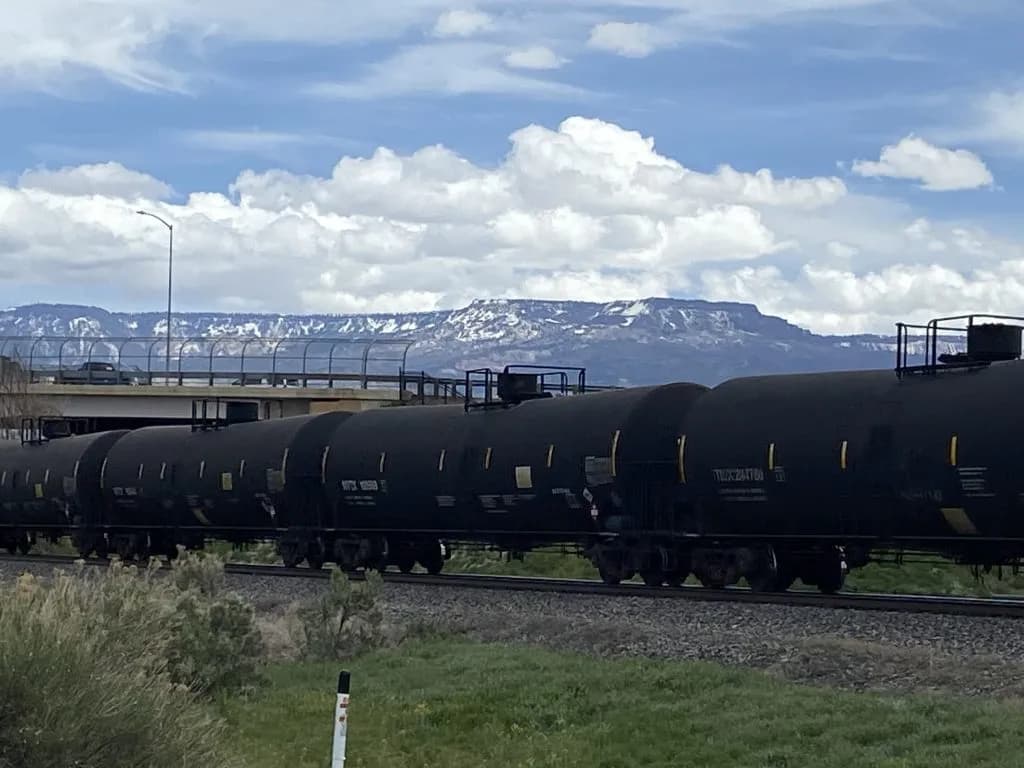
Aspen —Eagle County paid nearly $1.2 million to fight the Uinta Basin Railway. The county lost. The Supreme Court rejected the appeal last year.
The final tab for the legal challenge came in at $1,179,694. That is the total cost in attorney’s fees and expenses since the lawsuit began in February 2021. The money is gone. The rail line is moving forward.
Justin Patrick, the county’s Strategic Director of Communications, confirmed the figures in an email Tuesday. The bulk of the bill went to Kaplan Kirsch, a Denver law firm. They received $921,003. The rest — $258,691 — went to Goodwin Proctor LLP in Washington, D.C. That firm handled the specialized litigation before the U.S. Supreme Court.
There are no further costs anticipated. The county is done paying for this specific battle.
The lawsuit argued that the U.S. Surface Transportation Board failed to adequately weigh the environmental impacts of the proposed 88-mile rail spur. Utah’s Seven County Infrastructure Coalition proposed the project. It would carry a massive surge of oil along the Colorado River. Eagle County, backed by environmental groups and towns like Avon, said the board ignored the damage to the river.
The appellate court agreed in 2023. The U.S. Supreme Court disagreed last May. The high court narrowed the scope of the National Environmental Policy Act. It ruled that agencies only need to consider "proximate impacts." That distinction was enough to kill the county’s argument.
Commissioners were disappointed. The decision was 8-0. They vowed to keep fighting.
Now, they are attacking a different part of the same project. Last week, Eagle County filed a second lawsuit. This one targets the U.S. Department of the Interior and the U.S. Bureau of Land Management. The county argues these agencies used "Alternative Arrangements" under President Donald Trump’s "energy emergency" executive order. They did it to expedite the expansion of a coal-loading facility in Utah. That facility will handle Uinta Basin oil.
The county claims the agencies ignored multiple federal laws and the public-input process. The alternative, known as the Wildcat Loadout, could achieve up to 75% of the capacity of the multi-billion-dollar railway. That translates to 260,000 barrels a day. The oil would move along 100 miles of Union Pacific tracks through mountainous terrain.
"This action is about ensuring that federal agencies follow the law and fully evaluate the impacts of projects that affect our communities," Commissioner Tom Boyd said. He emphasized protecting natural resources, public safety, and quality of life.
The concern is specific. Remote Colorado River canyons are at risk. The oil is waxy crude. It is too thick for pipelines. It must be transported in heated tanker cars. Locals worry about spills and wildfires in those narrow, hard-to-reach valleys.
Colorado Attorney General Phil Weiser has joined a multi-state lawsuit challenging Trump’s executive order. His case is based in part on the Wildcat Loadout expansion.
The first lawsuit cost over a million dollars. The second suit is capped at $225,000. That is a smaller price. But it is still a steep entry fee for a county trying to stop a train it cannot afford to watch pass through its backyard. The rail is still coming. The money is just the receipt.
Keep up with Aspen
The day's Western Slope news, one email each morning. Free.

S&P 500 Slips Modestly as Weak Retail Sales and Oil Prices Drive Market Correction

Aspen Essay Connects Generations Through Highway 82 Landmarks