Eagle County Sues Over Wildcat Loadout Facility Expansion
Eagle County files lawsuit against federal government over Wildcat Loadout Facility expansion, citing environmental and community concerns.
Aspen —Eagle County Commissioner Matt Scherr says the county's latest lawsuit against the Wildcat Loadout Facility expansion is about one thing: protecting the community. "We're not going to stand by and watch as the federal government fast-tracks a project that puts our water, our land, and our people at risk," he says.
The lawsuit, filed March 26, challenges the federal approval of the expansion, alleging violations of the Federal Land Policy Management Act, National Environmental Policy Act, and the Administrative Procedure Act. Eagle County claims the Bureau of Land Management (BLM) arbitrarily reversed its commitment to public participation in the decision-making process.
This isn't the first time Eagle County has pushed back against oil-train traffic. The county, along with environmental groups, previously challenged the 88-mile Uinta Basin Railway in court - a case that made it to the U.S. Supreme Court. The expansion of the facility in Utah is seen as an alternative to that project, with the potential to transport up to 75% of the oil the railway spur aims to move.
The numbers are stark: the Uinta Basin Railway would increase oil-train traffic to 350,000 barrels a day on five, two-mile-long trains. That's up from the current 90,000 barrels of waxy crude a day being trucked to refineries. The impact on the community would be significant - more trains, more traffic, more risk of accidents and environmental disasters.
Eagle County has already spent nearly half a million dollars in legal fees since 2020, with the majority going to the Denver-based law firm of Kaplan Kirsch & Rockwell. The latest lawsuit seeks reimbursement of litigation costs and legal fees, but officials don't have an update on the current spending.
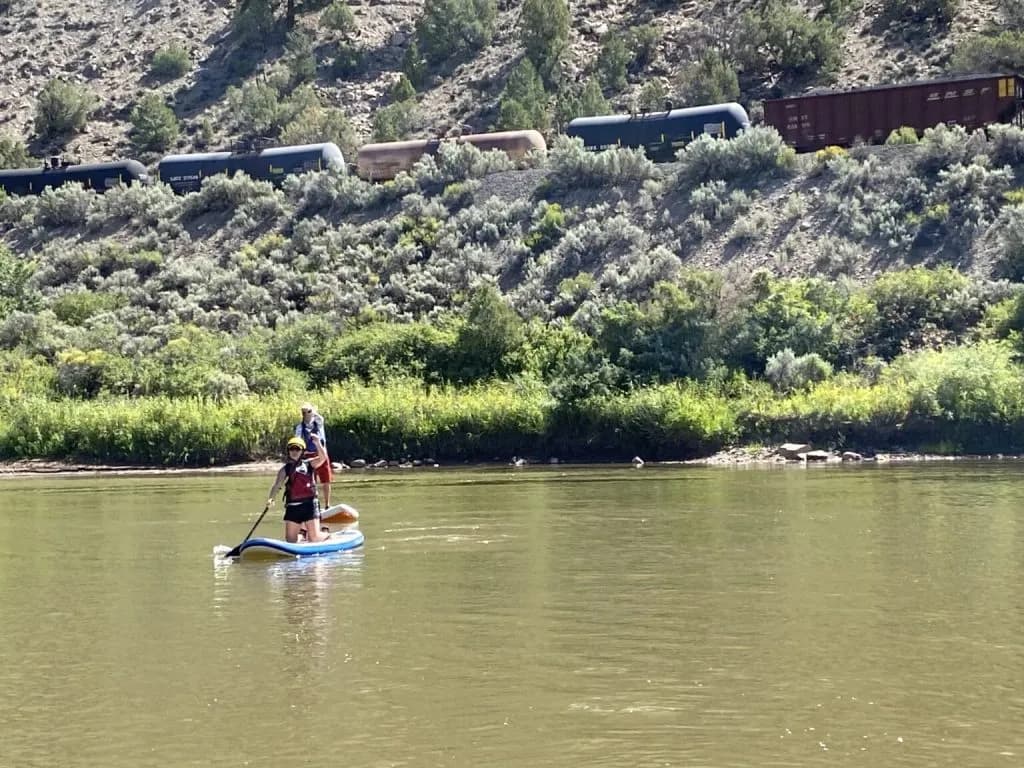
The county's concerns aren't just about the environment - they're also about the community. "We're talking about the Colorado River, critical water sources, and nearby communities that would endure the increased daily traffic of oil trains," the lawsuit reads. The potential for devastation is real, and Eagle County is fighting to ensure that the federal government doesn't ignore the risks.
The use of "Alternative Arrangements" to approve the amended railway right-of-way has essentially thrown out previous comments and assertions made by the county, according to the lawsuit. Eagle County argues that this approach disregards the increased risk of accidents, derailments, wildfires, and oil spills that could devastate public lands and nearby communities.
As the lawsuit moves forward, Eagle County won't back down. One thing is that the community is worth fighting for, and the county is willing to take on the federal government to protect it. The question now is - will the federal government listen, or will the county be forced to continue fighting for its rights?
The Colorado River, a critical water source, runs through the heart of Eagle County. The potential impact of increased oil-train traffic on this resource is a major concern for the community. Make no mistake - this lawsuit is about more than just a facility expansion. It's about the future of the community, and the protection of its most valuable resources. The county's lawsuit may be one to watch - not just for Eagle County, but for the entire region. Eagle County's determination to protect the environment and the community is one reason locals are paying close attention to this case.
In a region where outdoor recreation and tourism drive the economy, the potential impact of increased oil-train traffic can't be overstated. Eagle County's actions demonstrate its commitment to protecting the environment and the community. As the case moves forward, folks around here will be watching closely - the outcome will have a direct impact on their lives, their businesses, and their future. The fact that the BLM approved the expansion under the auspices of a "energy emergency" raises questions about the federal government's priorities. Is the push for increased oil production worth the risk to communities like Eagle County? One possible outcome is that the courts will hold the federal government accountable for its actions. But for now, the lawsuit is still unfolding.
This will cost taxpayers - the legal fees are already piling up, and the potential environmental costs are impossible to quantify. The community will be watching closely as the lawsuit moves forward, waiting to see if the federal government will be held accountable for its actions. The county's determination to protect its resources is evident - but the outcome is far from certain.
For people in the valley, the stakes are high. The potential for environmental disaster is real, and the community is taking a stand. One possible next step is that the lawsuit will set a precedent for how the federal government handles similar projects in the future. The community will be heard, and its concerns will be addressed. What's next is still uncertain.
Keep up with Aspen
The day's Western Slope news, one email each morning. Free.