Colorado Faces Lawsuit Over AI Regulation Law
Elon Musk's xAI company has sued Colorado over its AI regulation law, sparking a debate on free speech and AI development. The lawsuit's outcome will have significant implications for the state's tech industry and residents.

Colorado —Snowflakes fall gently on the Grand Mesa, a serene backdrop for the brewing storm in Colorado's tech scene. The sound of keyboards clacking and minds racing fills the air in tech hubs from Grand Junction to Boulder. Make no mistake, the fight over AI and free speech is coming to the Western Slope.
Elon Musk's xAI company has sued Colorado in federal court, seeking to block the state's artificial intelligence antidiscrimination law from taking effect. The law, passed in 2024, aims to regulate "high-risk" AI systems and protect consumers from "algorithmic discrimination." Musk's lawyers claim the law is "unconstitutionally vague" and would force his AI chatbot, Grok, to promote the state's ideological views, violating the First Amendment.
The lawsuit has sparked a heated debate, with State Rep. Briana Titone, one of the bill's lead sponsors, calling it a "fishing expedition" that misinterprets the core of the law. Titone emphasizes that the law is about consequential decisions, not freedom of speech. The short version: this law is not about restricting speech, but about ensuring AI systems don't discriminate against protected classes.
As the Colorado legislature prepares to debate tweaks to the policy, locals are watching closely. The law is set to take effect on June 30, and the lawsuit seeks to keep it from happening. Worth watching is how this lawsuit will impact the AI industry and the state's efforts to regulate it. The Colorado Attorney General's office has declined to comment on the litigation, leaving many to wonder what's next.
The complaint filed by Musk's lawyers is lengthy, but one passage stands out: "Unless the implementation and enforcement of SB24-205 is enjoined, it will violate xAI's constitutional rights and cause irreparable constitutional harm, impose enormous burdens on xAI and the AI industry, and substitute Colorado's political preferences for the national economic and security imperative of American AI dominance." Read that again - this is not just about Colorado's law, but about the future of AI regulation in the US.
State Rep. Manny Rutinel, another lead sponsor of the bill, has a different take on the lawsuit. He believes it's a plot for Musk to "enrich himself and his MAGA cronies." The community is divided, with some seeing the lawsuit as a necessary step to protect free speech and others viewing it as a power play by a wealthy tech mogul.
As the lawsuit makes its way through the courts, folks around here are left to wonder what this means for the local tech industry. Will this lawsuit stifle innovation or protect consumers? The outcome will have far-reaching implications for the state and its residents.
In Delta County, where agriculture and tech coexist, the concern is palpable. The county spends around $1 million annually on technology infrastructure - that's what it costs to keep the local network running. If the AI law is blocked, it could impact how that money is spent in the future. The question is, what will happen to the local economy if the law is enacted or blocked?
The fight over AI and free speech is just beginning, and locals will be watching closely. As the state legislature debates tweaks to the policy, the community will be waiting to see how this lawsuit plays out. The future of AI regulation in Colorado and the US hangs in the balance, and the outcome will be felt from the Grand Mesa to the streets of Grand Junction.
This will cost taxpayers - the lawsuit, the legislation, the ongoing debate. The exact figure is unknown, but it won't be cheap. The community will be footing the bill, one way or another. What will they get in return?
Keep up with Colorado
The day's Western Slope news, one email each morning. Free.
Federal Report Sets 200,000 Acre-Foot Water Conservation Target for Upper Basin
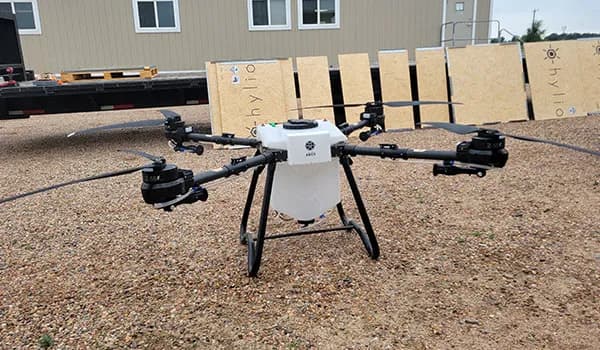
Colorado Parks and Wildlife Deploys Precision Drones for Weed Control