Aspen Public Radio Wins Lawsuit Against Trump Administration
A federal court has ruled in favor of Aspen Public Radio and other public radio stations, blocking the Trump administration's attempt to withhold federal funds over alleged biased reporting.
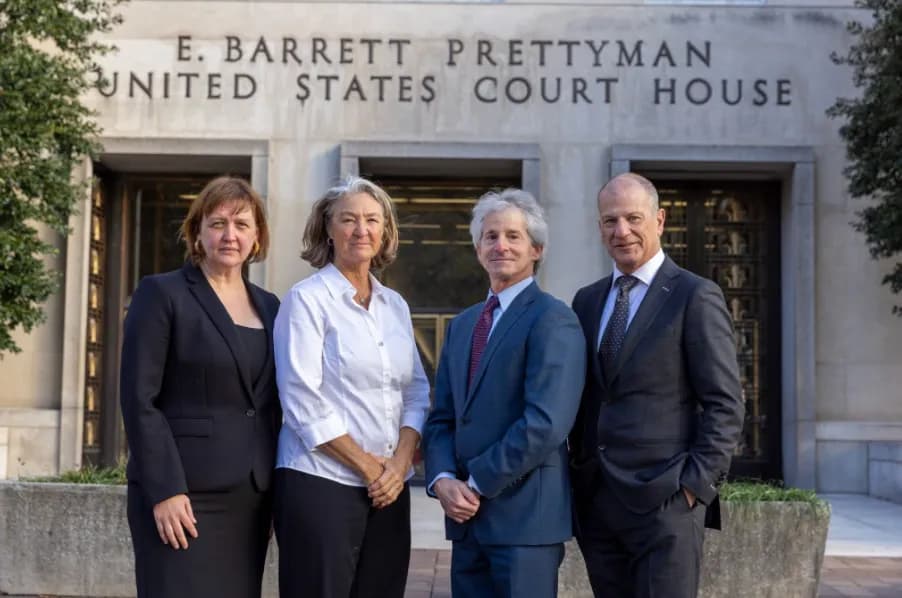
Aspen —Breeze Richardson, executive director of Aspen Public Radio, called the federal court decision a "tremendous win" — and it's hard to argue with that. U.S. District Judge Randolph Moss ruled in favor of Aspen Public Radio, KSUT Public Radio, Colorado Public Radio, and NPR, permanently blocking the Trump administration's Executive Order 14290. This order, issued in May 2025, aimed to withhold federal funds from NPR due to alleged "biased" reporting. Make no mistake, this decision will have significant implications for local media outlets on the Western Slope.
The executive order, dubbed "Ending Taxpayer Subsidization of Biased Media," directed federal entities to cut off grants to NPR from various agencies, including the Corporation for Public Broadcasting and the Federal Emergency Management Agency. But the court saw through this — Judge Moss cited the First Amendment as the reason for his decision, stating it's "difficult to conceive of clearer evidence that a government action is targeted at viewpoints that the President does not like." That's a crucial point: the government can't punish journalists or broadcasters for coverage it disapproves of.
The local radio stations took a strong stance against the executive order from the start. Ten months ago, they issued a joint statement emphasizing that "free press is not optional in a democracy, it is foundational." This statement was more than just a press release; it was a declaration of their commitment to independent, verified news and information. The short version: these local radio stations were willing to take on the federal government to protect their right to free speech.
The lawsuit, "National Public Radio, Inc. v. Trump," argued that public media has a First Amendment right to be free from government attempts to control speech. First Amendment Attorney Steve Zansberg represented the plaintiffs, making it clear that "the Constitution does not permit the government to punish journalists or broadcasters for coverage it disapproves of." Aspen Public Radio Attorney Karl Hanlon added that the ruling "affirms that government has no role in controlling or punishing independent reporting it does not believe in." Read that again; this is a significant victory for local media outlets, and it sets an important precedent.
This decision will have a direct impact on folks around here. For locals who rely on these radio stations for news and information, this means that their favorite stations can continue to provide unbiased reporting without fear of government retaliation. It's worth watching how this decision will affect the way local media outlets cover sensitive topics - will they feel more empowered to speak truth to power, or will they still face pressure to self-censor?
The community should be proud that it was Aspen Public Radio that led the charge in this case. As Richardson said, "having a free and independent press is really critical to our democracy." This will cost taxpayers nothing. in fact, it will save them from footing the bill for a misguided executive order. The real cost would have been to our democracy, had the court ruled in favor of the Trump administration.
The radio station's leadership took a huge risk by standing up to the federal government. But in the end, it paid off. One thing is certain is rephrased to: The outcome of this case has far-reaching implications for the way we consume news and information in our community, and the impact will be felt for a long time.
Keep up with Aspen
The day's Western Slope news, one email each morning. Free.