Federal Government Takes Equity Stake in Boulder Quantum Firms
Three Boulder-area quantum computing firms — Atom Computing, Infleqtion, and Quantinuum — secure $100 million each in federal funding by trading minority equity stakes to the Department of Commerce under the CHIPS and Science Act.
Colorado —“Swapping a little equity for federal incentives and funding isn’t new, but it’s become more common under the Trump administration.”
That’s the blunt reality for three Boulder-area quantum computing firms: Atom Computing, Infleqtion, and Quantinuum. Each just traded a slice of ownership for $100 million in federal cash. The U.S. Department of Commerce announced Thursday that these nine selected companies across the country would receive the investment, with Colorado’s trio securing their share under the CHIPS and Science Act.
Here is the deal on paper: the government gets a minority, noncontrolling equity stake in each company. The goal, according to Commerce, is to “enhance the return for the U.S. taxpayer.” It’s a leveraged buyout where Washington becomes a silent partner in your future profits.
Let’s do the math on Infleqtion, the Louisville-based firm that went public in February. They raised $550 million during their initial public offering. Now, they’re issuing common stock valued at $100 million at a 15% discount to the Department of Commerce. That’s not just free money; that’s diluted ownership. If the company succeeds, the government eats at the table. If it fails, the taxpayers take the hit on the equity value.
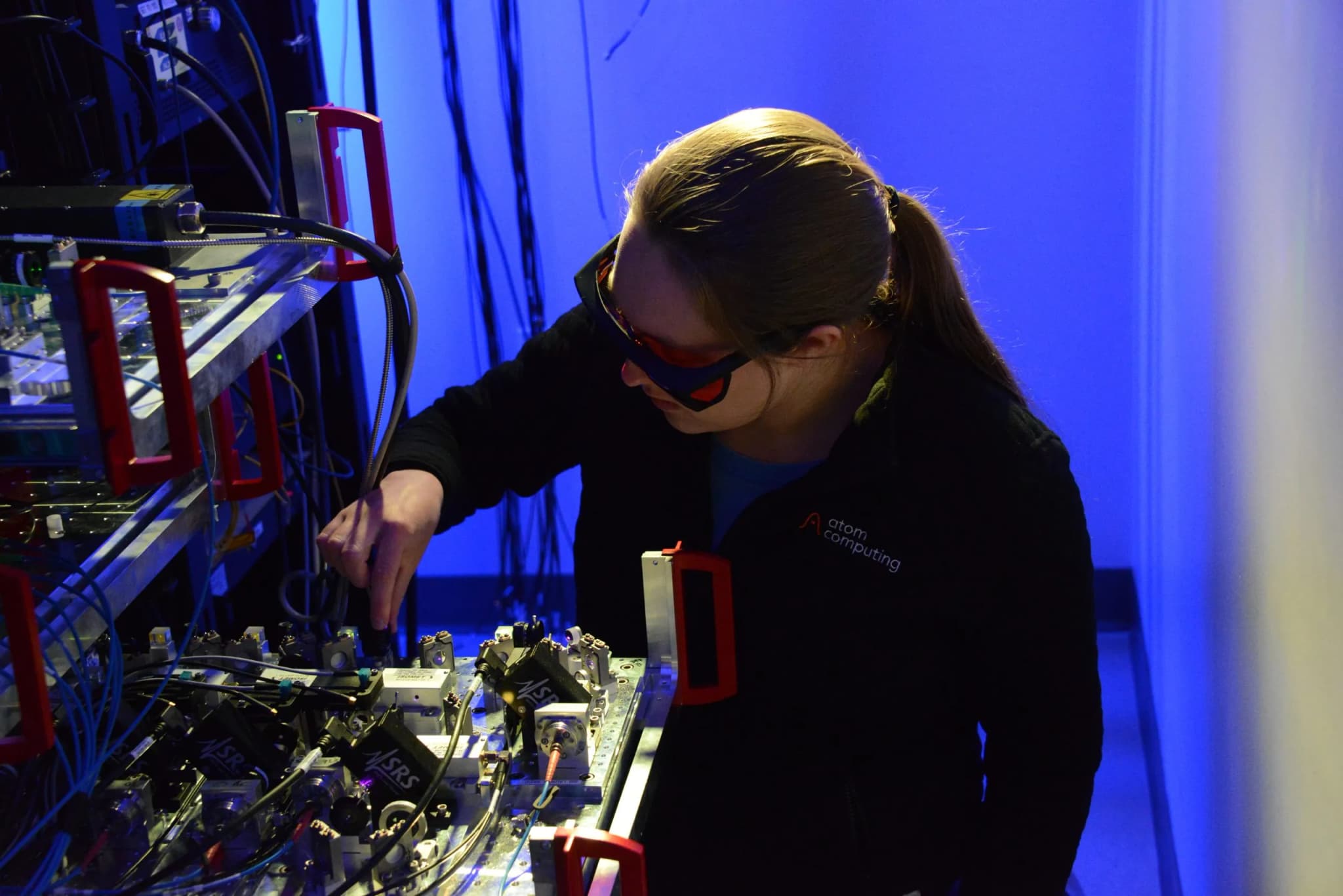
Atom Computing is the one with the most visible footprint in Boulder. They opened a facility there three years ago to commercialize technology that promises to crunch complex calculations in minutes rather than weeks. They employ 80 people locally. They’ve raised more than $200 million from investors so far. The funding will help them develop multiple engineering and manufacturing solutions in parallel, according to their statement. That’s good news for the 80 employees. It’s less clear what it means for the average Boulderite wondering why their property taxes aren’t dropping to pay for quantum computers.
Quantinuum in Broomfield didn’t comment on the equity trade. Atom Computing didn’t either. Infleqtion said the award is tied to progress and project costs. Transparency is optional when you’re this big.
This might be one of the first times the federal government has taken a direct stake in a Colorado-based company. The Commerce Department didn’t return a request for comment, which is standard bureaucratic silence. But the pattern is clear. The current administration is targeting technology, critical minerals, and nuclear energy. Intel got $8.9 billion last year and bought stock. Now, it’s quantum’s turn.
Colorado wasn’t even tipped off before the announcement. The state became a designated U.S. Tech Hub for quantum computing in October 2023 and received a $40.5 million federal award shortly after. This $300 million injection is a massive escalation.
For context, consider the local impact. These aren’t just abstract tech giants. They are physical buildings in Boulder, Louisville, and Broomfield. They are jobs. But they are also equity stakes held by the federal government. When you swap equity for funding, you aren’t just borrowing money. You’re selling a piece of your future valuation to Washington.
The bottom line? Locals get a boost in high-tech employment and infrastructure in the Front Range corridor. The federal government gets a financial interest in the next big tech breakthrough. And the taxpayers? They get a minority stake in companies that may or may not dominate the market in a decade. It’s a bet on quantum computing. And right now, the house has a seat at the table.
Keep up with Colorado
The day's Western Slope news, one email each morning. Free.




Federal Report Sets 200,000 Acre-Foot Water Conservation Target for Upper Basin
Colorado Parks and Wildlife Deploys Precision Drones for Weed Control