Federal Judge Rules Against Colorado Primary System
A federal judge's ruling has given new hope to Western Slope Republicans opposing Colorado's primary system, potentially altering the state's election process.
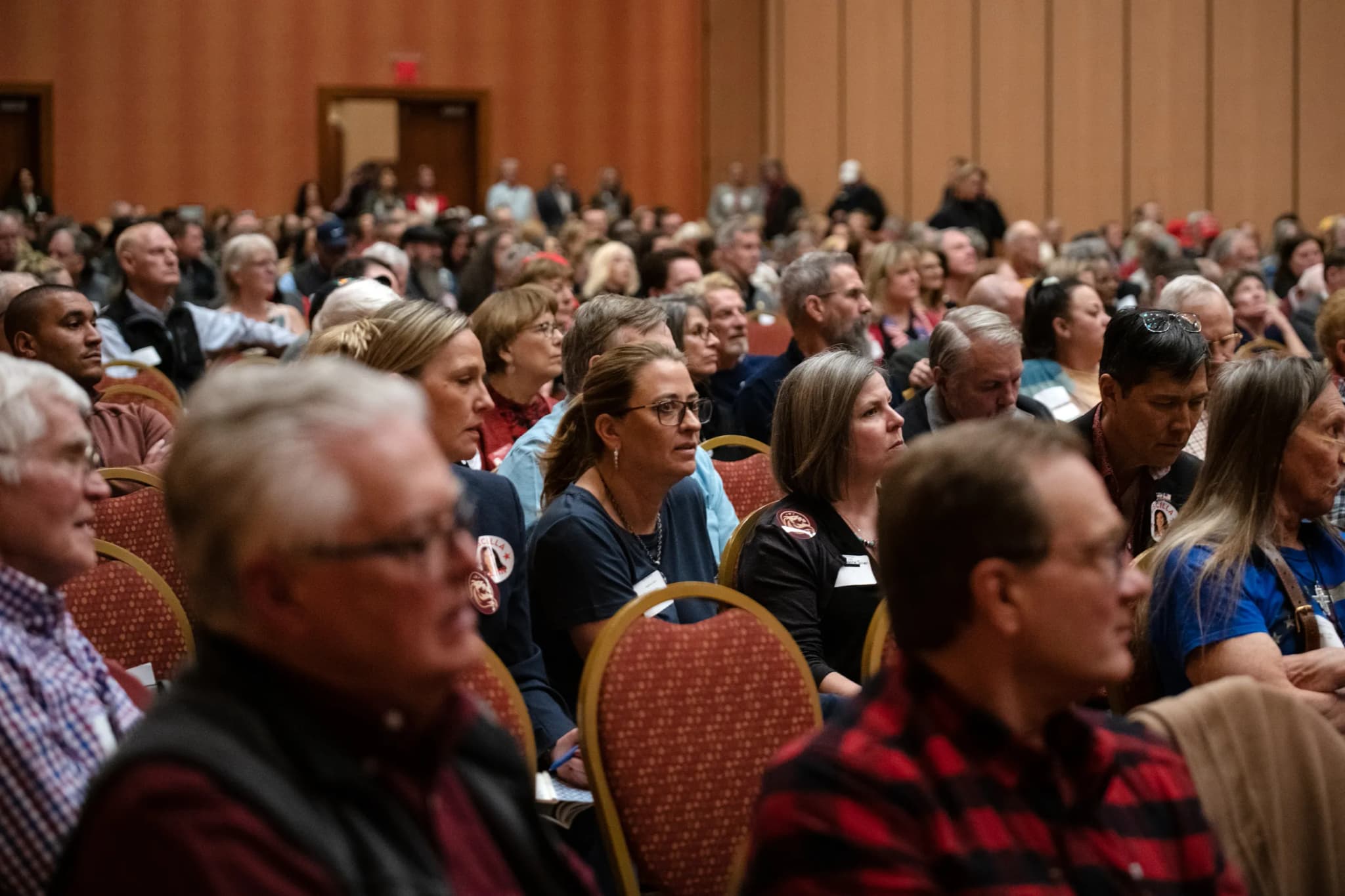
Colorado —Snow-capped peaks loom over the Western Slope, a region where politics can be as unforgiving as the terrain. In a Grand Junction coffee shop, locals discuss the latest development in the Colorado GOP's ongoing battle to opt out of the state's primary system. A federal judge's ruling has given new hope to Western Slope Republicans who oppose the current system — and it will be worth watching how this decision impacts local elections.
U.S. District Court Judge Philip A. Brimmer found that the requirement for 75% of the central committee to support opting out of primaries is unconstitutionally high. This ruling is a significant blow to Colorado's primary system, which has been in place since voters approved Proposition 108 in 2016. The proposition allowed unaffiliated voters to participate in partisan primaries, a move that some Republicans have fiercely opposed.
The Colorado GOP has been trying to opt out of the primary system for years, but has consistently failed to meet the 75% threshold. A faction of Republicans, led by former state Rep. Dave Williams, has been driving this effort. Williams, who was the Colorado GOP's chairman for two years starting in March 2023, has argued that the current system is flawed and that the party should be able to choose its own candidates without interference from unaffiliated voters.
Judge Brimmer's ruling does not specify what threshold would be constitutional, but it does suggest that the current requirement is too high. The ruling is a victory for the Colorado GOP, which has argued that the opt-out provision creates a severe burden on the party's right to association. This right is enshrined in the 14th Amendment of the U.S. Constitution.
The implications of this ruling are still unclear, but it could potentially give Republicans more control over their own primary process. This could be significant for Western Slope Republicans, who have often felt that their voices are not being heard in the state's primary system. The region has a distinct political identity, and locals may be more likely to support candidates who reflect their values and priorities.
Make no mistake, this ruling will not go unchallenged. The state of Colorado will likely appeal the decision, and the issue may ultimately be decided by a higher court. However, for now, the ruling gives new hope to Western Slope Republicans who have been seeking to opt out of the primary system.
The short version is that a federal judge has ruled in favor of the party, finding that the current opt-out provision is unconstitutionally high. This ruling has significant implications for the state's primary system and could potentially give the party more control over its own primary process.
As the community digests this news, folks around here are wondering what this means for local elections. Will the Colorado GOP be able to opt out of the primary system, and if so, how will this impact the candidates who run in Western Slope districts? These are questions that will be answered in the coming months, but for now, the ruling is a significant development in the ongoing debate over Colorado's primary system.
Read that again: a federal judge has ruled that the burden for opting out of Colorado's primaries is too high. This ruling is a major boost for the Colorado GOP, which has been seeking to opt out of the system for years. One impact is that the decision will have significant effects on the state's primary system, and locals will be watching closely to see how it all plays out.
Keep up with Colorado
The day's Western Slope news, one email each morning. Free.



Federal Report Sets 200,000 Acre-Foot Water Conservation Target for Upper Basin

Colorado Parks and Wildlife Deploys Precision Drones for Weed Control