Grand Junction Honors Three Helitack Firefighters Killed by Aspen Acres Fire
Grand Junction held a memorial service for Emily Barker, Nick Hutcherson, and Sydney Watson, three Helitack crew members who died when flames overtook their shelters during the Aspen Acres fire.
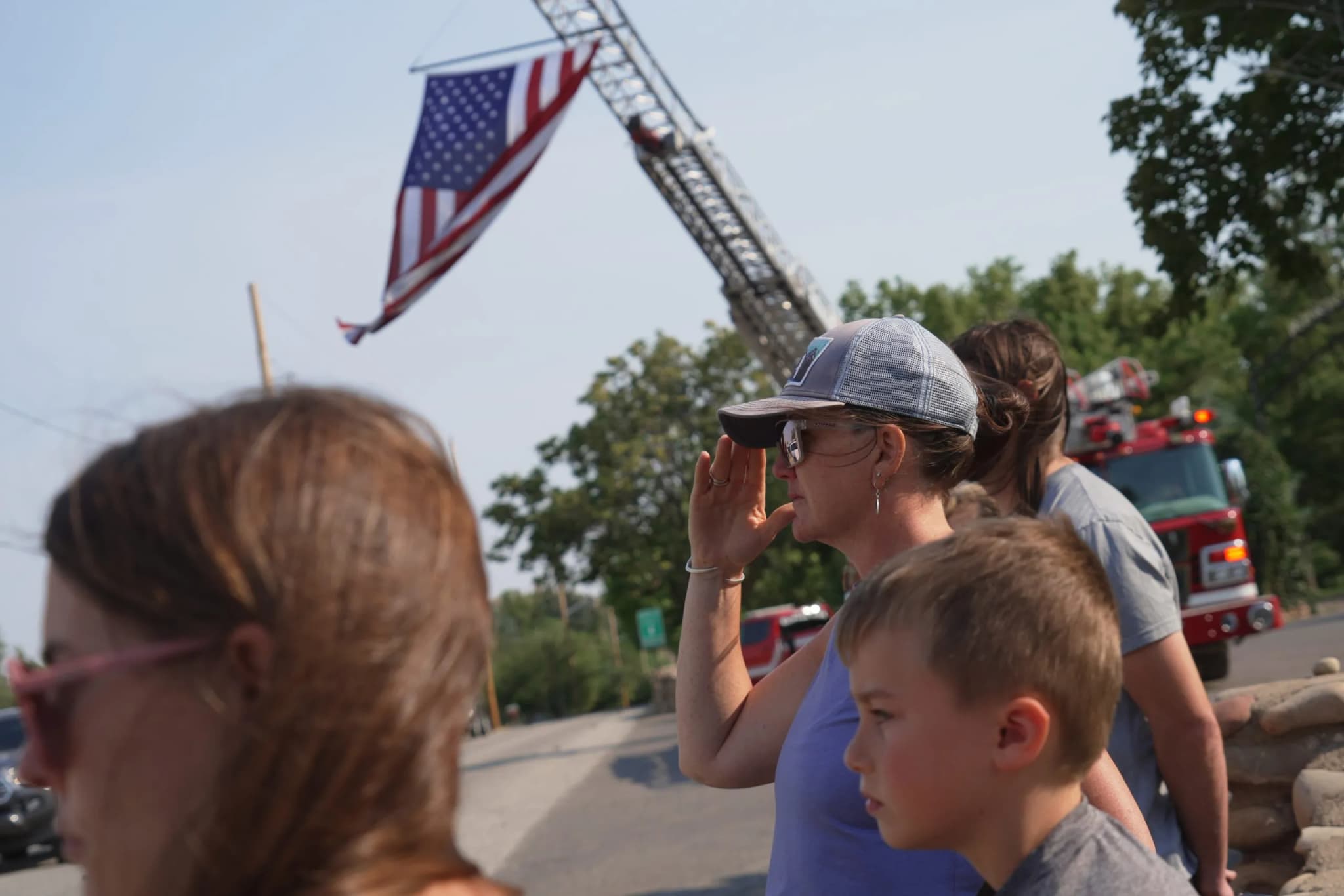
Grand Junction —The air in Grand Junction tasted of ash and expensive coffee, thick with the kind of grief that doesn’t just sit in your chest but settles into the floorboards. It was a heavy, humid silence that followed U.S. Wildland Fire Service Chief Brian Fennessy as he stood before a stage draped in flags and framed photographs, trying to explain why three of his own were gone. They weren’t just statistics in a wire report; they were Emily Barker, Nick Hutcherson, and Sydney Watson, members of a Helitack crew who had deployed emergency protective shelters when the flames moved faster than their boots could carry them.
You can feel it in the way people speak about wildland firefighting now — less like a job and more like a calling that demands everything. Fennessy told the gathered crowd that these three showed up day after day to make order out of chaos, bringing purpose and heart to a job that often offers neither. But there’s a rough edge to that romance, isn’t there? The National Guard was deployed Friday just to staff checkpoints for the Aspen Acres fire, which has burned about 136 square miles south of Colorado Springs and damaged or destroyed more than 200 structures. That’s not just acreage; that’s neighborhoods, that’s property taxes shifting, that’s the smell of smoke in your laundry.
While the fire near where Barker, Hutcherson, and Watson died is now almost entirely contained, nearly 40 large fires are still burning across the West. Most are scattered around Colorado, Utah, and New Mexico, but others stretch from Alaska to Arizona. Months of dry weather and a record lack of snow this past winter, combined with erratic winds, have been fueling the infernos. It’s a pattern we’re becoming painfully familiar with, yet each new tragedy feels like a fresh wound.
Sarah Fisher, the U.S. Forest Service’s deputy chief for fire and aviation management, spoke to the weight of this loss during the memorial service. She noted that the work demands long days, heavy burdens, and quiet acts of bravery. "We will remember them," she said, "we will honor their legacy and we will carry their light forward." It’s a beautiful sentiment, but it doesn’t change the fact that three people are gone, leaving behind communities that will have to navigate the aftermath of their absence.
Barker, 38, was from Clinton Township, Michigan, and loved hiking, skiing, dirt biking, and playing hockey. Her friend and former roommate, Sarah Brubeck Schnurbusch, said Barker had so much spirit that people around her always strived to be better just by being in her presence. Hutchinson and Watson were remembered similarly, as courageous public servants who left a lasting impact on the communities where they worked.
The memorial service in Grand Junction, near where the firefighters died while battling flames on the Colorado-Utah border, felt less like a ceremony and more like a vigil. Photos of the firefighters were set up on stage alongside flowers, their faces staring out at neighbors who now look at the horizon with a different kind of fear. The Aspen Acres fire continues to churn, evacuations are ordered across four counties, and the smoke drifts over valleys that have seen too much burning this year.
Fennessy said the weight of this tragedy is felt way beyond our wildland fire community. It’s in the roads closed by National Guard soldiers, it’s in the smoke that clings to your clothes, and it’s in the quiet realization that the next fire might not be contained so easily. The air outside was still, heavy with the promise of more heat to come, and the memory of three names spoken aloud in a room full of people who know exactly what that means.
Keep up with Grand Junction
The day's Western Slope news, one email each morning. Free.


Canadian Tariffs Force Grand Junction Startup To Triple Bike Rack Price

Vail Musician James Carstensen Dies After Choosing Hospice Care