Hasty Tackle Box Faces Retirement Hurdle as CPW Closes Reservoir Access
A dispute between Colorado Parks and Wildlife and the Fort Lyon Canal Company closing public access to key reservoirs threatens the sale of Hasty’s The Tackle Box, complicating owners Ron and Karen Moreland’s retirement plans.
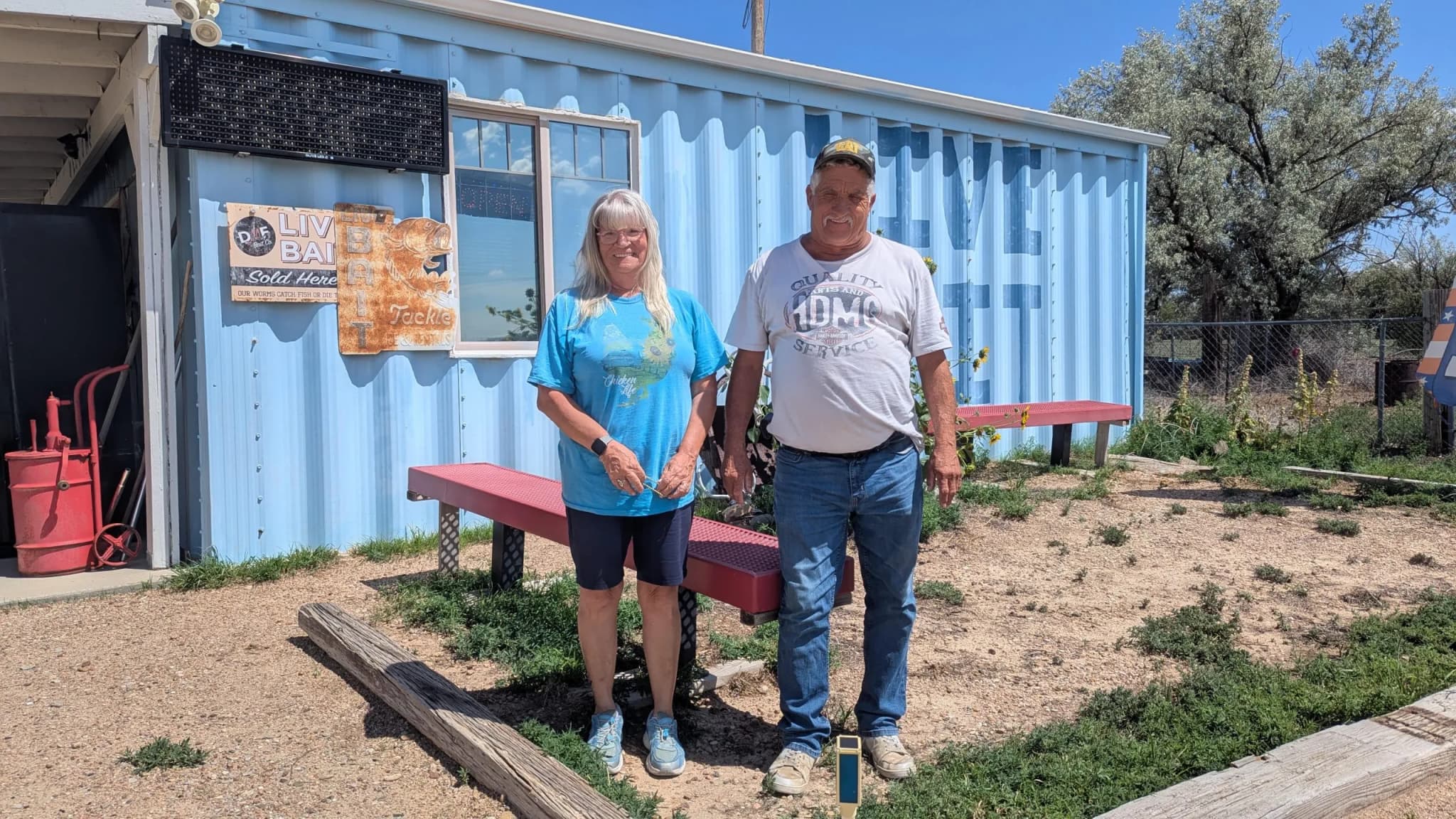
Colorado —The Tackle Box sits in Hasty, a town of roughly 125 people in Bent County, wedged between John Martin State Park and two state wildlife areas. It is a small, unassuming storefront where Ron and Karen Moreland have spent decades selling lures, bobbers, and gently used coolers to locals and tourists alike. But right now, the store is just as much about waiting as it is about selling.
They are closing in on the age when they want to start thinking about retiring. The problem? A dispute between Colorado Parks and Wildlife (CPW) and the Fort Lyon Canal Company has thrown a wrench into their exit strategy.
The Morelands own the business, and it is their sole source of income. “It’s how we pay our bills and stuff,” Karen Moreland said. “But we’ve had it up for sale, because my husband and I are getting older, and now we’re going to have an even harder time selling it.”
The store is currently listed for $110,000. In a healthy economy, that’s a manageable asking price for a niche operation. But the Morelands say the water access that makes their business viable is drying up.
On July 16, CPW closed public access to Adobe Creek and Thurston reservoirs. This wasn’t a sudden weather event. It was the result of the Fort Lyon Canal Company refusing to renew public access agreements on June 3. The canal company cited obligations to shareholders, operational needs, and long-term management responsibilities for the privately owned facilities.
For the anglers who flock to southeastern Colorado, this is a significant blow. The reservoirs are critical components of the region’s fishing economy. They are stocked consistently with warm water species like catfish, crappie, and walleye. The Tackle Box’s website features photo galleries of old and young anglers gripping their catches, beaming into camera lenses against backdrops of clear blue water. That visual appeal drives traffic to Hasty. It drives sales.
And it drives the value of the business itself.
“It’s difficult enough trying to offload a business that relies on water during a drought like Colorado has been locked in for the last two decades,” the Morelands noted. Now, with two major reservoirs effectively cut off from the public, the value proposition shrinks. Potential buyers look at the map, see the closed gates, and walk away.
CPW says they will do what it takes to keep people on the water, but the immediate reality is a closed door. The Fort Lyon Canal Company controls the infrastructure. Without their permission, the water might be there, but the public can’t get to it.
Ron and Karen Moreland are not just watching the water levels drop; they are watching their retirement window close. They cater to both novice and experienced anglers. They stock everything from rods and reels to ice. But if the fish aren’t accessible, the store becomes a museum of what used to be.
The dispute highlights a broader tension in southeastern Colorado. The region is anchored by reservoirs that serve dual purposes: irrigation for agriculture and recreation for the public. When the balance tips too far toward private operational needs, the local economy takes the hit. Hasty is small. It doesn’t have a backup industry waiting in the wings. It has fishing. And right now, that fishing is locked behind a gate.
The Tackle Box is on the market. The Morelands are getting older. And the water, for now, is staying put.
Keep up with Colorado
The day's Western Slope news, one email each morning. Free.
Federal Report Sets 200,000 Acre-Foot Water Conservation Target for Upper Basin
Colorado Parks and Wildlife Deploys Precision Drones for Weed Control