Holy Cross Energy Hits 100% Renewable Power, But Coal Backup Remains
Holy Cross Energy achieved 100% renewable electricity in March, but the milestone relied on mild weather and a temporary coal plant outage, highlighting the ongoing need for energy storage.
Aspen —Did Holy Cross Energy actually stop burning coal in March, or did it just get lucky with the weather?
The short version: It was both. But don’t let the press release fool you into thinking the grid is fully clean just because the calendar says March.
Holy Cross Energy (HCE), the Glenwood Springs-based cooperative, provided 100% renewable electricity to its 45,000 members from Vail to Parachute to Aspen last month. The utility calls it a milestone. I call it a data point.
The real story isn’t that they hit 100%. It’s that they hit it by relying on mild temperatures and a coal plant in Pueblo that was temporarily offline.
HCE President and CEO Bryan Hannegan called it a "proud moment." He’s right. But he also noted the hard work ahead to hit their "100×30" goal — 100% renewable energy every month of every year by 2030. That goal is ambitious. The path to it is littered with technical hurdles.
Here is what the officials aren’t saying loudly enough: hitting 100% for a month is easy when the sun shines and the wind blows. Hitting it for a year is a different beast.
Jenna Weatherred, HCE’s vice president of member and community relations, admitted the utility didn’t expect to see this level of renewable reliance this early. They were aiming for 85% year-round. They’re already at 92% average clean energy from January through April.
But 92% isn’t 100%.
The gap? Storage.
"It’s going to take batteries and member participation and some behavioral changes," Weatherred said. "At 3 a.m. on a Thursday, when the wind’s not blowing, we need to either pull from storage or from other sources."
Right now, those "other sources" include the Comanche 3 coal plant in Pueblo. HCE owns 8% of it. In March, Comanche 3 was not in operation. That absence was a key factor in the 100% figure. When the wind dies and the batteries dip, HCE pulls from the grid or that coal plant.
The limiting factor for the 2030 goal is feasible energy storage. Prices need to come down. Technology needs to improve.
"This is exciting for us moving forward," Weatherred said. "It lets us know that we can actually do this, and do this in a way that is sustainable long-term and hopefully before our goal of 2030."
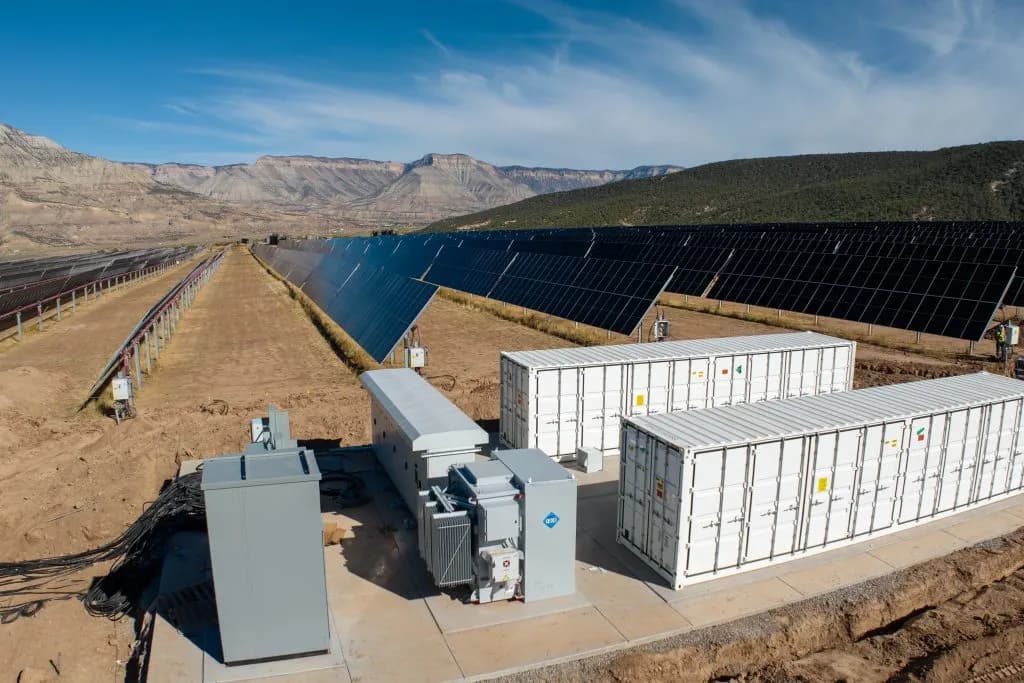
Sustainable long-term is the key phrase. The current infrastructure — wind farms like Bronco Plains II, solar arrays like Hunter Solar, and hydro facilities, is solid. But it’s intermittent. To bridge the gaps, HCE needs more batteries. Much more.
Kristen Bertuglia, Vail’s Environmental Sustainability Director and a former HCE board member, cheered the achievement. She called it a "testament to the leadership, innovation, and persistence" of the staff. She’s not wrong. But she’s also looking at a specific slice of time.
Local board hopeful Sarah Smith Hymes said it "gives me chills" to hear the milestone was reached. She’s running for the HCE board. Her enthusiasm is political, but her observation is factual.
The transition away from fossil fuels will cost jobs in one sector and create them in another. Weatherred expects the increase in renewable infrastructure to create more employment opportunities. That’s the promise. The reality is a grid that still needs backup power when the weather turns.
HCE’s portfolio includes distributed solar, hydro, and wind. It’s a diverse mix. But diversity doesn’t guarantee reliability at night.
The community wants affordable, reliable electricity. HCE promises to deliver it. The question is whether "reliable" includes the occasional dip below 100% renewable, or if the 2030 goal is a hard line.
Weatherred noted that getting to that last 10 to 15% of renewable coverage will require new technology and lower storage prices. If storage costs don’t drop, the timeline slips. If they do, the grid gets cleaner.
For now, the lights are on. The energy is clean. The coal plant is quiet.
Enjoy it while it lasts.
Keep up with Aspen
The day's Western Slope news, one email each morning. Free.