How Morapos School Aligned with Ranching Life
Diane Prather recalls the practical rhythms of the one-room Morapos School, where academic schedules aligned with hay harvests and families maintained the facilities.

Steamboat Springs —The scent of cut sagebrush and rabbit brush still hangs in the air near Morapos, a sharp reminder that summer’s heat has broken and the school year is beginning. For locals who remember the Morapos School, that specific odor signals more than just the changing season; it marks the return to a rhythm dictated by hayfields and outhouses.
Diane Prather wrote in the Craig Daily Press about this transition, recalling her first day of school at the country school just down the road from her family’s ranch house. The details she offers are not nostalgic fluff — they are a data point for understanding how rural education functioned before consolidation.
Prather notes that school started later than it does now, timed to allow ranchers to finish the first cutting of hay. This wasn’t arbitrary scheduling. It was logistical. Cattle hadn’t yet been trailed home from summer pasture, and mothers were deep into canning produce purchased in Palisade. The timing aligned the academic calendar with the agricultural one.
There were only about 10 students in the school at that time. Prather’s family walked to and from Morapos, except when snow drifted the road. Her brother Duane (Osborn) was born when she was 14, meaning the school served multiple generations of local families.
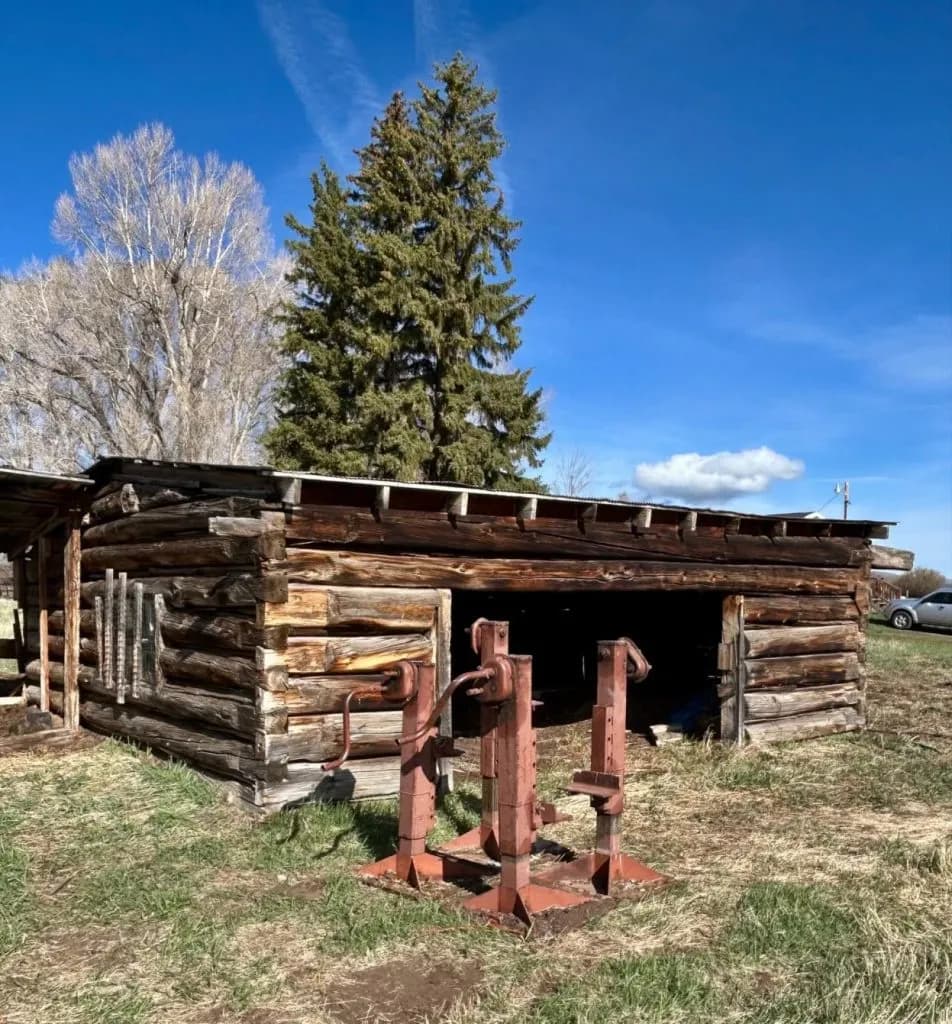
The infrastructure was modest but functional. Mothers cleaned the schoolhouse and the teacherage — the small house next door where the teacher lived during the year. They also cleaned the outhouse. Fathers mowed the sagebrush and rabbit brush that grew up around the buildings during the summer. Prather says she can still smell that cut brush and be taken back to those days.
On the first day, students wore clothes sewn by their mothers. They met other students, their mothers, and the teacher at the school. Registration was handled by mothers providing necessary information to the Superintendent of Schools, who had an office at the courthouse. Kids found their desks and went home.
What a letdown, Prather writes. They changed into chore clothes and returned to their usual routine. The next day, they put on the new clothes again, walked to school, and placed their lunchboxes in the anteroom. They opened their desk tops to store supplies and recited the Pledge of Allegiance, as they did every morning.
The teacher’s job was substantial. Depending on the year, she taught several grades. The curriculum included seat work and “recitation.” Subjects ranged from math, reading, geography, and social studies to Colorado History for eighth graders. Grammar, penmanship, some science, and ABCs for the little ones rounded out the day.
On paper, this sounds simple. In practice, it required a teacher capable of managing multiple age groups simultaneously while ensuring each student mastered their specific grade-level content. The Morapos School was supervised by the Superintendent of Schools, whose office was at the courthouse, providing a layer of oversight despite the school’s remote location.
For context, this model contrasts sharply with today’s consolidated districts. Then, the cost was low, and the community was directly involved, mothers cleaned, fathers mowed, and students walked. Now, we deal with larger budgets, bus routes, and specialized staff. But the core function remains: preparing kids for life in the valley.
Prather’s account highlights a system that worked because it fit the local landscape. The school was close to home. The schedule respected the harvest. The teachers handled the workload of multiple grades without needing separate classrooms for each.
The practical bottom line is this: The Morapos School served its community effectively by aligning with the ranching calendar and keeping operational costs low through direct family labor. It wasn’t just about learning ABCs; it was about maintaining a functional rural society.
Keep up with Steamboat Springs
The day's Western Slope news, one email each morning. Free.
Otero County Preservation Officer Warns of Historic Site Risks From Federal Rule Changes
Margaret Durrance Postcard Reveals Aspen Amphitheater Design Differences